

If you have a tiny balcony, a narrow side yard, or a modest concrete slab, finding the right patio design ideas for small spaces can feel overwhelming. Every square foot counts, and a single misplaced planter can ruin the entire flow. In 2026, the most effective way to solve this is by using AI to visualize your exact space before you buy a single paver or plant.
Small-space landscaping leaves zero room for guesswork. Unlike expansive properties where design flaws can be hidden behind a row of shrubs, compact outdoor living areas expose every misjudgment in scale, lighting, and traffic flow. By leveraging AI-driven spatial planning, you can test multiple design directions in minutes, ensuring your final layout is both beautiful and highly functional.
Why Patio Design Ideas for Small Spaces Require Precision in 2026
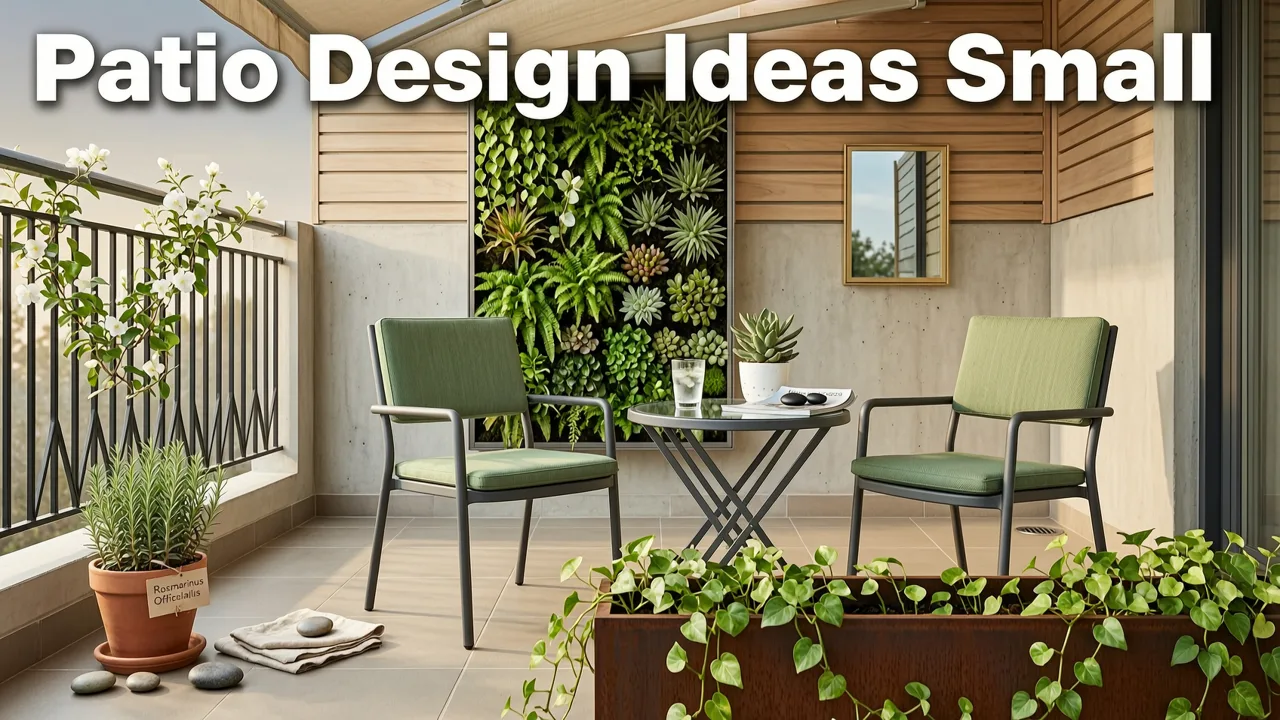
The imagination gap is the biggest enemy of compact outdoor design. When you stare at a blank 8-by-10-foot concrete pad, it is nearly impossible to mentally calculate how a built-in bench, a dining table, and three large planters will physically interact. Homeowners often overestimate the space available for walkways or underestimate the visual weight of dark furniture in a shaded corner.
14 Small Backyard Design Secrets
by Backyard Design Guy - Outdoor Living
In 2026, the standard approach to small yard makeovers has shifted from sketching on graph paper to uploading a photo. AI landscape design tools now utilize advanced depth mapping to understand the physical boundaries of your existing patio. This means you are no longer just looking at a flat mood board; you are seeing a realistic, proportionally accurate rendering of your specific micro-patio.
This precision prevents the most common failure in balcony landscaping and small patios: buying furniture or plants that simply do not fit. When you can visually compare a minimalist Zen layout against a lush, container-heavy garden before spending a dime, you protect your budget and your sanity.
Top Patio Design Ideas for Small Spaces to Maximize Your Area
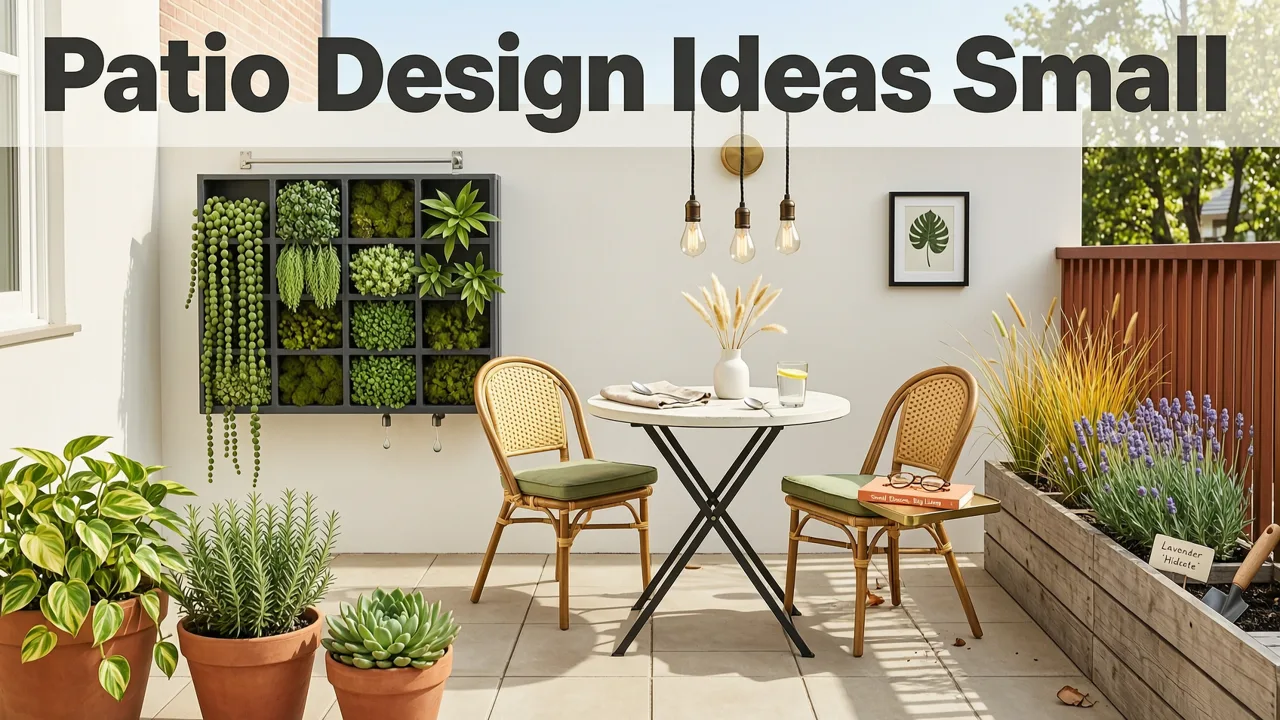
When square footage is limited, your design strategy must prioritize verticality, multifunctionality, and visual continuity. Here are the three most effective patio design ideas for small spaces trending this year.
The Vertical Oasis
When you cannot build outward, you must build upward. The vertical oasis strategy utilizes trellises, wall-mounted planters, and living wall systems to draw the eye up, creating the illusion of a much larger footprint. This approach is ideal for narrow side yards or enclosed balconies where floor space is entirely consumed by seating.
- Trellis Dividers: Use slim, vertical trellises planted with climbing jasmine or clematis to create privacy without sacrificing light.
- Rail Planters: For balcony landscaping, railing-mounted boxes add greenery without consuming precious deck space.
- Hanging Gardens: Suspend macrame planters or modern geometric cages from overhead beams to utilize dead air space.
The Minimalist Zen Retreat
Clutter is the enemy of small spaces. The minimalist Zen retreat relies on clean lines, negative space, and a restricted color palette to make a compact patio feel expansive. This design direction uses large-format pavers to reduce visual seams and limits plant selections to a few high-impact architectural specimens.
In small-space design, negative space is not empty space; it is the breathing room that makes the entire area feel larger and more inviting.
Focus on a single focal point, such as a sleek water feature or a sculptural Japanese maple in a oversized ceramic pot. Keep furniture low-profile and tucked into corners to keep the central floor area completely clear.
The Multi-Functional Entertaining Hub
If your goal is to host guests on a tiny patio, every piece of furniture must earn its keep. The multi-functional hub incorporates built-in seating with hidden storage, fold-down tables, and modular pieces that can be rearranged or stacked away when not in use.
- Built-in Bench Seating: Construct a wraparound bench along two walls. It provides maximum seating capacity while pushing the bulk of the furniture against the perimeter, leaving the center open.
- Modular Tables: Use nesting tables or a fold-out wall table instead of a traditional dining set.
- Dual-Purpose Planters: Use large, heavy planters as natural room dividers or as structural anchors for overhead shade sails.
How AI Vision Models Translate Your Photo into Actionable Layouts

Generating realistic patio design ideas for small spaces requires an AI that understands physical reality, not just aesthetic patterns. Modern vision models, as detailed in the OpenAI documentation, use advanced depth-aware scene reconstruction to analyze the geometry of your uploaded photo.
When you upload an image of your current patio, the AI identifies the horizon line, the boundaries of the hardscape, and the location of existing structures like doors, windows, and fences. It then applies style-adaptive layout generation, rendering new plants, furniture, and hardscaping materials with accurate perspective and shadow casting.
Here is how AI-assisted planning compares to traditional methods for compact spaces:
| Planning Phase | Traditional Method | AI-Assisted Method (2026) |
|---|---|---|
| Spatial Visualization | Requires mental math or physical tape measures to gauge scale. | Instantly renders 3D-accurate layouts directly over your existing photo. |
| Plant Selection | Relies on generic nursery tags; hard to visualize mature size in context. | Shows exact mature growth habits and scales plants to fit your specific container sizes. |
| Style Iteration | Time-consuming; requires buying samples or visiting showrooms. | Generates dozens of style variations (Zen, Modern, Cottage) in seconds. |
| Cost Estimation | Often leads to overspending due to poor material quantity planning. | Highlights exact spatial requirements, preventing over-purchasing of pavers or soil. |
Step-by-Step Guide to Generating Your Small Patio Layout
Transitioning from a blank slab to a fully realized outdoor room is straightforward when you use the right tools. Follow this workflow to generate your perfect layout.
1. Capture the Right Baseline Photo
Stand in the corner of your patio or at the edge of your balcony. Hold your phone at chest height and take a wide, straight-on shot. Ensure the entire space, including the connecting door or fence line, is visible. Good lighting is crucial; take the photo on a bright, overcast day to avoid harsh shadows that can confuse the AI.
2. Upload and Define Your Style
Upload your photo to an AI landscape design platform. You can explore comprehensive guides on patio layout ideas from photo to understand how different prompts affect the output. Select a style that matches your home's architecture, or input a custom prompt describing your ideal vibe.
3. Iterate and Refine
Do not settle for the first generation. AI tools allow you to tweak specific elements. If you love the furniture layout but want more greenery, adjust the prompt to increase plant density. Compare three or four distinct variations side-by-side to see which direction truly maximizes your square footage.
Avoiding Costly Mistakes in Compact Outdoor Spaces
Even with a perfect visual layout, small patios present unique environmental challenges. The most frequent error homeowners make is ignoring the microclimate. A narrow patio surrounded by high wooden fences or brick walls can become a heat trap, baking tender plants in the afternoon sun.
Before you finalize your plant list, you must understand your light exposure and wind patterns. If you want to ensure your new layout survives its first summer, review our detailed guide on how to avoid planting mistakes before you dig. It covers critical factors like soil volume in containers, drainage solutions for enclosed balconies, and selecting wind-resistant species for high-rise patios.
Additionally, respect the traffic flow. A beautiful design fails if you have to contort your body to squeeze past a massive planter to reach the back door. Use your AI renderings to verify that you have maintained at least 24 to 30 inches of clear walkway through the space.
Expanding Your Vision: From Patios to Full Yard Makeovers
While mastering your small patio is the immediate goal, AI visualization is equally powerful for larger projects. If you decide to extend your hardscape or tackle the rest of the property, the same principles apply.
For those looking to transform the entire rear of their home, our visual guide on backyard landscape ideas before and after demonstrates how AI can map out sweeping lawns, fire pits, and pergolas. If your curb appeal needs attention instead, you can generate stunning front yard landscape ideas directly from a photo of your current facade.
Start Designing Your Perfect Patio Today
Small spaces demand smart design. By moving away from guesswork and embracing AI-driven spatial planning, you can unlock the full potential of your compact outdoor area. Whether you are building a vertical oasis or a minimalist Zen retreat, seeing your patio design ideas for small spaces rendered in realistic detail ensures you will love the final result.
Stop wondering what your tiny patio could become. Upload your photo today, test your favorite layouts, and build with absolute confidence.


