

Why a Patio Layout Generator Is the Smartest First Step in 2026

If you have ever stood on a tired concrete slab, squinting at an awkward grill placement or a blank stretch of pavers, and wondered what the space could actually look like, a patio layout generator gives you the answer in seconds. Upload a single photo, choose a style, and the AI renders realistic layout concepts — furniture, planting beds, pergolas, fire pits, lighting — all mapped to the exact dimensions and sightlines of your patio. No measuring tape, no design degree, no costly trial-and-error with plants or furniture you end up returning.
For homeowners, renters, and weekend gardeners in 2026, the value is simple: you see your options before you spend a dollar. Instead of guessing between a cozy lounge zone and an open-air dining setup, you preview both side by side. That clarity saves time, protects your budget, and makes conversations with contractors or nurseries dramatically more productive.
How an AI Patio Layout Generator Works
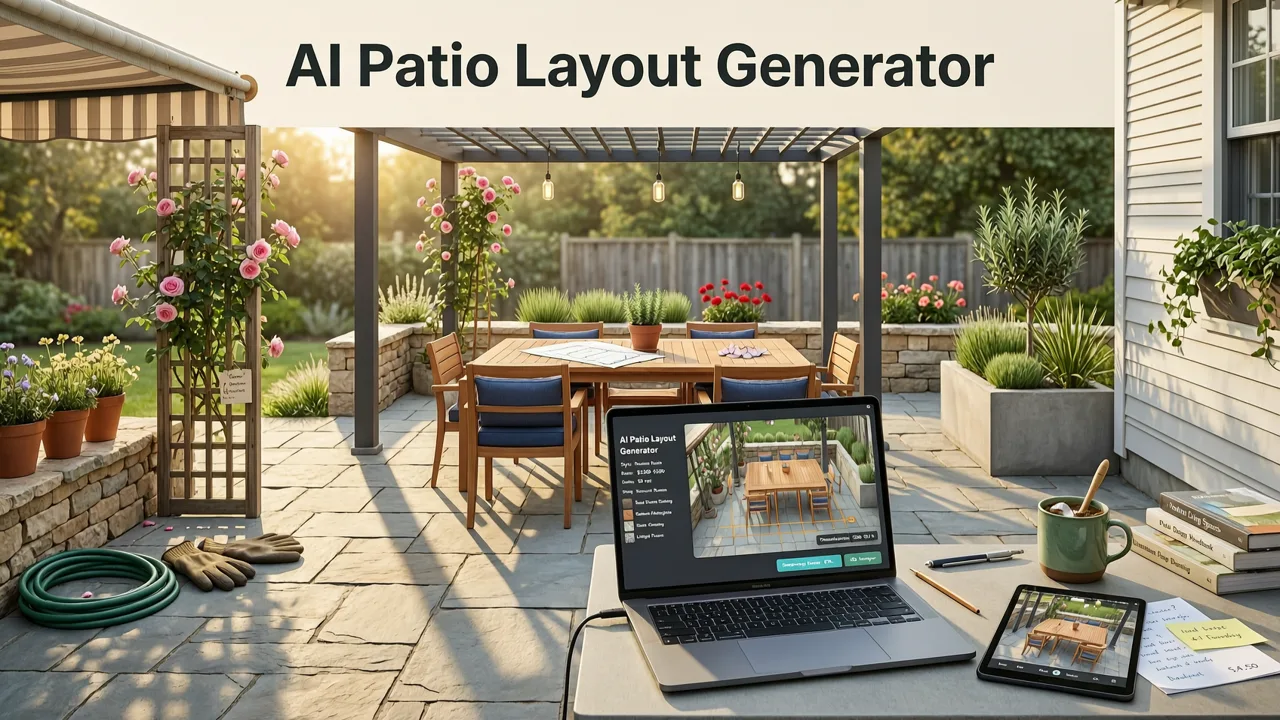
Modern patio layout generators rely on depth-aware scene reconstruction and style-adaptive rendering. When you upload your photo, the AI does far more than slap a filter on top. It reads the geometry of your space — the slope of the ground, the height of the fence line, the position of the sun at different times of day — and then generates layout options that actually fit.
Patio Paver Pattern Generator (see description)
by New Interior
1. Scene Analysis and Spatial Mapping
The engine identifies hardscape surfaces, existing structures, and open zones. It calculates approximate square footage, detects drainage patterns, and flags areas where grade changes might affect furniture placement. This spatial intelligence is what separates a useful design tool from a novelty photo editor.
2. Style-Adaptive Layout Generation
Once the space is mapped, the generator applies your chosen aesthetic — modern minimalist, Mediterranean, cottage garden, desert xeriscape, tropical resort, or Japanese zen — and arranges elements accordingly. A Mediterranean layout will suggest terracotta planters and olive trees; a modern minimalist concept will lean toward clean concrete, linear planters, and low-profile modular seating. Every suggestion respects the real constraints of your patio.
3. Plant and Material Matching
Beyond furniture and structures, the generator recommends plant palettes suited to your climate zone, light exposure, and soil conditions. If you want to go deeper on planting, the best plants for my backyard guide walks through AI-powered matching that pairs species to your specific microclimate.
What You Can Generate with a Patio Layout Generator

The range of outputs has expanded significantly in 2026. Here is what a typical session produces:
- Seating zones: Lounge areas, dining sets, built-in benches, and conversation pits sized to your actual patio footprint.
- Hardscape elements: Paver patterns, gravel paths, stepped transitions, and raised bed outlines.
- Shade structures: Pergolas, shade sails, retractable awnings, and louvered roofs positioned for optimal sun coverage.
- Water and fire features: Small fountains, fire pits, and tabletop fire bowls placed with safety clearances in mind.
- Lighting plans: String light routes, path lights, uplighting for trees, and recessed step lighting.
- Planting beds: Border layouts, container groupings, and vertical garden placements matched to light and exposure.
Patio Layout Generator vs. Hiring a Landscape Designer
One of the most common questions homeowners ask is whether an AI patio layout generator can replace a professional designer. The honest answer: it depends on the project scope. Here is a direct comparison to help you decide.
| Factor | Patio Layout Generator (AI) | Landscape Designer |
|---|---|---|
| Cost | Free to low-cost per project | $500–$5,000+ depending on scope |
| Turnaround time | Seconds to minutes | 1–4 weeks for initial concepts |
| Number of concepts | Unlimited variations | Typically 2–3 initial options |
| Customization depth | Style, layout, plant palette | Full engineering, grading, irrigation plans |
| Best for | Ideation, visualization, quick comparisons | Permitted construction, complex grading, HOA submissions |
| Revision speed | Instant | Days per revision cycle |
Most homeowners in 2026 use the generator first to narrow down their vision, then bring a refined concept to a designer or contractor for execution. That workflow eliminates the expensive back-and-forth that used to define the early stages of any outdoor project.
Step-by-Step: Using a Patio Layout Generator Effectively
Getting the most from the tool comes down to preparation. Follow these steps and your results will be dramatically more useful.
Step 1: Capture a Clean Base Photo
Stand at the entry point to your patio — usually the back door or a side gate — and shoot straight across the space. Avoid extreme angles. Shoot on a clear day with even lighting. Remove temporary clutter like hoses, toys, or loose chairs so the AI reads the true geometry of the area.
Step 2: Choose Your Primary Style
Select the aesthetic direction that resonates most. If you are torn between two styles, generate both. The side-by-side comparison is where the tool earns its keep. You can explore patio layout ideas from photo across multiple styles to see which direction feels right for your home's architecture.
Step 3: Define Your Non-Negotiables
Before generating, note the elements you must keep — a gas line, a downspout, a mature tree, a utility access panel. The best generators let you flag these zones so the AI avoids placing furniture or planting beds over them.
Step 4: Iterate and Refine
Your first generation is a starting point, not a final answer. Swap the dining set for a lounge arrangement. Try a pergola instead of a shade sail. Move the fire pit to the opposite corner. Each iteration takes seconds and brings you closer to a layout you would actually live with.
Step 5: Export and Share
Once you have a concept you love, export the image and share it with your contractor, nursery, or partner. A visual reference eliminates the ambiguity of verbal descriptions and keeps everyone aligned on the goal.
Common Patio Layout Mistakes a Generator Helps You Avoid
Even experienced homeowners fall into predictable traps when planning a patio. An AI generator surfaces these problems before they become expensive fixes.
- Oversized furniture in a small space: The generator scales elements to your actual square footage, preventing the classic mistake of buying a sectional that blocks every pathway.
- Ignoring traffic flow: Good layouts preserve clear walkways between zones. The AI maintains functional circulation paths automatically.
- Forgetting sun and wind exposure: Shade structures and windbreaks are positioned based on the orientation detected in your photo.
- Planting the wrong species: Plant recommendations factor in the light conditions visible in your image, reducing the risk of shade-loving plants in full sun or vice versa.
- Mismatched styles: A Mediterranean tile pattern clashes with mid-century modern furniture. The generator keeps material and furniture aesthetics coherent.
Using the Generator for Different Patio Types
Small Urban Patios and Balconies
Compact spaces demand precision. Every inch counts, and a poorly placed chair can make the area feel cramped. The generator excels here because it visualizes multiple furniture arrangements within tight constraints. Pair this with small backyard landscape ideas to maximize vertical planting and fold-down furniture strategies.
Large Open-Air Patios
Big patios risk feeling empty or directionless. The generator helps you define zones — a dining area here, a lounge zone there, a cooking station nearby — so the space feels intentional rather than cavernous.
Front Yard Porch Patios
Front-facing patios have different requirements: curb appeal, neighbor interaction, and street-side privacy. The generator adjusts suggestions accordingly, recommending lower-profile plantings and welcoming seating arrangements.
Multi-Level and Sloped Patios
Grade changes add complexity. The AI detects elevation shifts in your photo and suggests retaining wall placements, stepped seating, or ramp transitions that respect the existing topography. For a broader view of how transformations come together, the backyard landscape ideas before and after visual guide shows real-world examples of complex terrain handled well.
How Patio Layout Generators Have Evolved by 2026
The gap between AI-generated concepts and professionally drawn plans has narrowed considerably. Today's generators leverage advanced spatial reasoning models that understand structural load, drainage logic, and plant growth patterns. The outputs are not just pretty pictures — they are buildable concepts grounded in landscape design principles.
Industry guidance from organizations like OpenAI's documentation and Google's AI responsibility framework has pushed developers toward transparency about what the tool can and cannot do. Responsible generators clearly label AI-generated imagery and encourage users to verify structural and permitting details with licensed professionals before construction begins.
Pricing: What a Patio Layout Generator Costs in 2026
Most patio layout generators in 2026 operate on a freemium model. Free tiers typically allow a handful of generations per month with standard resolution outputs. Paid plans — usually in the $10 to $30 per month range — unlock unlimited generations, high-resolution exports, plant shopping lists, and contractor-ready PDFs. Given that a single mispurchased outdoor sofa can cost more than a year's subscription, the return on investment is clear for anyone planning a real project.
Tips for Getting the Most Realistic Results
- Shoot at eye level. Crouching or shooting from above distorts proportions and leads to inaccurate furniture scaling.
- Include reference objects. A standard patio chair or a known-size planter in the frame helps the AI calibrate dimensions.
- Capture multiple angles. If your patio wraps around the house, shoot from two or three positions so the generator understands the full layout.
- Be specific with style terms. "Mid-century modern with warm wood tones" produces sharper results than a vague "nice patio."
- Use the tool seasonally. Revisit your layout in spring and fall to see how the design holds up under different lighting and planting conditions.
Frequently Asked Questions
Can I use a patio layout generator if I rent my home?
Absolutely. Renters benefit especially from AI-generated layouts because you can visualize changes without committing to permanent alterations. Focus on container plantings, modular furniture, and removable shade structures that travel with you when you move.
Does the generator work for covered patios and screened porches?
Yes. Upload a photo of your covered or screened space and the AI will work within the existing structure. It can suggest furniture arrangements, hanging planters, rug layouts, and lighting that complement the enclosed environment.
How accurate are the plant recommendations?
Plant suggestions are based on visible light conditions, your general geographic region, and the style you select. For precise species matching, cross-reference the generator's output with a localized plant guide or consult your local nursery extension service.
Can I share the generated layouts with a contractor?
Most paid plans include export options designed for contractor communication — high-resolution images, annotated PDFs, and material lists. These serve as excellent starting points for professional bids, though contractors will typically create their own technical drawings for permitted work.
Start Designing Your Patio Today
A patio layout generator removes the guesswork from outdoor design. You upload a photo, explore multiple styles in seconds, and walk away with a clear vision of what your space can become — before you buy a single plant or sign a contractor agreement. Whether you are reimagining a tiny urban balcony or planning a sprawling backyard entertaining zone, the tool puts professional-grade visualization in your hands. Upload your first photo today and see your patio's potential come to life.


