

If you have ever stared at an overgrown yard or a blank concrete slab, struggling to imagine its full potential, you are not alone. The gap between a barren outdoor space and a lush, functional landscape is often just a matter of visualization. Generating garden plans from picture uploads has become the definitive method for homeowners and renters to bridge this gap in 2026. By transforming a simple smartphone photo into a realistic, scaled design concept, AI-driven landscaping tools eliminate the guesswork, prevent costly planting errors, and provide a clear blueprint before a single shovel hits the dirt.
Why Traditional Garden Planning Falls Short in 2026
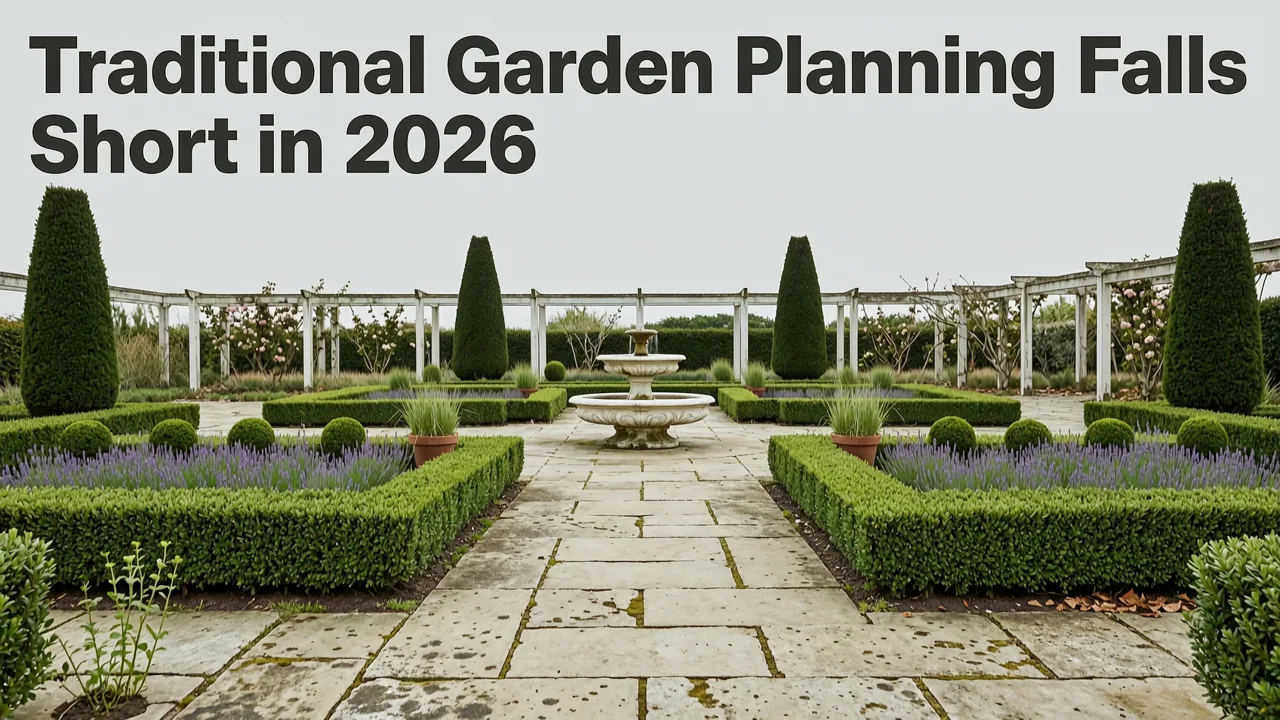
For decades, landscape planning relied heavily on 2D sketches, mood boards, and the homeowner’s ability to mentally translate flat drawings into three-dimensional reality. This approach inherently creates an imagination gap. A sketch showing a row of shrubs along a fence line does not convey the mature width of the plants, the seasonal color shifts, or how the foliage interacts with the existing architecture.
This disconnect frequently leads to expensive missteps. Homeowners often purchase plants that outgrow their designated spaces, select hardscape materials that clash with the home’s exterior in natural light, or misjudge the scale of a patio extension. Understanding how to avoid planting mistakes before you dig is critical, but traditional methods make it difficult to anticipate microclimate shifts, shadow patterns, and spatial crowding until the plants are already in the ground.
The Garden Design SECRET Most Homeowners Miss
by Garden Guru
Visual planning tools solve this by anchoring the design directly to the physical space. When you generate garden plans from picture files, the resulting concepts respect the existing geometry of the yard, ensuring that every suggested element fits naturally into the real-world environment.
How to Generate Garden Plans From Picture Using AI
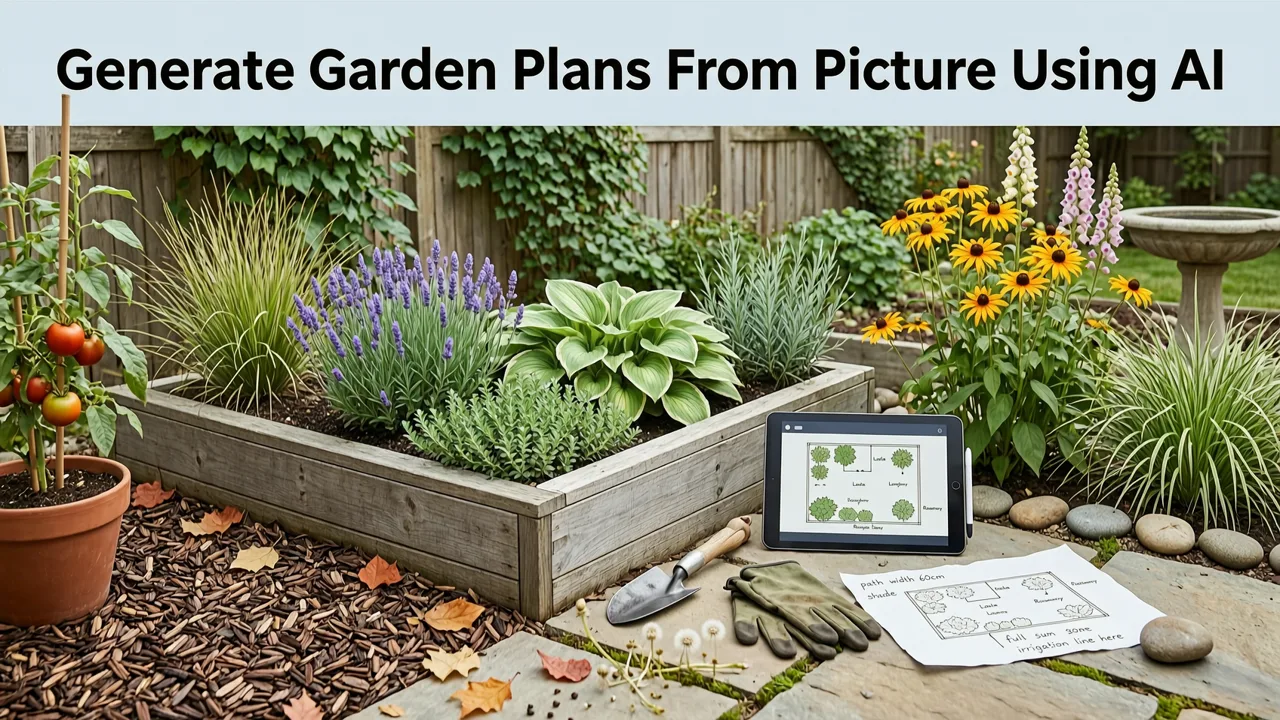
Creating a highly accurate digital landscape requires a systematic approach. While the underlying technology does the heavy lifting, the quality of the output depends heavily on the input and the parameters you set.
Step 1: Capturing the Optimal Base Image
The foundation of any AI-generated design is the source photograph. To achieve the most accurate garden plans from picture data, the image must be clear, well-lit, and comprehensive. Shoot during the golden hour—shortly after sunrise or before sunset—to capture even lighting that minimizes harsh shadows. Ensure the lens is level and capture multiple overlapping angles if the space is large. Remove temporary clutter like toys, hoses, or vehicles from the frame so the AI can accurately map the permanent structural elements of the yard.
Step 2: Defining Spatial Constraints and Design Styles
Once the image is uploaded, the next phase involves defining the boundaries and the aesthetic direction. Modern AI platforms allow users to mask specific areas, ensuring the algorithm only modifies the zones intended for redesign while preserving existing structures like fences, pools, or mature trees. Selecting a cohesive style—such as modern minimalist, cottage garden, or drought-tolerant xeriscape—guides the algorithm’s plant selection and hardscape material suggestions, ensuring the generated plan aligns with both personal taste and local environmental conditions.
Step 3: Iterating and Refining the Digital Render
Rarely is the first generated concept the final version. The true power of AI landscape design lies in rapid iteration. Users can adjust plant density, swap hardscape textures from natural stone to composite decking, and alter the color palette of seasonal blooms. This iterative process allows homeowners to compare multiple design directions side-by-side, refining the layout until it perfectly balances aesthetic appeal with practical functionality.
The Technology Behind AI-Generated Garden Plans
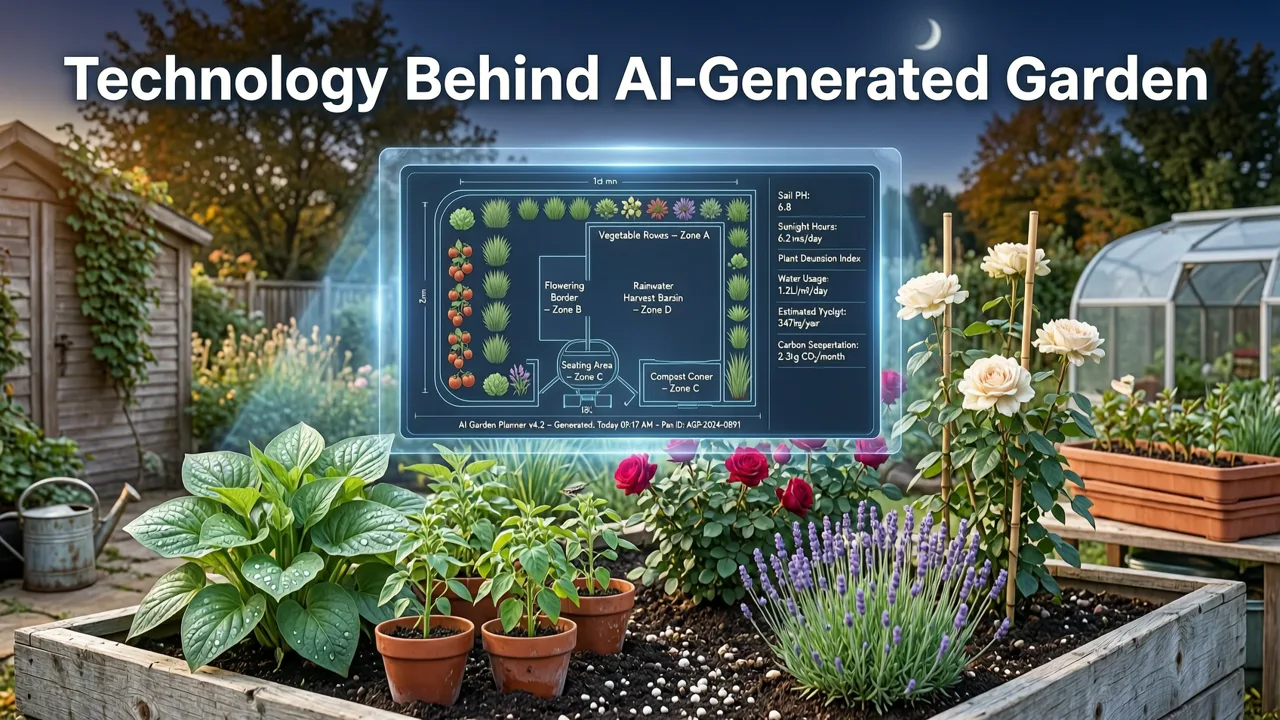
The ability to generate garden plans from picture inputs relies on advanced computer vision and generative AI models. These systems utilize depth-aware scene reconstruction to understand the three-dimensional geometry of a two-dimensional image. By analyzing perspective, lighting, and object scale, the AI builds a spatial map of the yard.
Following spatial mapping, style-adaptive layout generation takes over. The AI accesses vast databases of botanical knowledge and architectural design principles to populate the space with appropriate elements. It considers plant mature sizes, sunlight requirements, and color theory to create realistic renders. The development of these models follows strict frameworks, such as those outlined in Google AI guidance, ensuring that the technology remains reliable, contextually accurate, and environmentally conscious in its suggestions.
Traditional Landscaping vs. AI Photo-to-Plan Workflows
Transitioning from conventional design methods to AI-driven visualization represents a significant shift in efficiency and accuracy. The following table highlights the core differences between these approaches.
| Planning Feature | Traditional 2D Drafting | AI Picture-to-Plan Generation |
|---|---|---|
| Visualization Speed | Days to weeks for initial concepts | Seconds to minutes for multiple renders |
| Spatial Accuracy | Relies on manual measurements and estimation | Depth-mapped to existing photo geometry |
| Style Iteration | Costly and time-consuming to redraw | Instantaneous swapping of styles and materials |
| Cost Efficiency | High upfront design fees | Low-cost or free initial visualization |
| Botanical Context | Depends entirely on the designer's knowledge | Integrates database-driven plant compatibility |
Expanding Your Vision: Front Yards, Patios, and Balconies
While backyard transformations are the most common use case, the utility of photo-based planning extends to every exterior space. Curb appeal is heavily influenced by the front yard, where structural elements, walkways, and foundation plantings must harmonize with the home’s architecture. Exploring front yard landscape ideas through AI rendering allows homeowners to test bold design choices, like replacing a traditional turf lawn with a structured gravel and succulent xeriscape, without committing to the physical labor first.
Similarly, hardscape areas require precise planning. A poorly scaled patio can make a yard feel cramped, while an undersized seating area fails to accommodate gatherings. By utilizing tools that generate patio layout ideas from photo uploads, users can accurately visualize furniture placement, fire pit positioning, and pergola structures, ensuring the final build is both beautiful and highly functional.
Best Practices for Translating Digital Plans to Reality
An AI-generated visual is a powerful planning tool, but it must be executed with practical landscaping principles in mind. To successfully transition from a digital render to a physical landscape, follow these critical steps:
- Verify Hardiness Zones: While AI suggests visually appropriate plants, always cross-reference selections with your local USDA hardiness zone or regional climate equivalent to ensure long-term survival.
- Conduct Soil Testing: A beautiful digital plan relies on healthy soil. Test your soil's pH and nutrient levels before planting to determine if amendments are necessary for the chosen species.
- Check Utility Lines and Zoning: Before executing any hardscape changes visualized in your AI plan, contact local utility services to mark underground lines and verify that your planned structures comply with municipal zoning setbacks.
- Phase the Implementation: Large-scale makeovers can be overwhelming and expensive. Break your AI-generated master plan into manageable phases, tackling hardscaping and large trees first, followed by shrubs, and finally seasonal perennials.
Navigating Common Pitfalls in AI Landscape Design
As AI tools become more accessible, users must remain aware of their limitations. The most common pitfall is treating the generated image as an exact construction blueprint rather than a conceptual guide. AI models do not account for hidden underground obstacles, specific soil drainage issues, or the exact mature spread of a specific plant cultivar in your unique microclimate.
Additionally, over-reliance on visual perfection can lead to the selection of high-maintenance plants that look stunning in a render but require constant pruning, specialized fertilizers, or intensive pest management in reality. Always balance the aesthetic appeal of the AI-generated garden plans from picture renders with the practical realities of your available time and local growing conditions.
The Future of Outdoor Space Planning
The integration of artificial intelligence into landscape design has permanently altered how outdoor spaces are conceptualized. By removing the barriers of technical drawing and spatial imagination, these tools empower anyone to take control of their outdoor environment. Whether you are revitalizing a neglected backyard, designing a welcoming front entrance, or optimizing a compact balcony, the ability to see your ideas brought to life in photorealistic detail ensures that every decision is informed, intentional, and visually cohesive.
Stop guessing what your outdoor space could look like and start seeing it with absolute clarity. Upload your first photo today to generate realistic, customized landscape concepts and take the first step toward your perfect yard.


