

Staring at a cramped, overgrown yard makes it nearly impossible to visualize a complete transformation. When every square foot counts, finding the right backyard redesign ideas for small spaces requires more than just imagination; it demands precise planning and spatial awareness. This guide breaks down the most effective layout strategies for compact outdoor areas and explains how AI-powered visualization helps you preview realistic plant layouts and hardscape features before breaking ground.
Why Visualizing Backyard Redesign Ideas for Small Spaces Matters
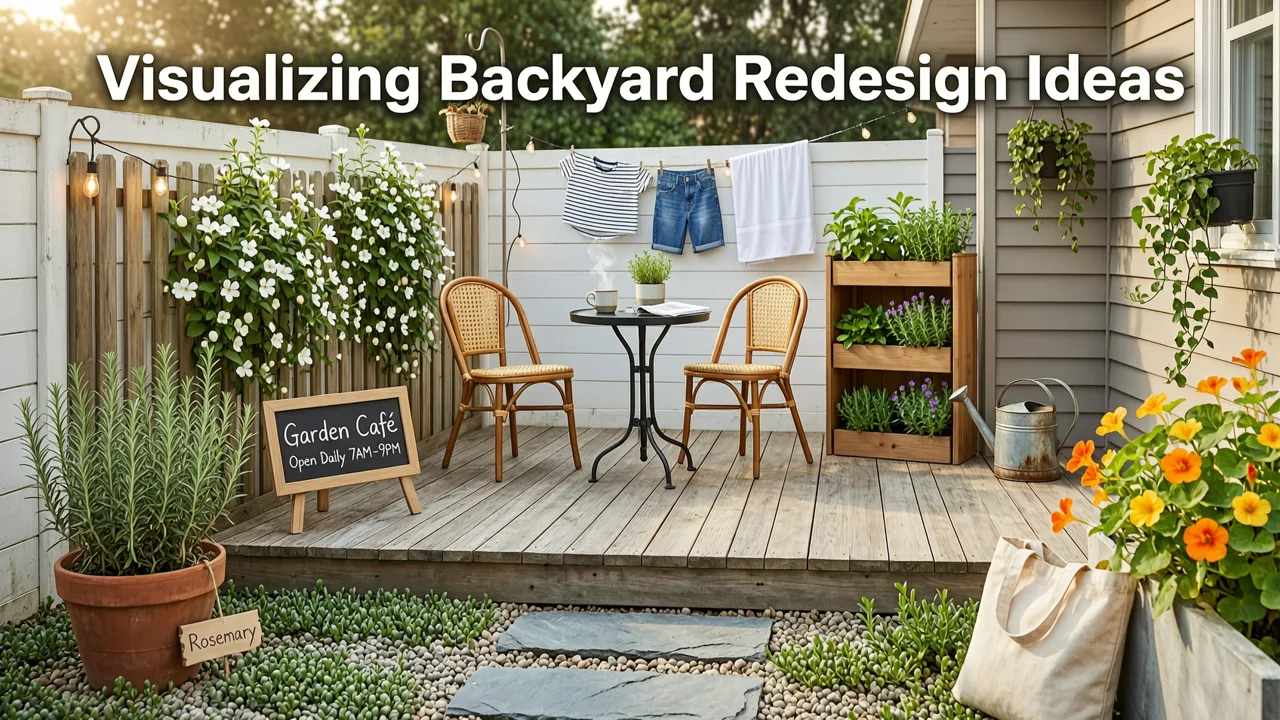
Small outdoor areas amplify design mistakes. A plant that looks appropriately sized in a nursery gallon pot can quickly overtake a 10-by-10-foot yard within two seasons. Similarly, placing a large patio set in a narrow corridor can make the entire area feel claustrophobic rather than cozy. The most effective way to bridge the gap between a barren patch of grass and a functional outdoor room is to see the transformation in context.
Reviewing detailed backyard landscape ideas before and after transformations highlights how professional designers manipulate scale, sightlines, and texture to expand the perceived boundaries of a small yard. In 2026, homeowners no longer have to rely solely on static mood boards or expensive 3D architectural renderings. AI-driven visual planning allows you to upload a photo of your exact space and instantly generate multiple design directions, ensuring that every proposed element fits the physical reality of your yard.
3 Budget-Friendly SMALL BACKYARD Landscape Designs
by Landscaping Made Simple - Bobby K Designs
Top Backyard Redesign Ideas for Small Spaces in 2026
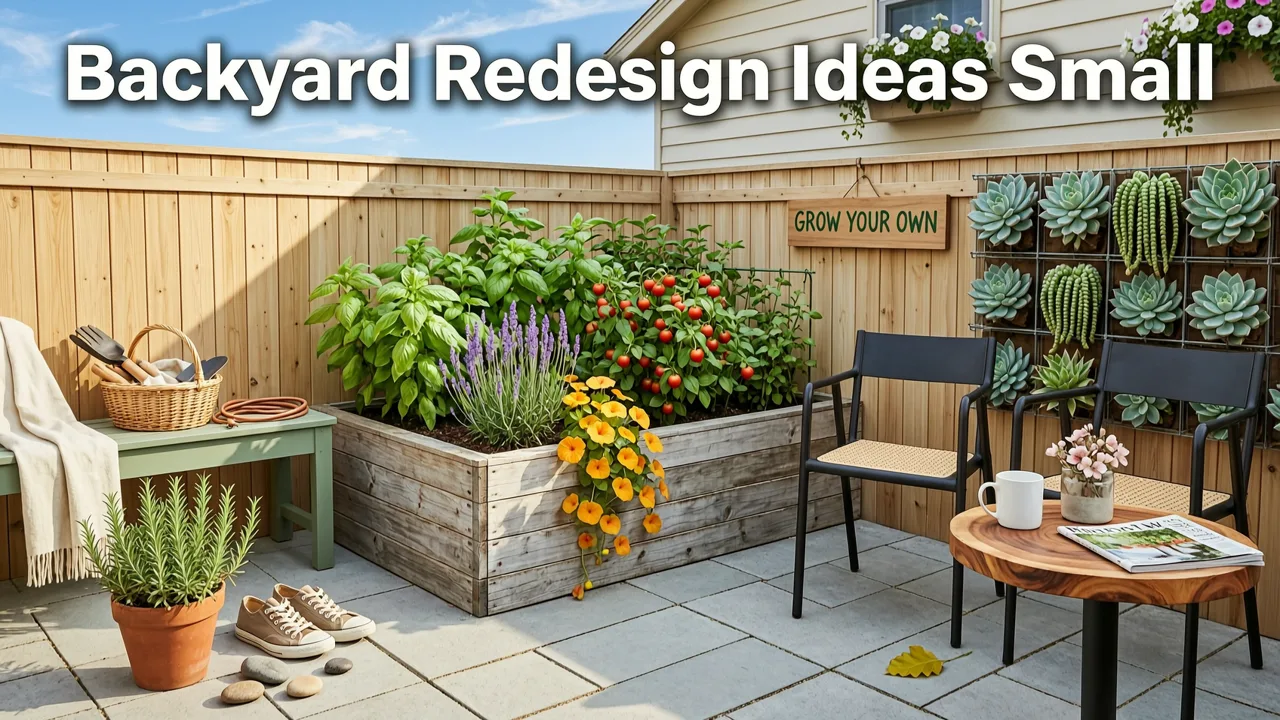
Maximizing a compact footprint requires a shift in perspective. Instead of focusing on what cannot fit, successful small yard landscaping focuses on verticality, multi-functional elements, and strategic zoning.
Vertical Gardens and Living Walls
When horizontal space is limited, building upward is the most logical solution. Vertical garden designs draw the eye up, creating an illusion of height and volume. Trellises, modular pocket planters, and wall-mounted irrigation systems allow you to grow herbs, ferns, and trailing vines without sacrificing precious ground space for seating or pathways. This approach also provides excellent privacy from close neighbors in urban or suburban settings.
Multi-Functional Hardscaping and Seating
In a compact yard, every hardscape element must work harder. Built-in bench seating that wraps around a raised planter bed eliminates the need for separate, bulky patio furniture. Similarly, integrating storage directly into deck steps or using a fire pit that doubles as a dining table with a cover ensures that the space remains uncluttered while serving multiple purposes.
Zoning with Lighting and Planters
Defining distinct areas within a small yard prevents the space from feeling like a single, overwhelming corridor. Using low-voltage LED pathway lighting, varying the heights of container gardens, and switching paving materials from wood decking to stone pavers can subtly separate a dining zone from a lounging zone. This psychological zoning makes the yard feel larger and more organized.
Compact Water Features and Fire Pits
The sound of moving water or the warmth of a fire feature adds a premium sensory experience to any garden. For small spaces, opt for sleek, modern wall fountains or compact, smokeless bioethanol fire pits. These elements provide high visual and auditory impact without dominating the square footage or creating safety hazards in tight quarters.
How to Plan Small Backyard Layouts Using AI Visualization
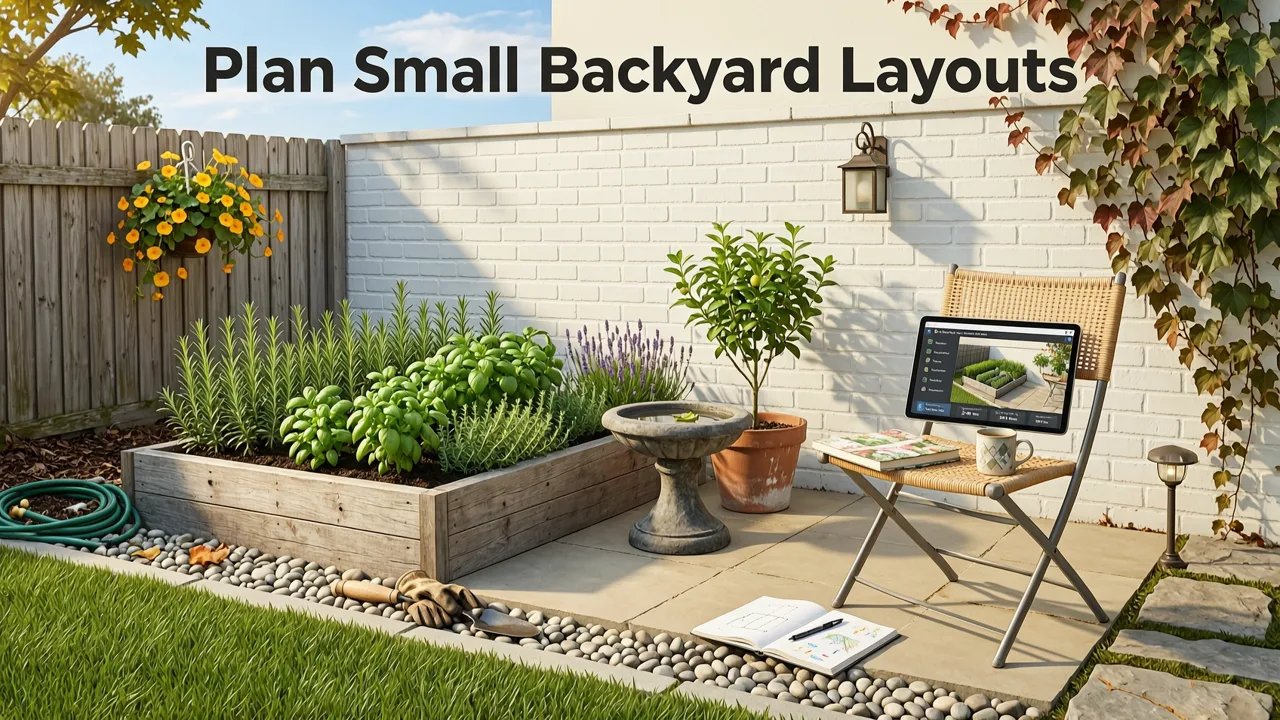
Translating these concepts into a cohesive plan is where modern technology shines. When you utilize an AI visual planning guide, the process begins with a simple photograph of your existing yard. Advanced AI landscape visualization tools utilize depth-aware scene reconstruction to understand the physical dimensions, shadows, and existing structures in your photo.
Unlike older design software that required manual 3D modeling, current AI engines analyze the spatial geometry of your yard. Following the responsible AI development frameworks outlined in resources like OpenAI documentation and Google AI guidance, these models are trained to respect physical constraints. If you select a "Modern Minimalist" style, the AI will not generate a sprawling, overgrown English cottage garden that ignores your property lines; instead, it generates style-adaptive layout generation that respects your fence lines, existing trees, and sunlight angles.
This allows you to rapidly iterate. You can test a vertical garden concept against a built-in seating concept in seconds, comparing which direction best serves your lifestyle before committing to materials.
Comparing Design Styles for Compact Yards
Choosing the right aesthetic is critical for small spaces. Cluttered or overly ornate styles can make a small yard feel chaotic, while clean lines and strategic plantings enhance the feeling of openness. Below is a comparison of popular design styles and how they apply to compact backyards.
| Design Style | Key Features for Small Spaces | Best Used For | AI Prompt Strategy |
|---|---|---|---|
| Modern Minimalist | Clean lines, monochromatic plant palettes, integrated lighting, large-format pavers. | Narrow urban yards, balconies, and contemporary homes. | Specify "uncluttered," "geometric planters," and "neutral tones" to prevent the AI from adding excessive foliage. |
| Urban Cottage | Dense but curated plantings, climbing roses, wrought iron accents, cozy seating nooks. | Privacy-focused yards, shaded corners, and romantic aesthetics. | Use terms like "vertical climbing plants," "intimate seating," and "dappled sunlight" to maintain scale. |
| Zen / Japanese | Gravel raking patterns, bamboo screening, compact maple trees, simple water basins. | Creating a tranquil retreat, masking ugly fences, low-maintenance goals. | Request "asymmetrical balance," "moss accents," and "minimalist hardscape" to ensure the AI keeps the layout serene. |
| Mediterranean | Terracotta pots, drought-tolerant succulents, stucco walls, wrought iron, olive trees. | Sunny, hot climates, and entertaining-focused patios. | Focus on "container gardening," "warm earth tones," and "compact citrus trees" to avoid oversized oak or pine generation. |
Avoiding Costly Mistakes in Tight Quarters
The margin for error in a small backyard is virtually zero. Buying the wrong plants or installing permanent hardscape in the wrong location can result in thousands of dollars in wasted materials and labor. Understanding your yard's unique microclimate is the first step in mitigation.
Before finalizing any design, you must map sunlight and shade patterns, identify underground utilities, and assess soil drainage. If you are unsure how to evaluate these factors, reviewing strategies on how to avoid planting mistakes before you dig is essential. Placing a sun-loving lavender bush in a shaded corner generated by an AI concept without verifying the real-world microclimate will lead to plant failure and wasted budget.
Furthermore, financial planning is just as critical as spatial planning. A beautiful AI rendering is useless if it exceeds your financial limits. Learning how to redesign a backyard on a budget ensures that you prioritize high-impact, low-cost changes first. For example, refreshing hardscape edges and adding strategic lighting often yields a higher visual return than completely replacing expensive patio furniture.
Step-by-Step Guide to Your Small Backyard Transformation
To move from a frustrating, cramped yard to a functional outdoor oasis, follow this systematic approach:
- Audit the Existing Space: Measure the exact dimensions, note the location of utilities, and observe how sunlight moves across the yard throughout the day.
- Capture the Baseline: Take clear, well-lit photographs of your yard from multiple angles, ensuring the AI can accurately map the depth and existing structures.
- Generate AI Concepts: Upload your photos to an AI landscape design tool and experiment with different styles. Compare how a modern minimalist layout looks versus an urban cottage design.
- Refine the Hardscape: Select the layout that best improves traffic flow and defines your zones. Ensure that paths are wide enough for comfortable walking and that seating areas are appropriately scaled.
- Select Scale-Appropriate Plants: Choose plants that will not outgrow their designated space. Opt for slow-growing varieties or compact cultivars specifically bred for small gardens.
- Execute in Phases: Complete the hardscaping and major structural elements first. Add soil, irrigation, and plantings last to avoid damaging new installations.
Conclusion
Transforming a compact outdoor area requires a blend of creative strategy and precise execution. By leveraging the best backyard redesign ideas for small spaces—such as vertical gardening, multi-functional hardscaping, and strategic zoning—you can turn a limited footprint into a highly functional retreat. More importantly, by utilizing AI visualization tools, you eliminate the guesswork, ensuring that every plant, paver, and planter is perfectly suited to your space before you spend a single dollar. Upload your photo today and start visualizing your ideal small backyard transformation.


