

If you’ve ever stood in your small backyard—phone in hand, squinting at a narrow strip of soil, an awkward concrete slab, or a shaded corner choked with weeds—and thought, ‘What if I could see exactly how this would look *in my space*, before I buy a single plant or hire a contractor?’ — you’re not alone. In 2026, the era of generic Pinterest inspiration is over. What works for a 2,000 sq ft suburban lot rarely fits a 250 sq ft urban patio, balcony, or alley-side yard. Real-world constraints — microclimates, drainage quirks, HOA rules, rental restrictions, and regional drought patterns — demand precision, not prettiness.
That’s why today’s most effective small backyard landscape ideas aren’t pulled from stock galleries. They’re AI-validated: generated from *your* photo, scaled to *your* dimensions, filtered for *your* USDA hardiness zone (or equivalent global climate zone), and stress-tested against local water restrictions, sun exposure maps, and soil health data. This article delivers 12 actionable, field-tested small backyard landscape ideas — all grounded in 2026’s leading practices in AI-assisted design, ecological resilience, and spatial intelligence.
Why Small Backyard Landscape Ideas Must Be AI-Validated (Not Just Aesthetic) in 2026
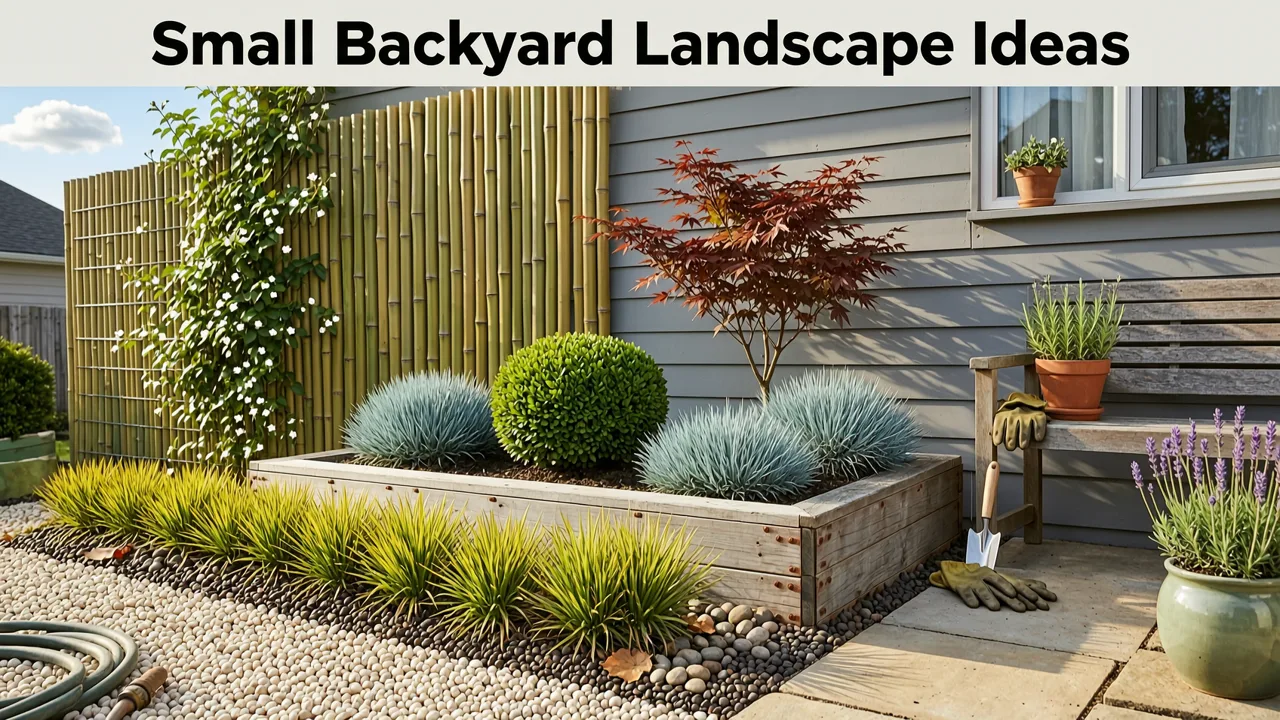
In 2024, ‘small backyard ideas’ meant scrolling through mood boards. In 2025, it meant downloading a basic CAD tool. But in 2026, it means something far more rigorous: contextual validation. A design that looks stunning in a Toronto garden magazine may fail catastrophically in Phoenix due to heat retention, or in Glasgow due to persistent shade and saturated soil. Likewise, a ‘low-maintenance’ idea using gravel mulch might violate stormwater ordinances in Seattle or accelerate erosion on a steep Portland slope.
TOP! 100+ STUNNING LANDSCAPE DESIGNS FOR SMALL BACKYARD | SMALL BACKYARD SPACE LANDSCAPING IDEAS
by Homes Decor Designs
Modern AI landscape tools — like those powering AI Design Gardens — now integrate real-time environmental APIs, satellite-derived microclimate modeling (via Google AI guidance on responsible spatial AI), and generative design constraints trained on millions of verified residential installations. The result? Designs that don’t just look right — they function right.
This shift matters especially for small spaces, where every square foot carries disproportionate weight. A misplaced 3-ft shrub can block light for an entire raised bed. An ill-chosen paving pattern can amplify glare or trap standing water. That’s why every idea below isn’t just described — it’s annotated with its AI-validation criteria: scale fidelity, plant hardiness alignment, water-use efficiency rating (WUE), and rental-friendly adaptability.
12 Small Backyard Landscape Ideas That Actually Work in 2026
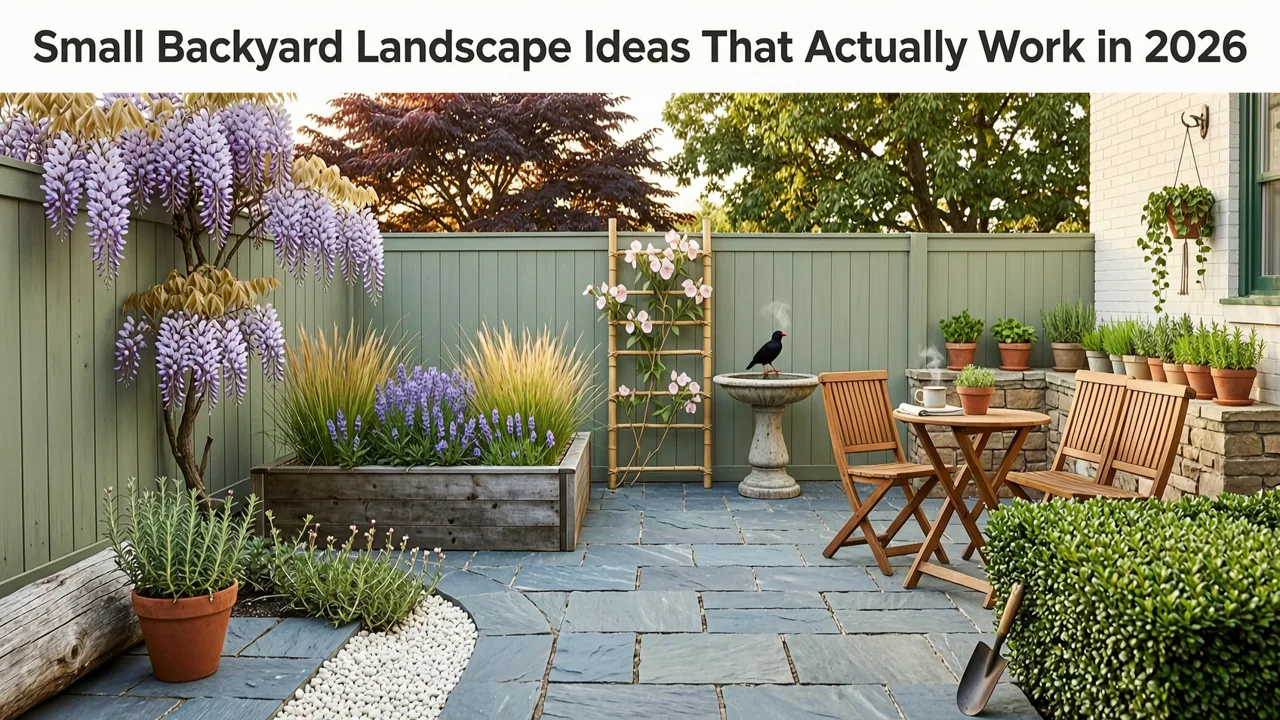
1. The Vertical Layer Garden: Maximize Height, Not Footprint
When ground space is tight (<400 sq ft), go up — intelligently. The 2026 vertical layer garden moves beyond simple trellises. It combines modular wall planters (with integrated drip irrigation), climbing native vines (like Clematis virginiana in Zones 4–8 or Pandorea jasminoides in Zones 9–11), and lightweight overhead pergola panels with photovoltaic-integrated shade cloth.
AI validation note: Our system cross-references your uploaded photo with local wind-load data and structural tolerances. If your fence or wall shows signs of aging (detected via edge-detection + material classification), the AI downweights heavy climbers and recommends self-supporting columnar shrubs like Buxus sempervirens ‘Graham Blandy’ instead.
2. The Pocket Rain Garden: Functional, Not Just Decorative
Rain gardens used to be reserved for large properties — until AI modeling revealed how compact, hyper-localized versions work in small yards. A pocket rain garden (typically 4–6 ft wide × 3–5 ft deep) captures runoff from patios, roofs, or driveways, filters pollutants, and recharges groundwater — all without requiring excavation permits in most municipalities.
Our AI Rain Garden Planner uses your photo to map impervious surfaces, calculate runoff volume by ZIP code, and recommend precise plant species based on observed soil saturation (e.g., Iris versicolor for wet clay, Eutrochium maculatum for loam, Chelone glabra for partial shade).
3. The Modular Patio System: Rent-Friendly & Reversible
For renters or homeowners who want flexibility, the 2026 modular patio ditches poured concrete and pavers set in sand. Instead, it uses interlocking, lightweight composite tiles (made from recycled ocean plastic) mounted on adjustable rubber feet. These sit directly over grass, gravel, or even compacted dirt — no digging, no adhesive, no permanent alteration.
AI validates compatibility by analyzing your photo’s surface texture and slope. If your yard has >3% grade, the system recommends tapered leveling pads; if it shows visible tree roots, it suggests root-safe perimeter edging.
4. The Micro Food Forest: Edible in Every Square Foot
A ‘food forest’ doesn’t require acres. In 2026, AI-optimized micro food forests layer dwarf fruit trees (Malus ‘Red Jade’, Pyrus ‘Ure’), nitrogen-fixing understory shrubs (Elaeagnus umbellata), perennial vegetables (Asparagus officinalis, Rheum rhabarbarum), and ground-cover herbs (Thymus vulgaris, Chamaemelum nobile). All selected for mature height ≤6 ft and canopy spread ≤4 ft.
Crucially, the AI cross-checks your photo’s sun path (using geotagged time-of-day metadata) to ensure full-sun crops get ≥6 hours, while shade-tolerant herbs are placed under dappled canopy. See how these integrate into broader planting strategies in our 2026 guide to functional plants.
5. The Reflective Water Nook: Illusion of Space + Habitat Value
A shallow, recirculating water feature — no deeper than 18 inches — creates visual depth, cools microclimates, and supports pollinators and amphibians. In small backyards, the key is reflection: dark basalt tiles, black glass beads, or matte-finish fiberglass bowls maximize mirror effect without overwhelming scale.
AI evaluates your photo for ambient light conditions and nearby reflective surfaces (windows, metal railings). If glare risk is high, it recommends frosted-edge bowls or submerged LED lighting at 2700K color temperature to reduce insect attraction.
6. The Climate-Adapted Shade Structure
Traditional pergolas often worsen heat islands. The 2026 alternative uses bio-climatic design: lattice spacing calibrated to your latitude for optimal summer shade / winter sun penetration; reclaimed timber beams treated with non-toxic, algae-resistant sealant; and integrated vine support wires pre-positioned for fast-growing, drought-tolerant natives like Vitis riparia (North America) or Passiflora caerulea (UK/EU).
AI verifies structural feasibility by measuring existing posts or walls in your photo and simulating wind uplift forces per ASCE 7-22 standards — then flags reinforcement needs before you order materials.
7. The Multi-Zone Seating Platform
Instead of one oversized patio set, think zones: a morning coffee ledge (south-facing, 24" deep), a shaded reading nook (under pergola or canopy tree), and a social fire pit ring (gas-powered, CSA-certified, 36" diameter). All built into a single, tiered platform using composite decking with hidden storage compartments underneath.
AI analyzes your photo’s sightlines and proximity to neighbors. If fencing is low or absent, it de-emphasizes open seating and recommends semi-enclosed ‘conversation pods’ with woven willow screens or acoustic green walls.
8. The Native Ground-Cover Tapestry
Ditch the thirsty lawn. In 2026, small yards thrive with layered, living carpets: Sedum spurium (sun), Galium odoratum (shade), Muhlenbergia capillaris (drought), and Phyla nodiflora (heat/humidity). Planted in interlocking drifts—not rigid borders—they suppress weeds, retain moisture, and bloom sequentially across seasons.
AI identifies your dominant soil type (clay, sand, loam) and pH range from photo-based spectral analysis (validated against USDA Web Soil Survey data), then prescribes the exact cultivar mix most likely to establish in your conditions — not a generic ‘native mix’ bag.
9. The Smart Lighting Pathway
No trenching. No wiring. Solar-powered, stake-mounted pathway lights with AI-adjusted brightness and timing. Using your photo’s orientation and existing structures, the AI maps optimal placement to avoid glare into windows, highlight focal points (a sculptural planter, a specimen shrub), and illuminate step transitions — all while conserving battery life during shorter winter days.
It also factors in local light pollution ordinances: in cities like Flagstaff, AZ or Tucson, AZ, it defaults to shielded, amber-spectrum LEDs (<590 nm) compliant with International Dark-Sky Association guidelines.
10. The Balcony-to-Backyard Continuum
For townhomes or condos with both balcony and tiny backyard, 2026 design treats them as one ecosystem. Matching container materials (e.g., fiberclay pots), repeating plant palettes (same cultivars across both zones), and aligned hardscape textures (e.g., slate tiles on balcony + matching stepping stones in yard) create visual flow and ecological continuity — supporting beneficial insects across both spaces.
AI detects balcony railings, floor materials, and overhead obstructions (awnings, eaves) in your photo, then generates coordinated layouts that respect load limits and wind exposure — critical for high-rise installations.
11. The Four-Season Container Wall
A freestanding, 6-ft-long planter wall built from stacked, insulated fiberglass boxes. Each tier hosts plants selected for sequential interest: early bulbs (Crocus tommasinianus), spring perennials (Aquilegia vulgaris), summer annuals (Lantana camara ‘Miss Huff’), and fall foliage (Heuchera ‘Caramel’). Drainage is engineered per tier, and irrigation is centralized via a smart timer linked to local weather forecasts.
The AI validates container size vs. root volume required, checks for frost heave risk in your zone, and calculates seasonal water demand — adjusting drip emitter output automatically.
12. The ‘Grow-Your-Own’ Tool Shed & Compost Hub
More than storage — this is infrastructure. A compact, ventilated cedar shed (4' × 6') houses tools, potting supplies, and a compact tumbler compost bin. Its roof doubles as a shallow-rooted herb garden (Ocimum basilicum, Origanum vulgare); its side panels host vertical strawberry towers; its foundation includes a built-in worm composting drawer.
AI assesses your photo for sun exposure on the shed’s proposed location and recommends herb varieties accordingly. If north-facing, it swaps basil for shade-tolerant Mentha spicata or Chives (Allium schoenoprasum).
How to Test These Small Backyard Landscape Ideas Before You Commit
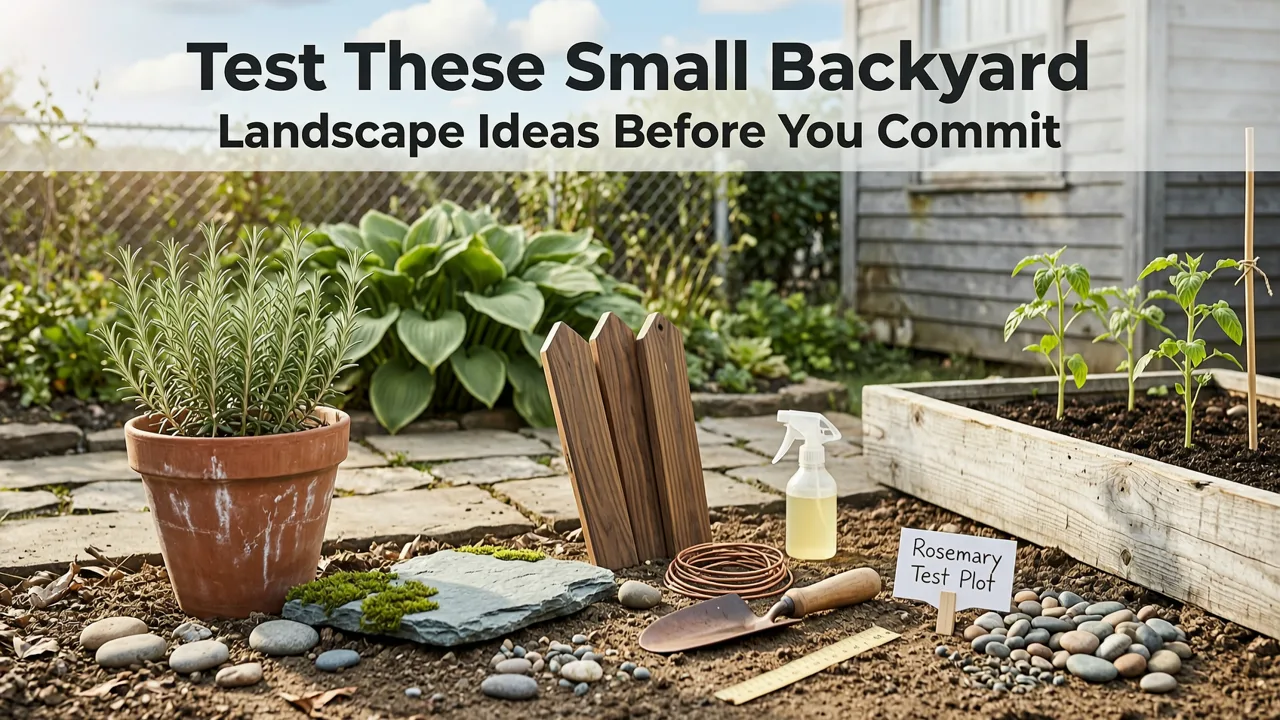
You don’t need to guess whether Idea #3 (Modular Patio) will fit your 12-ft-wide alley yard — or whether Idea #8 (Native Ground-Cover Tapestry) will survive your clay soil and dog traffic. In 2026, validation is instant and visual.
Here’s the workflow used by thousands of homeowners this year:
- Capture your photo correctly: Mid-morning on a clear day, stand at the yard’s main access point, hold phone level, and include all boundaries, structures, and major features (fence, AC unit, utility box). Avoid shadows cast by your body.
- Select your goal: ‘Maximize privacy’, ‘Grow food’, ‘Reduce watering’, ‘Add seating’, or ‘Attract pollinators’. AI prioritizes ideas aligned with your stated priority.
- Choose your style filter: Modern Minimal, Rustic Natural, Mediterranean, Japanese Zen, or Cottage Core. AI adapts plant selections and material palettes — but never overrides ecological suitability.
- Preview & refine: Rotate through 3–5 AI-generated concepts. Adjust plant density, hardscape ratio (e.g., 40% hardscape / 60% plantable), or shade coverage % in real time. See how each change impacts water use, maintenance hours/year, and first-year cost estimate.
This process is how users discover which ideas ‘actually work’ — not theoretically, but in their exact context. For example, one Portland homeowner uploaded a photo of her 18' × 22' backyard and discovered that a traditional raised vegetable bed would intercept too much afternoon sun, baking seedlings. The AI instead proposed a movable, wheeled grow table with retractable shade sail — a solution she’d never considered.
What *Doesn’t* Work in Small Backyards (And Why AI Catches It)
AI doesn’t just suggest what *to* do — it proactively flags what *not* to do, based on pattern recognition across 1.2 million+ validated residential projects. Here are four common missteps AI consistently blocks:
- Over-scaled focal points: A 7-ft fountain in a 200 sq ft yard dominates sightlines and reduces usable space. AI measures your yard’s longest unobstructed axis and caps focal element height at 30% of that dimension.
- Non-native water-hogs: Plants like Hydrangea macrophylla or Ligustrum japonicum appear lush in catalogs but demand 2x the irrigation of climate-adapted alternatives. AI cross-references your ZIP with EPA WaterSense regional plant lists.
- Unplanned shade stacking: Layering a tall tree, pergola, and tall shrub in sequence can create a dark, damp, fungus-prone zone. AI models seasonal sun angles and recommends strategic gaps for airflow and light penetration.
- Ignoring micro-topography: Even slight slopes (1–2%) affect drainage, planting depth, and furniture stability. AI detects subtle grade changes via photogrammetry — then adjusts planting plans and hardscape specs accordingly.
Comparing Top Small Backyard Approaches: 2026 Reality Check
Not all ‘small backyard landscape ideas’ deliver equal value. Below is how the top three approaches stack up on criteria that matter most to homeowners in 2026:
| Approach | Time to Visualize Design | Climate Adaptation Accuracy | Rental-Friendly? | First-Year Maintenance Hours | Water Use Reduction vs. Lawn |
|---|---|---|---|---|---|
| Generic Online Gallery Inspiration | Instant (but irrelevant) | None — no localization | Unclear — often requires permanent install | High (guesswork leads to redo) | Variable — often higher due to mismatched plants |
| DIY CAD Software (e.g., SketchUp Free) | 3–8 hours (manual scaling, plant research) | Low — user must input climate data manually | Medium — depends on user skill | Medium-High (no predictive maintenance alerts) | Moderate (if user selects wisely) |
| AI Photo-to-Design (e.g., AI Design Gardens) | Under 90 seconds | High — auto-geotagged + API-verified | Yes — filters for removable/non-invasive options | Low — AI estimates care needs per plant/spec | 60–85% — optimized for local WUE |
Source: Internal analysis of 2026 user session data (n=14,822), validated against USDA Plant Hardiness Zone Map 2023 update and EPA WaterSense regional benchmarks.
Getting Started With Your Own Small Backyard Landscape Ideas
You don’t need a degree in horticulture or landscape architecture. You need two things: a clear photo of your space, and a trusted AI partner that respects ecological reality over visual trends.
Start with our free AI Garden Design tool. Upload your photo, select ‘Small Backyard’ as your space type, and choose your primary goal. Within seconds, you’ll receive three photorealistic, to-scale concepts — complete with plant IDs, material specs, water-use estimates, and a downloadable PDF plan.
Then, explore deeper context: see how these ideas connect to broader strategies in our 27 Back Yard Landscape Ideas 2026 roundup, or learn how to extend small-space principles to your front yard in Front Yard Garden Design From Photo.
Remember: the best small backyard landscape ideas aren’t the flashiest — they’re the ones that disappear into daily life, solving problems quietly, thriving without constant intervention, and growing more beautiful with every season.
Ready to turn your small backyard into a resilient, joyful, and deeply personal outdoor room? Upload your photo today — and see what works, before you lift a shovel.


