

Small Patio Design Ideas 2026: Where Inspiration Meets Implementation
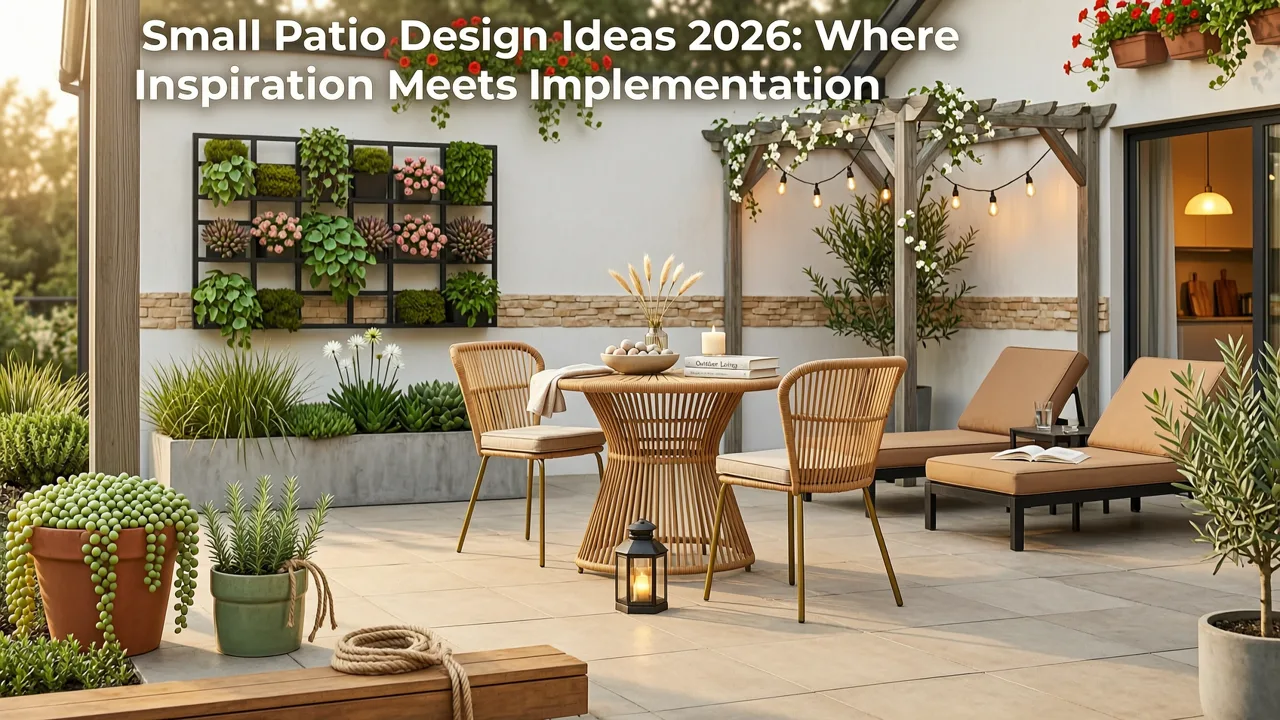
If you have a compact patio that feels more like a storage strip than a living space, you are not alone. Millions of homeowners in 2026 are turning to AI-powered visualization tools to test small patio design ideas 2026 on their actual slab, balcony, or courtyard before spending a dollar on furniture or plants. The best part: you can upload a single photo of your space and see realistic, style-specific transformations in under two minutes.
This guide walks you through the most effective small patio concepts trending this year, explains how AI-generated previews remove the guesswork, and shows you a repeatable process for turning a cramped outdoor patch into a functional, beautiful retreat. Whether your patio is four-by-six feet or a modest L-shaped slab, the ideas below will help you plan with confidence.
Why Small Patio Design Ideas in 2026 Demand a Different Approach
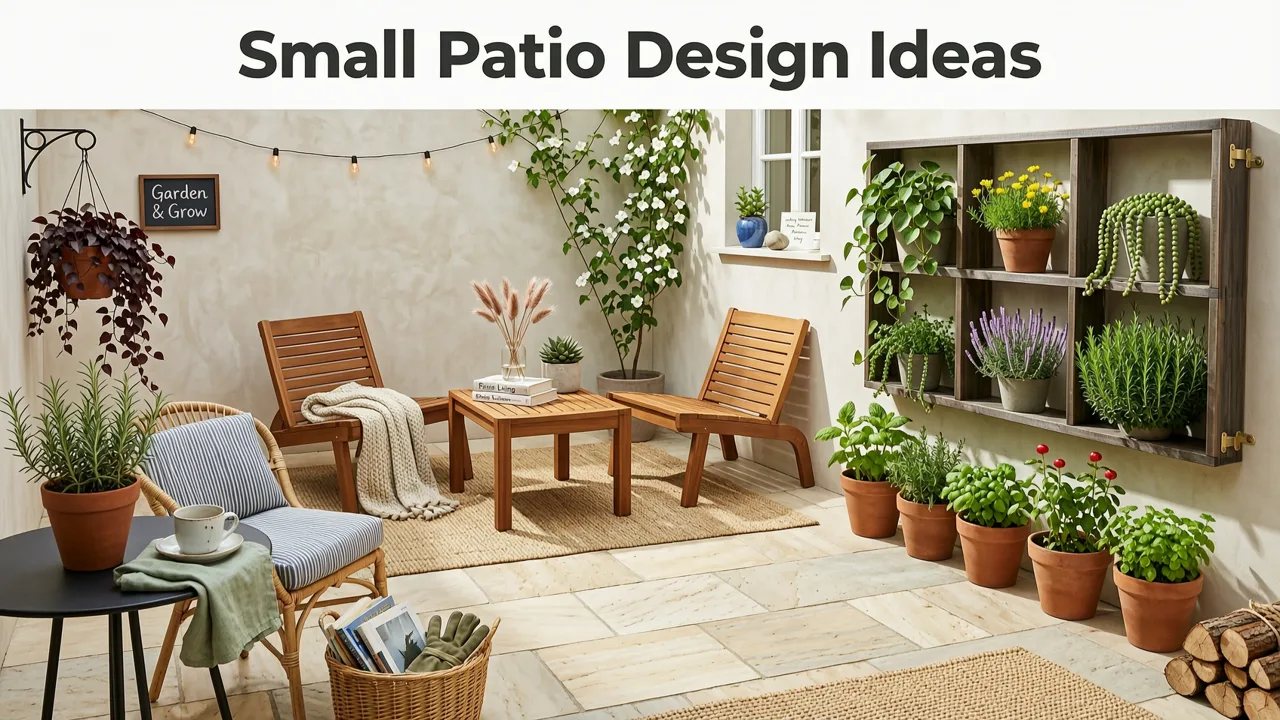
Small patios are unforgiving. A single oversized planter can block a walkway. A bold color choice can make a six-by-eight-foot space feel claustrophobic. In past years, homeowners relied on Pinterest boards and magazine clippings — aspirational images shot in sprawling California backyards that had nothing to do with a narrow urban slab in Chicago or a shaded London courtyard.
Tropical Apartment Patio Ideas: Privacy Solutions for Cozy Balconies
by Decor Like Dream
In 2026, the approach has shifted. The most successful small patio projects start with your space, not someone else's. AI landscape design tools now let you:
- Upload a real photo of your existing patio
- Select a design style — modern minimalist, Mediterranean, cottage garden, Japanese zen, and more
- See photorealistic renderings that respect your actual dimensions, lighting, and surrounding architecture
- Compare multiple directions side by side before committing to materials, plants, or furniture
This is not about replacing a landscape architect. It is about arriving at your first consultation — or your first trip to the garden center — with clarity instead of confusion. If you are also thinking about your front yard, you can explore front yard landscape ideas you can generate from a photo using the same visual-first method.
How AI Turns Your Patio Photo into a Realistic Design Concept
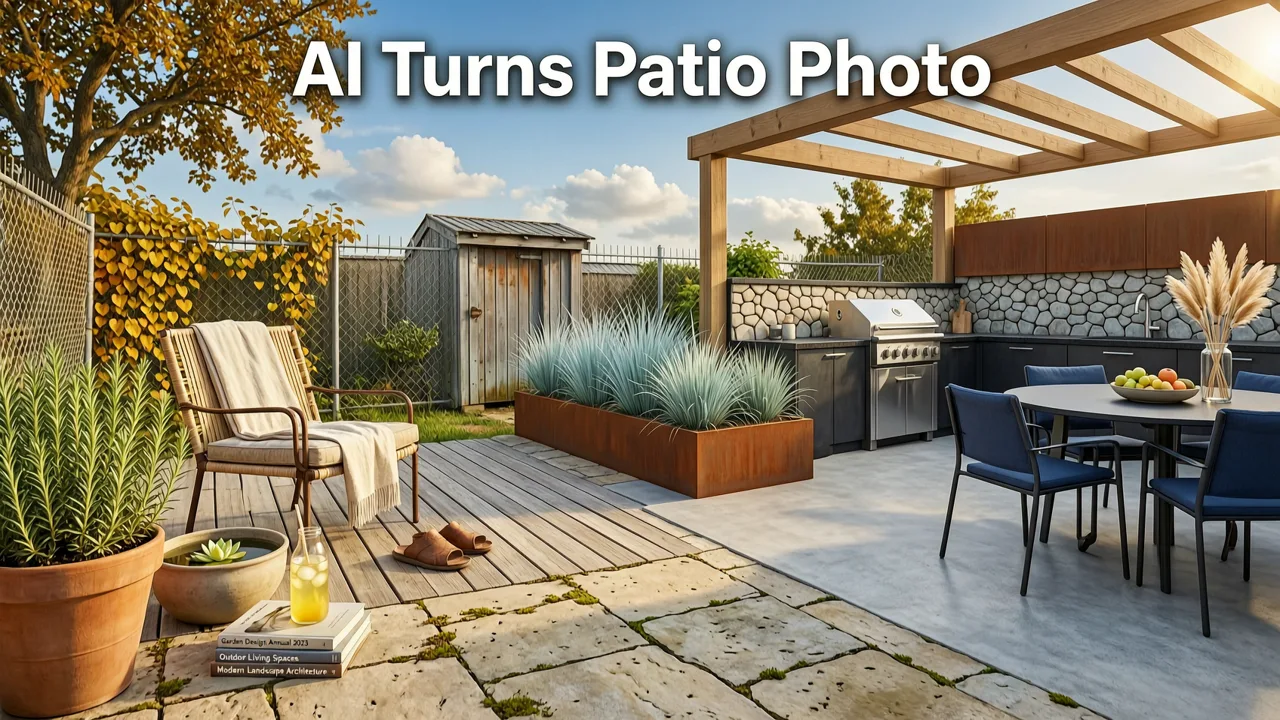
Modern AI patio design tools use advanced image-generation models trained on thousands of real landscape projects, horticultural databases, and architectural style guides. When you upload your photo, the system analyzes spatial proportions, existing structures, light direction, and surface materials. It then overlays design elements — planters, seating, lighting, ground cover — that are scaled correctly for your space.
The result is not a fantasy rendering. It is a grounded, buildable concept that shows you exactly what your patio could look like with a specific style applied. This technology follows the same responsible AI principles outlined in Google's AI responsibility guidelines, ensuring outputs are useful, transparent, and free from misleading distortions.
What Makes a Good Patio Photo for AI Processing?
Not all photos are equal. For the most accurate small patio design ideas 2026 rendering, follow these quick tips:
- Shoot in daylight. Overcast days work well because they eliminate harsh shadows that can confuse the AI.
- Capture the full space. Stand in the farthest corner and include as much of the patio as possible, along with adjacent walls, fences, or railings.
- Clear obvious clutter. Remove bikes, trash cans, and hoses so the AI can focus on the structural canvas.
- Include reference objects. A standard patio chair or potted plant in frame helps the AI gauge scale.
Top Small Patio Design Ideas 2026 (AI-Tested & Realistic)
Below are the concepts that consistently produce the strongest results when homeowners run them through AI visualization tools this year. Each idea is designed specifically for compact spaces and addresses the most common pain points: limited floor area, poor lighting, lack of privacy, and visual clutter.
1. The Vertical Green Wall Patio
When floor space is scarce, go up. A vertical garden wall transforms a blank fence or bare brick into a living tapestry without sacrificing a single square foot of usable patio. In 2026, AI renderings show this concept working best with a mix of trailing pothos, compact ferns, and small flowering herbs. Pair it with a single bistro set and a narrow runner rug, and even a four-by-five-foot patio feels like a garden room.
2. The Monochrome Minimalist Slab
Less is genuinely more on a small patio. This concept uses a restrained palette — think charcoal planters, light grey gravel, and a single statement tree in a oversized concrete pot. The AI-generated previews for this style consistently score high with urban homeowners because the clean lines make the space feel larger than it actually is. Add recessed LED strip lighting along the base of walls for evening ambiance.
3. The Cottage-in-a-Box Courtyard
For homeowners who love the romantic, layered look of English cottage gardens but lack the acreage, this idea compresses the charm into a tight footprint. AI tools render this style with climbing roses on a small trellis, lavender edging, a weathered wooden bench, and terra-cotta pots clustered at varying heights. The key is density without chaos — every plant earns its place.
4. The Japanese Zen Micro-Garden
A small patio is the ideal canvas for a Japanese-inspired design. Raked gravel or fine white sand, a single moss-covered stone, a compact maple in a low pot, and a bamboo water feature create a meditative retreat. AI renderings of this style are particularly effective because the system can show you exactly how the proportions will feel in your specific space, preventing the common mistake of overcrowding a zen concept.
5. The Multi-Level Deck & Planter Combo
If your patio slab is flat and featureless, consider adding visual height with a two-tier planter arrangement or a small raised deck section. AI design tools can show you how a six-inch raised platform with built-in seating and integrated planters transforms the spatial experience. This concept works especially well for L-shaped patios where one zone can serve as dining and the other as a lounging nook.
6. The Mediterranean Warmth Retreat
Warm terracotta tones, wrought-iron detailing, drought-tolerant lavender and rosemary, and a small mosaic-tile table define this style. In 2026, AI previews for Mediterranean patios are particularly popular in regions experiencing hotter summers, because the design naturally incorporates shade structures and heat-reflective light-colored surfaces. If you are also considering your broader backyard layout, you can design your backyard from a photo using AI to ensure the patio style flows into the rest of the space.
A Practical Comparison: 2026 Small Patio Styles at a Glance
Choosing a style is easier when you can compare the key attributes side by side. The table below summarizes the most popular small patio design ideas 2026 across the factors that matter most for compact spaces.
| Design Style | Best For | Key Materials | Plant Palette | Maintenance Level |
|---|---|---|---|---|
| Vertical Green Wall | Narrow urban patios, balconies | Modular planter panels, trellis | Pothos, ferns, trailing ivy, herbs | Moderate |
| Monochrome Minimalist | Modern homes, small city slabs | Concrete, gravel, steel | Single statement tree, ornamental grass | Low |
| Cottage-in-a-Box | Character homes, shaded courtyards | Reclaimed wood, terra-cotta | Roses, lavender, foxgloves, geraniums | High |
| Japanese Zen Micro | Quiet retreats, east-facing patios | Sand, stone, bamboo, maple | Moss, Japanese maple, hosta | Low to Moderate |
| Multi-Level Deck Combo | L-shaped patios, sloped sites | Composite decking, built-in planters | Mixed perennials, dwarf shrubs | Moderate |
| Mediterranean Warmth | Hot climates, sunny south-facing patios | Terracotta, mosaic tile, wrought iron | Rosemary, lavender, olive, bougainvillea | Low |
The 3-Step Process: From Photo to Finished Patio Plan
Knowing which style appeals to you is only half the battle. The real advantage of AI-powered design is that you can move from inspiration to a concrete plan in a single session. Here is the process that thousands of homeowners are using in 2026.
Step 1: Upload Your Real Patio Photo
Take a clear, well-lit photo of your current patio. Include the full space, adjacent walls, and any fixed features like doors, steps, or downspouts. Upload it to an AI patio design tool. The system will analyze the spatial geometry and prepare the canvas for design overlays.
Step 2: Choose Your Style and Generate Concepts
Select a design style that matches your home's architecture and your personal taste. The AI will generate multiple variations — different plant combinations, furniture layouts, color schemes, and material choices — all rendered onto your actual photo. This is where you discover which concepts truly work in your space versus which ones only look good in abstract inspiration images.
Step 3: Compare, Refine, and Export Your Plan
Review the generated concepts side by side. Most AI tools let you adjust individual elements — swap planters, change the rug, try a different seating arrangement. Once you land on a direction you love, export the rendering and use it as a reference when purchasing materials, selecting plants, or briefing a landscaper. You can also explore a free AI patio layout generator to test additional configurations before finalizing.
Common Small Patio Mistakes to Avoid in 2026
Even with the best ideas, compact patios can go wrong quickly. Here are the pitfalls AI visualization helps you sidestep before they become expensive regrets.
- Oversized furniture. A sectional that works in a spacious backyard will suffocate a small patio. AI renderings show you the exact footprint so you can choose pieces that fit.
- Too many plant species. Variety is the enemy of small spaces. Stick to three to five plant types for visual cohesion.
- Ignoring overhead space. A pergola, shade sail, or string lights draws the eye upward and makes a small patio feel expansive.
- Neglecting storage. Built-in benches with hidden storage keep cushions, tools, and cushions out of sight without adding freestanding clutter.
- Poor lighting planning. A single overhead bulb creates harsh shadows. Layer ambient, task, and accent lighting for a welcoming evening atmosphere.
Budget Considerations: What to Expect in 2026
One of the greatest advantages of testing small patio design ideas 2026 through AI is that you avoid costly trial and error. Here is a general sense of investment levels by approach:
- DIY refresh (paint, new planters, rearranged furniture): $200 – $800
- Mid-range upgrade (new surface material, built-in planters, quality seating): $1,500 – $5,000
- Full renovation (decking, pergola, integrated lighting, professional planting): $5,000 – $15,000+
Running your ideas through AI first means you know exactly what you are aiming for before you spend. That clarity alone can save hundreds — or thousands — of dollars in misplaced purchases and contractor change orders.
How to Get the Most from AI-Generated Patio Designs
AI is a powerful planning tool, but it works best when you guide it with clear intent. Keep these principles in mind:
- Be specific about your constraints. Note the square footage, sun exposure, and any HOA or rental restrictions before you begin.
- Test multiple styles. Do not commit to the first rendering. Compare at least three directions to see which truly resonates.
- Use renderings as a communication tool. Whether you are DIY-ing or hiring a pro, a visual reference eliminates miscommunication.
- Revisit seasonally. Your patio needs change with the seasons. Re-run your photo with different plant selections for spring, summer, and fall.
Frequently Asked Questions
Can AI patio design tools work for renters?
Yes. AI tools are especially valuable for renters because they let you visualize non-permanent changes — container gardens, outdoor rugs, freestanding screens — without committing to structural modifications. You can test ideas and move them with you when you leave.
Do I need design experience to use AI patio visualization?
No. The tools are built for everyday homeowners. You upload a photo, select a style, and the AI handles the spatial analysis, plant selection, and rendering. No design software skills or landscape architecture knowledge required.
How accurate are AI-generated patio renderings?
In 2026, AI renderings are highly realistic for planning purposes. They accurately reflect proportions, lighting conditions, and style aesthetics. They are not engineering blueprints, but they provide a reliable visual foundation for purchasing decisions and contractor conversations.
What if my patio is extremely small — like a balcony?
The smaller the space, the more valuable AI visualization becomes. Even a two-by-three-meter balcony can be transformed with the right plant selections, vertical elements, and compact furniture. AI tools scale every element to your actual dimensions so nothing feels overcrowded.
Start Planning Your Small Patio Transformation Today
The gap between a cramped, forgettable patio and a stylish, functional outdoor room has never been smaller. With the small patio design ideas 2026 outlined above and AI-powered visualization at your fingertips, you can explore, compare, and commit to a design direction with total confidence — all from a single photo of your space. Upload your patio image, test a few styles, and see what your outdoor area can truly become before you spend a single dollar. Your perfect small patio is one upload away.


