

Small Patio Design with Plants — Why Visualization Changes Everything
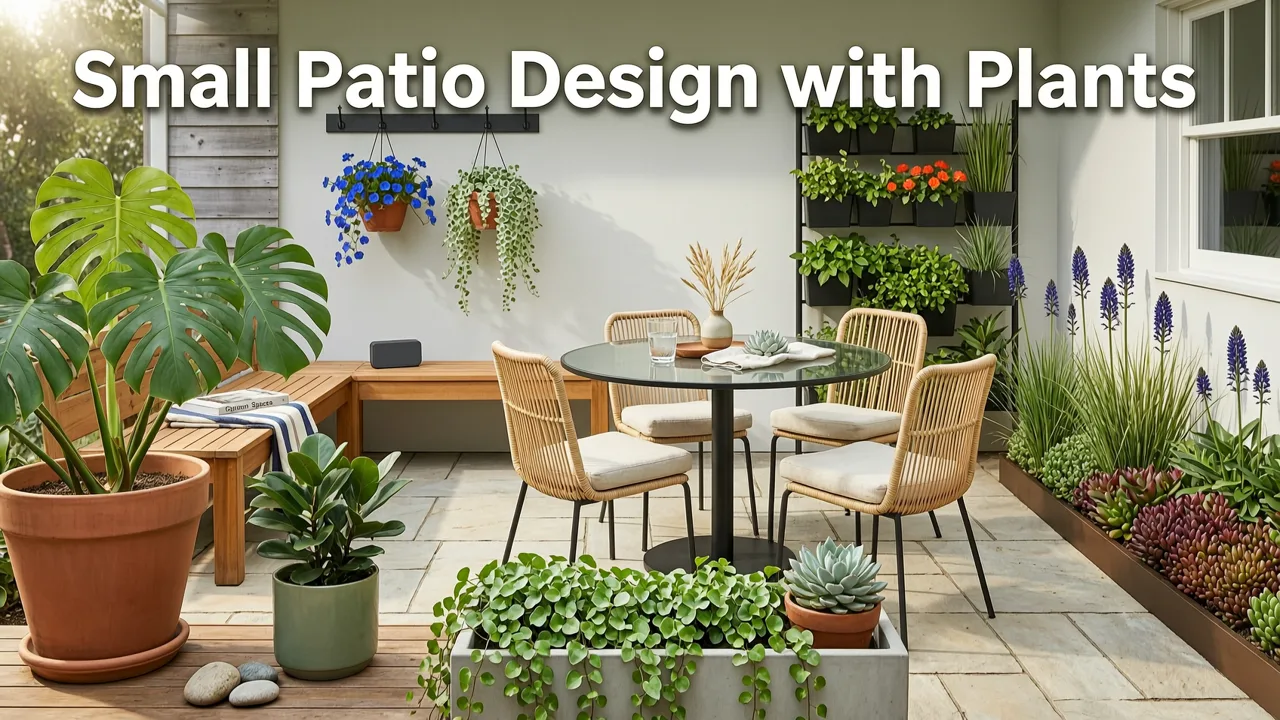
If you have ever stared at a cramped patio and wondered whether a few potted plants could actually transform it, you already know the hardest part of small-space gardening is not picking the plants — it is committing to a direction. A small patio design with plants looks simple in theory, but every square foot counts, and the wrong layout can make even a sunny corner feel cluttered or lifeless.
The short answer: the most effective small patio designs in 2026 combine vertical layering, strategic container placement, and a restrained plant palette that repeats for visual rhythm. The faster answer: an AI design tool can show you dozens of realistic layouts from a single photo of your patio before you spend a dollar on soil or plants.
This guide walks you through the principles behind a high-impact small patio design with plants, the plant types that perform best in tight spaces, and how to use an AI landscape visualizer to compare options side by side — so you can move from guesswork to a confident plan in minutes.
Tropical Apartment Patio Ideas: Privacy Solutions for Cozy Balconies
by Decor Like Dream
How to Approach a Small Patio Design with Plants
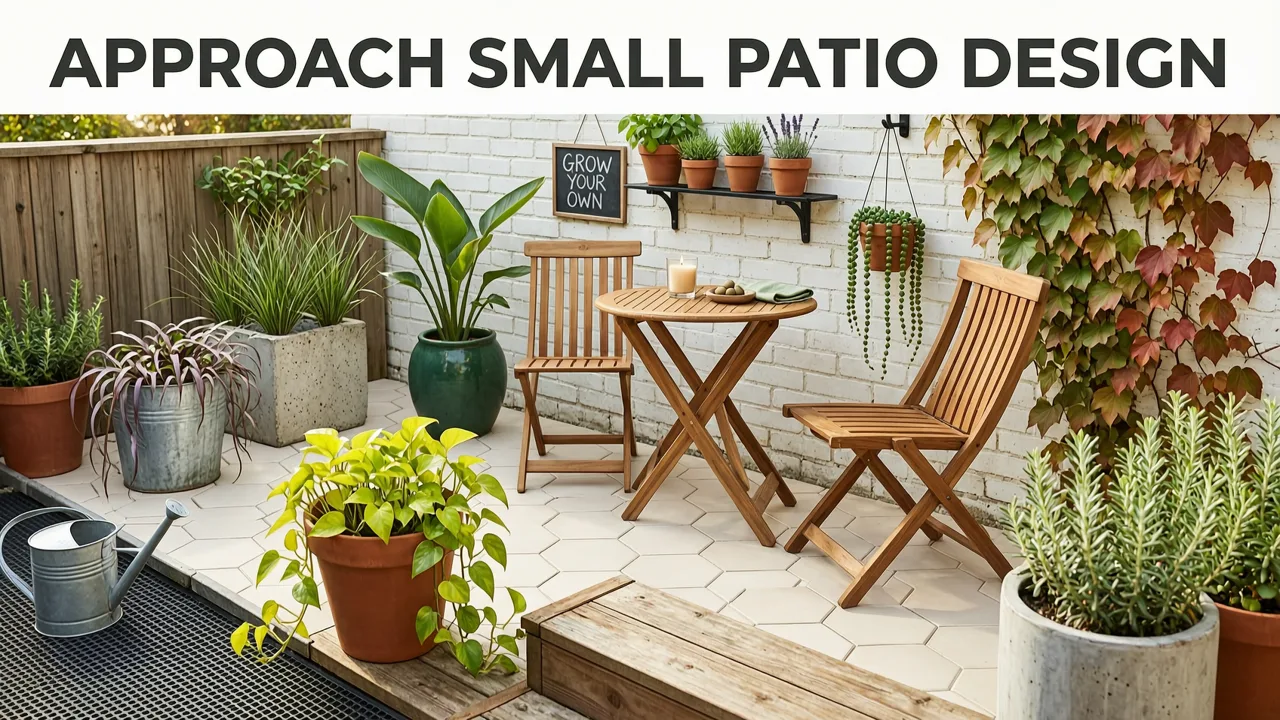
Designing a small patio is a constraint problem. You have limited floor area, usually limited sunlight, and often shared walls or railings that affect airflow and light. The goal is not to cram in as many plants as possible, but to create a layered, intentional composition that feels larger than it is.
Start with a Photo, Not a Sketch
Most homeowners start with a rough sketch or a Pinterest board. Both are useful, but neither tells you how a specific fern will look against your actual brick wall or how a row of tall grasses will frame your existing seating. Upload a photo of your patio to an AI design tool and you get an instant baseline — a realistic rendering that accounts for your actual proportions, light conditions, and existing hardscape.
This is where tools like the Free Backyard Design App become practical. You choose a style, upload your photo, and preview multiple plant-forward layouts without signing up or installing software.
Define the Zones Before You Pick Plants
Even a six-by-eight-foot patio benefits from zoning. Think in three layers:
- Seating zone: Where chairs, a bistro set, or a bench will live.
- Green zone: Where the majority of plants, containers, or vertical elements will go.
- Transition zone: The edges, railings, or walls where trailing plants, wall planters, or screening grasses soften the boundary.
Once you know your zones, plant selection becomes a filtering exercise rather than an open-ended browse through a garden center.
Five Small Patio Design Styles That Work with Plants
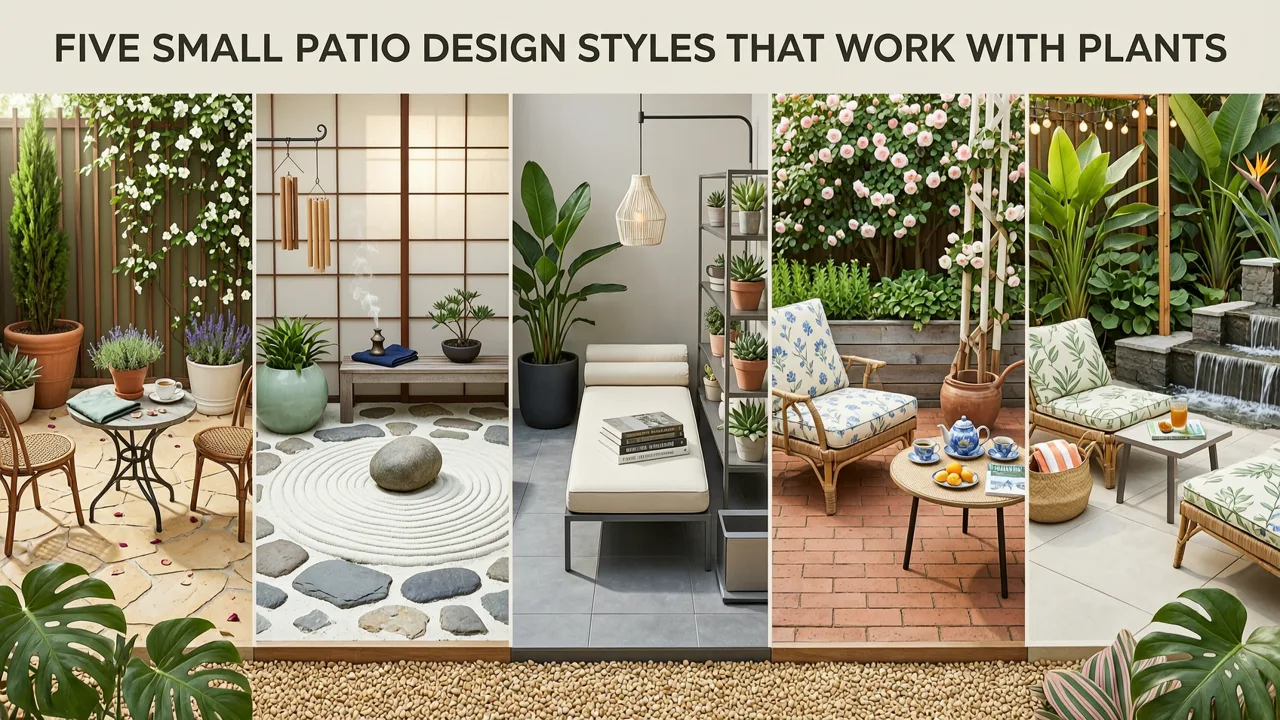
Not every design style translates well to a small patio. Dense cottage gardens, for example, can feel overwhelming in a tight footprint. The styles below are proven to read as intentional and spacious, even in compact outdoor areas.
1. Modern Minimalist with Architectural Plants
Think clean lines, a limited color palette, and three to five statement plants. Agave, snake plant, and Japanese blood grass thrive in containers and provide sculptural form without demanding constant pruning. Pair them with a single large planter and a slim bench, and the patio reads as designed rather than decorated.
2. Mediterranean Courtyard
Terracotta pots, lavender, rosemary, and a small citrus tree in a half-barrel. This style leans on fragrance and texture, and the plants are drought-tolerant — a practical advantage if your patio is fully exposed.
3. Urban Jungle Balcony or Patio
Layered height, trailing pothos, monstera in sheltered corners, and a vertical wall planter. The key is repeating green tones so the space feels cohesive rather than chaotic.
4. Cottage Micro-Garden
Yes, cottage style can work at small scale — if you restrict the palette. Choose two or three flowering perennials such as geraniums, nepeta, and dwarf lavatera, and repeat them across containers. Add one trailing element like ivy or lobelia over the railing.
5. Japanese-Inspired Serenity
A single Japanese maple in a large pot, moss or mondo grass as ground cover in shallow trays, and a small water feature. The restraint is the design.
If you want to compare how these styles look against your own patio photo, the 25 Backyard Design Ideas 2026 guide includes AI-generated examples that map closely to the styles above.
Best Plants for a Small Patio Design
Plant selection for a small patio follows a different logic than a full backyard border. You are choosing for container performance, visual impact at close range, and low maintenance in a high-visibility spot.
| Plant Type | Examples | Best For | Light Needs |
|---|---|---|---|
| Architectural focal plants | Agave, Dracaena, Japanese Maple | Corner statement pieces | Full sun to partial shade |
| Trailing plants | Ivy, Pothos, Lobelia, Creeping Jenny | Railing edges, wall planters, shelves | Partial shade to full sun |
| Compact flowering perennials | Geraniums, Nepeta, Dwarf Lavender | Container color repeats | Full sun |
| Ornamental grasses | Japanese Blood Grass, Blue Fescue, Carex | Soft screening, movement | Full sun to partial shade |
| Herbs for small pots | Rosemary, Thyme, Basil, Mint | Kitchen-adjacent patios | Full sun |
For a deeper look at how to match plants to your specific light, soil, and climate conditions, the Best Plants for Backyard Landscape selection guide covers sun exposure mapping and drainage considerations that apply equally to patio containers.
Layout Principles That Make a Small Patio Feel Larger
The difference between a cramped patio and a charming one is almost always layout. Apply these principles before you buy a single pot.
Use Vertical Space First
Walls, railings, and fence lines are free square footage. A slim wall planter, a hanging pocket garden, or a narrow trellis with clematis adds greenery without occupying floor area. Vertical elements also draw the eye upward, which makes the patio feel taller and more open.
Repeat, Do Not Multiply
Three identical terracotta pots with the same trailing plant read as a designed composition. Seven different pots with seven different plants read as clutter. Repetition creates rhythm, and rhythm creates the perception of space.
Leave Negative Space
Resist the urge to fill every corner. A clear pathway from the door to the seating area, even if it is only eighteen inches wide, gives the patio breathing room and makes it feel considered rather than stuffed.
Anchor with One Large Container
A single oversized planter — eighteen inches or more in diameter — grounds the design more effectively than a cluster of small pots. It also retains moisture more consistently, which reduces watering frequency.
How AI Patio Design Tools Work in 2026
The AI tools available today use image-to-image generative models trained on thousands of landscape photographs and planting plans. You upload a photo, select a style or describe your preferences, and the model produces a photorealistic rendering that respects your existing hardscape, proportions, and sight lines.
Under the hood, these models rely on diffusion-based architectures similar to those documented in the OpenAI documentation, combined with spatial understanding layers that preserve architectural geometry. Responsible AI practices, as outlined in Google AI guidance, ensure the outputs are used as design starting points rather than guaranteed planting prescriptions.
What to Expect from an AI-Generated Patio Layout
- A realistic preview of how plants, containers, and features will look in your actual space.
- Multiple style variations to compare — modern, cottage, Mediterranean, and more.
- A starting point for plant selection and container sizing.
- A visual reference you can share with a landscaper or nursery professional.
AI outputs are not a replacement for horticultural knowledge. They are a visualization layer that helps you make faster, more confident decisions before you invest in materials.
Step-by-Step: Create Your Small Patio Design with AI
- Photograph your patio. Stand in the center or at the main entry point. Capture the full space including walls, railings, and existing furniture if you plan to keep it.
- Upload to an AI design tool. Choose a style that matches your home's architecture and your personal preference.
- Generate multiple variations. Run at least three to four styles so you can compare how different plant palettes and layouts interact with your space.
- Identify the plants you like. Note the species and container types in the renderings you prefer.
- Verify plant suitability. Cross-reference your shortlisted plants against your patio's sun exposure, wind conditions, and hardiness zone.
- Finalize your layout. Use the AI rendering as a reference when purchasing plants and containers, or share it with a professional for implementation.
If you want to see how this process looks in practice, the Backyard Landscape Ideas Before and After visual guide walks through real transformations powered by AI-generated concepts.
Common Mistakes to Avoid in Small Patio Planting
Even experienced gardeners make predictable errors when scaling down to a patio. Watch for these:
- Overcrowding containers. Two or three plants per large pot is usually the maximum. More than that and they compete for water and nutrients.
- Ignoring mature plant size. A small nursery perennial can triple in volume within a season. Check mature spread before buying.
- Using too many pot sizes. Stick to two or three container sizes for a unified look.
- Forgetting drainage. Every container needs a drainage hole. No exceptions.
- Choosing plants purely for bloom color. Foliage texture and form matter more at patio scale, where you view plants from inches away.
Seasonal Adjustments for Year-Round Patio Appeal
A small patio design with plants should not look its best for only eight weeks in June. Plan for seasonal rotation:
- Spring: Bulbs in containers, fresh annuals, and emerging perennials.
- Summer: Flowering annuals, herbs, and tropicals in peak foliage.
- Autumn: Ornamental grasses, heather, and late-blooming sedum.
- Winter: Evergreen structural plants, winter heath, and container-friendly conifers.
Keeping a core of evergreen architectural plants year-round ensures the patio never looks empty, while seasonal swaps in smaller containers add variety without requiring a full redesign.
Frequently Asked Questions
What is the best plant layout for a very small patio?
Use a single large anchor container in one corner, vertical planters along the longest wall or railing, and one or two medium pots flanking the seating area. This creates height, depth, and balance without consuming floor space.
Can I use an AI tool to design a balcony patio, not just a ground-level patio?
Yes. AI design tools work from any photo — ground-level patios, raised decks, and balcony spaces all render accurately as long as the photo captures the full area and its boundaries.
How many plant varieties should I use on a small patio?
For a cohesive look, limit yourself to four to six plant species and repeat them across containers. More variety tends to read as clutter at small scale.
Do AI-generated patio designs account for my climate and hardiness zone?
AI tools generate visual concepts based on style and spatial logic, not horticultural data. Always verify that the plants shown in a rendering are suitable for your hardiness zone and local conditions before purchasing.
What is the most cost-effective way to start a small patio garden?
Begin with two or three large containers, a vertical wall planter, and a core of three evergreen or structural plants. Add seasonal annuals over time. Visualize the layout with an AI tool first to avoid buying plants that do not fit the design.
Start Designing Your Small Patio Today
A small patio design with plants does not require a large budget, a green thumb, or a professional landscaper. It requires a clear plan — and the fastest way to build that plan is to see it before you build it. Upload a photo of your patio, explore AI-generated layouts in multiple styles, and walk away with a design direction you can execute with confidence.


