

Why Small Balcony Garden Ideas Need AI Validation in 2026
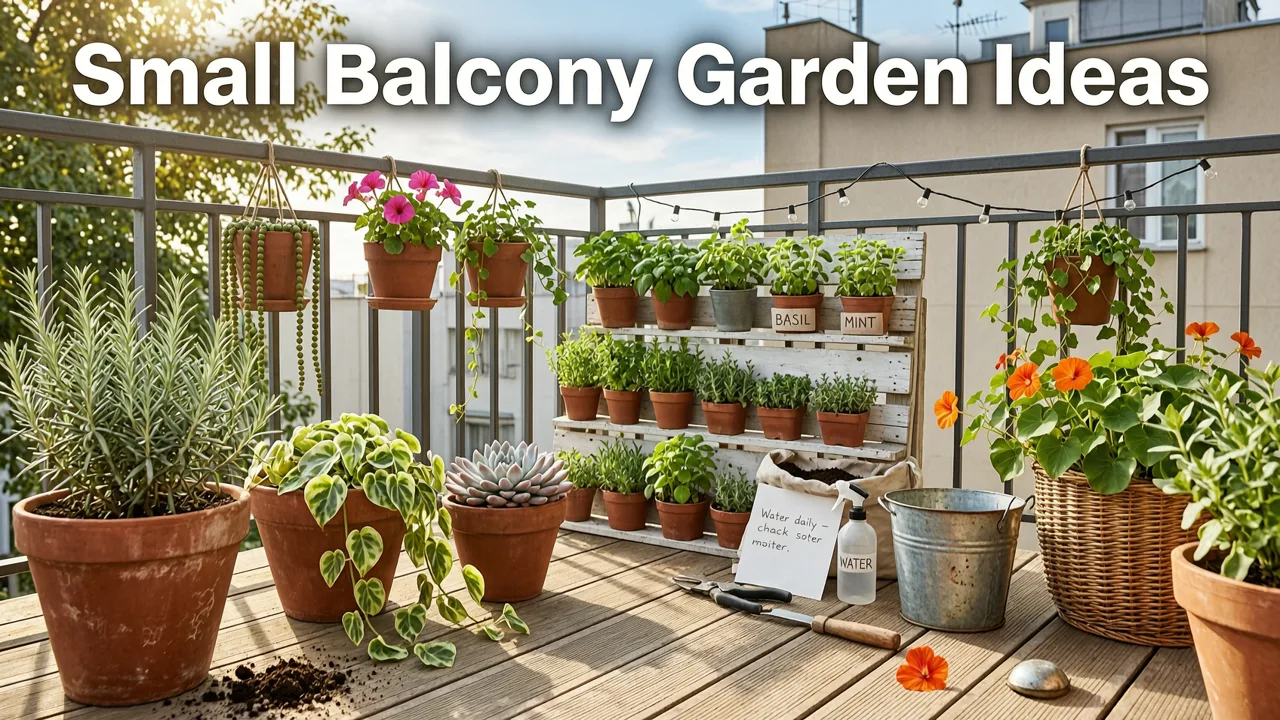
If you have ever stood on a cramped balcony—phone in hand, staring at a bare railing, a single terracotta pot, or a concrete slab that never gets enough afternoon sun—and wondered what it could actually become, you are not alone. Millions of apartment dwellers and renters face the same problem every spring: they want a lush, functional outdoor retreat, but the space is tiny, the light is unpredictable, and one wrong plant purchase means wasted money and a dead leaf pile by July.
The good news is that in 2026, you no longer have to guess. Small balcony garden ideas can now be generated, compared, and refined from a single photo of your actual balcony using AI-powered design tools like AI Design Gardens. Upload a picture, choose a style, and see realistic plant layouts, vertical systems, and seating arrangements before you spend a single dollar on soil or containers. This guide walks you through the most effective small balcony garden ideas that actually work this year, explains how AI makes the planning process faster and more accurate, and shows you how to avoid the mistakes that kill tiny-space gardens every season.
How AI Transforms Your Balcony Photo Into Actionable Garden Concepts
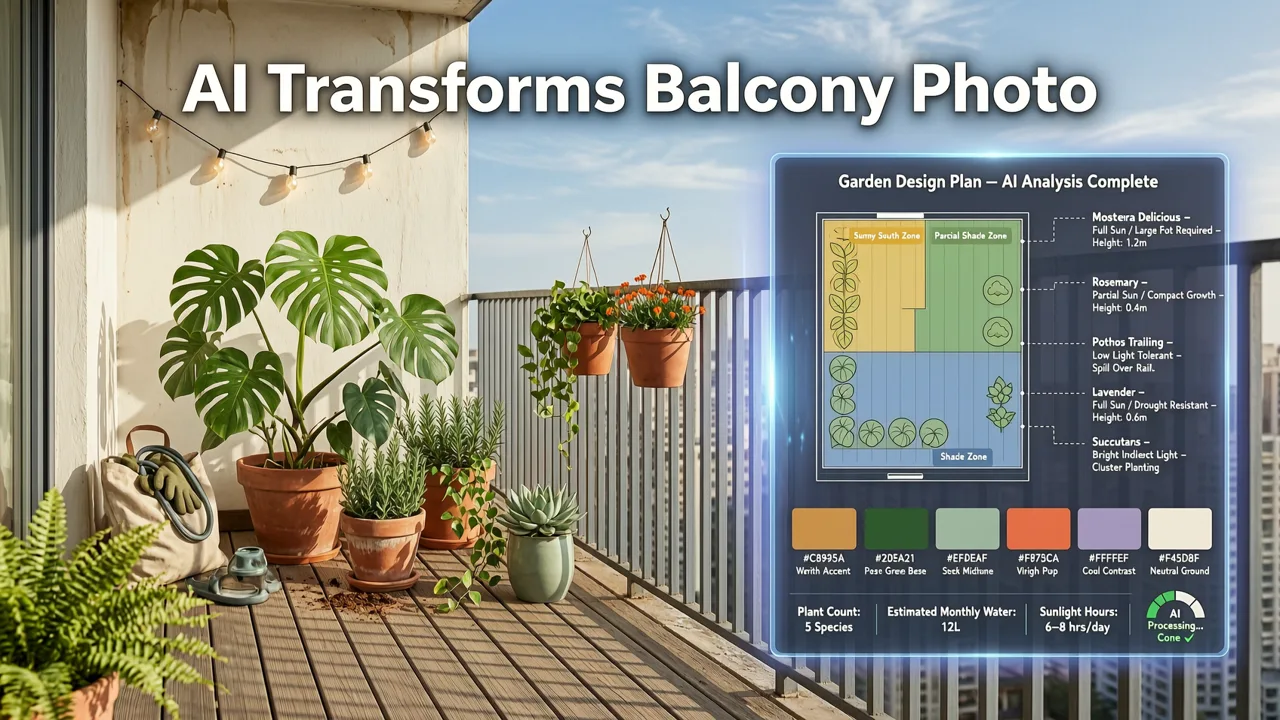
Traditional balcony planning relies on scrolling through Pinterest boards, hoping a photo of someone else's tenth-floor terrace will translate to your fourth-floor east-facing ledge. AI-driven design changes that equation entirely. When you upload a photo of your balcony into an AI landscape tool, the system performs several critical analyses that a static mood board simply cannot match.
58 Nicest Balcony Garden Ideas
by Balcony Garden Web
1. Spatial and Light-Aware Scene Reconstruction
Modern AI models analyze the geometry of your balcony—railing height, floor area, wall adjacency, and overhead obstructions—alongside estimated light exposure based on orientation and surrounding structures. The result is a design concept that respects your actual dimensions rather than an idealized version of them. A railing-mounted herb garden that looks perfect in a magazine photo may be completely impractical on a balcony with a solid glass barrier, and AI flags that constraint before you order the wrong planters.
2. Style-Adaptive Concept Generation
Whether you prefer a Mediterranean terracotta aesthetic, a minimalist Japanese zen look, or a productive edible balcony, the AI generates multiple style variants from the same base photo. You can compare a lush tropical container arrangement side by side with a low-maintenance succulent wall and see which one suits your light conditions, your lifestyle, and your building's aesthetic rules. This comparative approach is what separates informed planning from impulse buying.
3. Plant Compatibility and Maintenance Forecasting
Beyond aesthetics, AI tools cross-reference plant species with your balcony's microclimate—wind exposure, shade patterns, and temperature fluctuations common on elevated structures. A rooftop balcony on the fifteenth floor faces dramatically different conditions than a ground-level patio, and the plant palette needs to reflect that. Tools like AI Design Gardens surface species that will genuinely thrive in your specific conditions, not just the ones that photograph well.
12 Small Balcony Garden Ideas That Actually Work in 2026
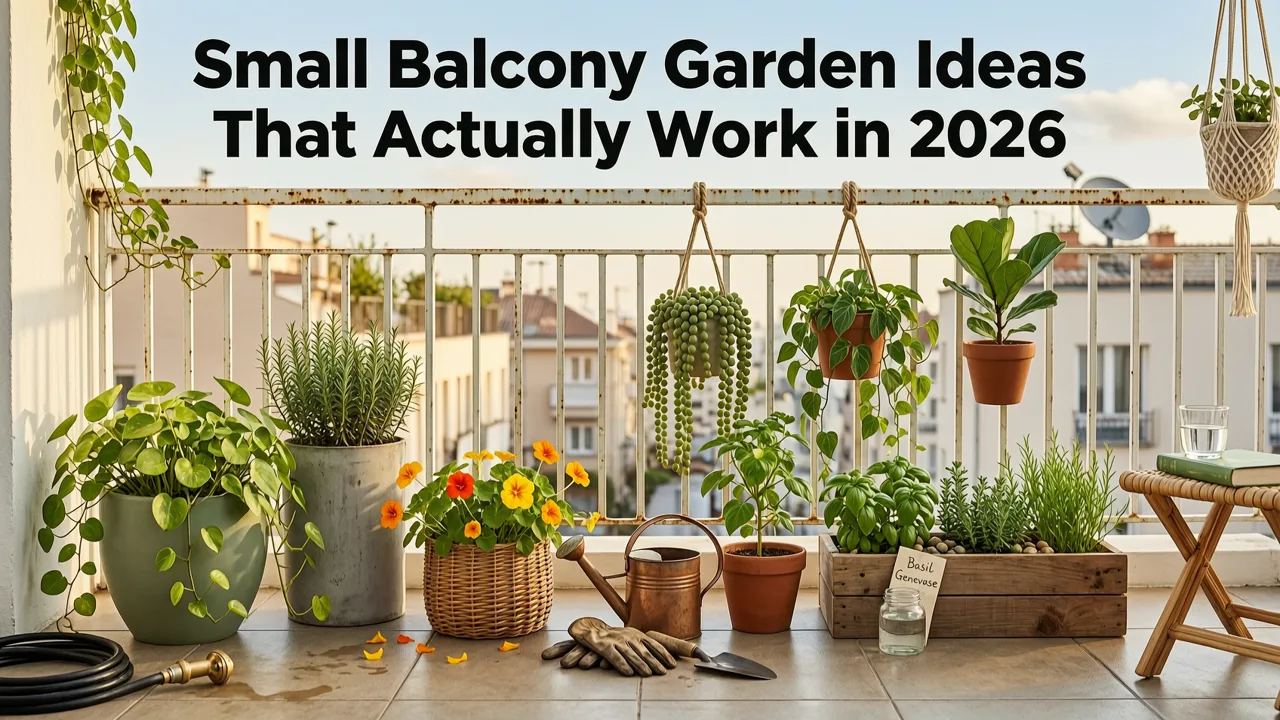
Below are the most effective small balcony garden ideas, organized by the primary challenge each one solves. Each concept can be previewed using AI visualization before you commit to materials or plants.
1. The Vertical Pocket Garden: Maximize Wall Space, Not Floor Space
When your floor area measures four feet by six feet, every square foot of vertical surface is real estate you cannot afford to waste. Vertical pocket gardens use fabric or modular plastic planters mounted on walls or railings to grow herbs, leafy greens, and compact flowering plants upward instead of outward. AI design tools can map pocket placement to your balcony's light gradient, ensuring shade-tolerant ferns land on the north side and sun-loving basil occupies the brightest zone.
2. The Railing Herb Strip: Functional, Fragrant, and Compact
A row of railing-mounted planters transforms an unused boundary into a productive herb garden. Chives, thyme, oregano, and compact basil varieties thrive in shallow containers with good drainage, and their placement at railing height keeps them accessible for daily harvesting. The key is choosing containers with secure mounting hardware—wind on upper floors can turn unsecured planters into hazards.
3. The Tiered Container Tower: Three Levels, One Footprint
A tiered plant stand or stacked container system lets you grow three to five times the plant volume in the same floor footprint. This is especially effective for trailing plants like cherry tomatoes, nasturtiums, or string-of-pearls succulents that cascade downward, creating visual depth. AI-generated concepts can show you exactly how a tiered arrangement will look against your specific railing and wall colors before you build it.
4. The Hanging Basket Canopy: Overhead Greenery Without Floor Loss
Hanging baskets suspended from overhead brackets or ceiling hooks add greenery at eye level and above without consuming any usable floor space. Trailing lobelia, creeping jenny, and compact fuchsias create a canopy effect that makes a small balcony feel enclosed and garden-like. In 2026, lightweight self-watering hanging baskets have made this approach practical even for renters who cannot drill into ceilings—tension-mounted hooks handle the load.
5. The Edible Micro-Balcony: Food Production in Under 10 Square Feet
You do not need a backyard to grow food. A well-planned edible balcony using compact varieties of tomatoes, peppers, lettuce, and herbs can produce a meaningful weekly harvest from as little as ten square feet of container space. The secret is intensive succession planting—sowing new seeds every two to three weeks so that as one crop finishes, the next is ready. AI tools that match plants to your balcony's light and wind conditions, like those referenced in guides on best plants for backyard spaces, are equally valuable for balcony-scale edible planning.
6. The Zen Gravel and Moss Tray: Low-Maintenance Calm
Not every balcony garden needs to be lush and flowering. A shallow tray filled with fine gravel, a few carefully placed moss-covered stones, and a single small bonsai or Japanese maple creates a meditative focal point that requires almost no maintenance. This concept works especially well on shaded balconies where traditional flowering plants struggle.
7. The Privacy Screen Garden: Green Walls That Block Neighbors
A trellis or modular screen panel planted with fast-growing climbers like clematis, jasmine, or ivy creates a living privacy wall in a single season. On balconies where you can see directly into a neighbor's unit, this approach replaces awkward sightlines with greenery. AI-generated before-and-after comparisons—similar to those explored in backyard landscape before-and-after guides—let you preview how a privacy screen will change the feel of your space at full growth.
8. The Succulent Shelf: Drought-Tolerant Beauty for Forgetful Waterers
A narrow floating shelf dedicated to an arrangement of succulents—echeveria, sedum, haworthia, and sempervivum—delivers sculptural beauty with minimal watering demands. This is the ideal balcony garden for frequent travelers or anyone who has killed plants through underwatering. Succulents tolerate the drying wind common on elevated balconies better than almost any other plant category.
9. The Compact Seating Nook: One Chair, Two Pots, One Rug
Sometimes the best small balcony garden idea is not about plants at all—it is about creating a usable outdoor room. A single folding bistro chair, two large statement pots with ornamental grasses or dwarf conifers, and an outdoor-rated rug transform a forgotten slab into a destination. AI design tools can stage furniture and plant combinations in your actual balcony photo so you can see the complete composition before buying anything.
10. The Butterfly and Pollinator Balcony: Ecology in a Tiny Footprint
Even a small balcony can support pollinators. Compact nectar-rich flowers like lavender, verbena, marigolds, and dwarf buddleia attract butterflies and bees in urban environments. Research from bodies such as Google's AI responsibility initiatives highlights how AI can model ecological impact at micro-scales, helping you choose plant combinations that support local pollinator corridors even at balcony height.
11. The Seasonal Swap System: Four Looks, One Balcony
Rather than committing to a single planting scheme, design your balcony around a modular container system that you swap seasonally. Spring bulbs give way to summer herbs, which transition to autumn ornamental kale and winter heather. AI visualization lets you preview all four seasonal configurations from a single photo, so you can plan the entire year's planting calendar before the first purchase.
12. The Lighting-Integrated Garden: Greenery That Glows
Integrated solar LED strips woven through railing planters or wrapped around a vertical garden structure extend your balcony's usability well into the evening. In 2026, solar-powered grow-light planters combine illumination for ambiance with supplemental light for shade-challenged plants, solving two problems with a single installation.
How to Use AI Design to Plan Your Small Balcony Garden Step by Step
Planning a small balcony garden with AI follows a straightforward workflow that saves time, money, and frustration compared to traditional trial-and-error approaches.
- Photograph your balcony from a central, elevated angle. Capture the railing, floor, walls, and any overhead structures in a single frame. Natural daylight produces the most accurate AI renderings.
- Upload the photo to an AI landscape design platform such as AI Design Gardens. The system reconstructs your space in three dimensions and identifies key constraints like light zones and usable area.
- Select a style direction. Most platforms offer multiple aesthetic presets—Mediterranean, modern minimalist, cottage, tropical, zen, edible, and others. Each preset adjusts plant species, container styles, and layout logic.
- Generate and compare multiple concepts. The AI produces several design variants from the same photo. Review them side by side to evaluate which layout maximizes your space, suits your maintenance capacity, and matches your aesthetic preferences.
- Refine and finalize. Adjust plant selections, container placements, and features based on the AI's recommendations. Export a planting list and layout plan to guide your purchases.
This workflow is equally effective for other small outdoor spaces. If you also have a patio to plan, the same AI approach applies—see our guide on patio layout ideas from photo for a parallel process. And if your outdoor space is slightly larger than a balcony but still tight, small backyard landscape ideas follow the same AI-validated principles at a larger scale.
Common Mistakes to Avoid When Planning a Small Balcony Garden
Even with the best ideas, small balcony gardens fail when planners overlook the unique constraints of elevated, compact outdoor spaces. Here are the most frequent errors and how AI design helps you sidestep them.
| Mistake | Why It Fails | How AI Prevents It |
|---|---|---|
| Buying sun-lovers for a shaded balcony | Plants stretch, fade, and die within weeks | AI maps light zones to your photo and flags incompatible species |
| Overcrowding the floor with too many pots | Space becomes unusable and plants compete for resources | AI optimizes container count and placement to your exact dimensions |
| Ignoring wind exposure on upper floors | Tall plants topple, soil dries rapidly, delicate foliage tears | AI accounts for elevation and suggests wind-resistant species and secure mounting |
| Choosing heavy terracotta on weight-restricted balconies | Structural load limits may be exceeded | AI recommends lightweight alternatives that match the desired aesthetic |
| Planting invasive climbers without containment | Species escape containers and damage building structures | AI flags aggressive growers and suggests contained alternatives |
Choosing the Right Plants for Your Balcony's Specific Conditions
Plant selection is where most small balcony gardens succeed or fail. The conditions on a balcony—elevated wind, reflected heat from building surfaces, limited soil volume, and variable light—create a microclimate that differs significantly from ground-level gardening. Here is a quick-reference framework for matching plants to common balcony conditions.
Full Sun Balconies (South or West Facing, 6+ Hours of Direct Light)
Lavender, rosemary, thyme, cherry tomatoes, dwarf citrus, bougainvillea, geraniums, and ornamental grasses like fountain grass thrive in these conditions. Choose light-colored containers to reduce root-zone heat.
Partial Shade Balconies (East Facing or Filtered Light, 3–5 Hours of Direct Light)
Ferns, hostas (in large enough containers), impatiens, begonias, hydrangeas (compact varieties), and most herbs like parsley, mint, and chives perform well. This is the most versatile light category for small balconies.
Deep Shade Balconies (North Facing or Fully Overhung, Under 3 Hours of Direct Light)
Moss, ferns, cast iron plant, peace lily, and trailing pothos are among the few options that thrive here. Focus on foliage texture and green tone variation rather than flowers.
High-Wind Balconies (Upper Floors, Exposed Corners)
Choose low, flexible, deep-rooted species: ornamental grasses, sedum, creeping thyme, and dwarf conifers. Avoid tall, top-heavy flowering plants and always secure containers with brackets or weighted bases.
Why Seeing Your Balcony Design Before You Build Matters
The single most impactful change in small balcony garden planning over the past two years has been the shift from abstract imagination to visual preview. When you can see a photorealistic rendering of your own balcony—with the exact planters, plants, and layout you are considering—the gap between intention and execution narrows dramatically. You stop buying plants on impulse. You stop ordering containers that look wrong when they arrive. You stop hiring landscapers and describing your vision in words that get misinterpreted.
AI-powered visualization tools grounded in responsible development practices—guided by frameworks like those outlined in OpenAI's documentation—have made this capability accessible to every homeowner and renter, not just those who can afford a professional landscape architect. The technology is not a replacement for gardening knowledge; it is a force multiplier for it. It lets you test more ideas in less time and commit to the ones that will genuinely work in your specific space.
Final Thoughts: Start With a Photo, Not a Purchase
Small balcony garden ideas are abundant, but the ones that succeed are the ones validated against your actual space—your light, your wind, your dimensions, and your lifestyle. In 2026, AI design tools make it possible to test dozens of concepts from a single photograph before spending money on a single bag of potting soil. Whether you want an edible herb station, a zen retreat, a pollinator waypoint, or simply a green corner to drink your morning coffee in, the path starts the same way: take a photo, upload it, and let the design show you what is possible.
Ready to see your balcony transformed? Upload a photo of your space to AI Design Gardens today and preview your small balcony garden ideas in minutes—not seasons.


