

Balcony Garden AI Designer – Small Space Landscaping Made Easy in 2026
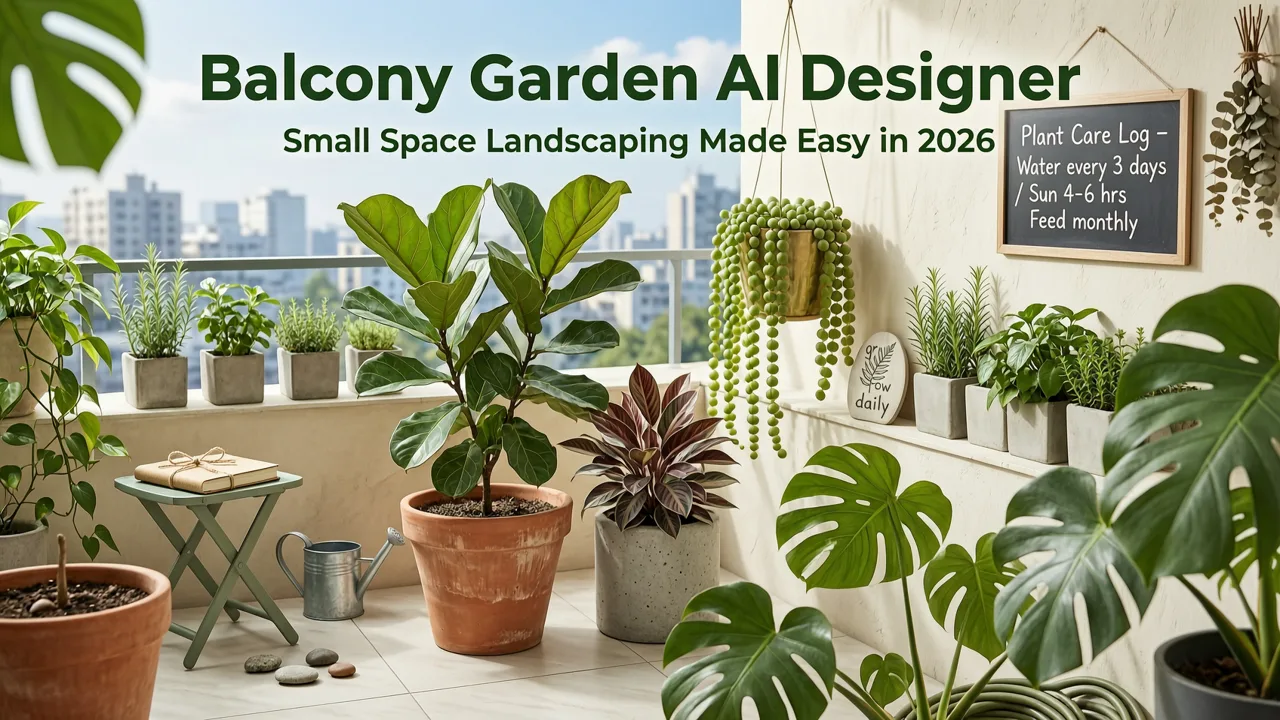
If you have ever stared at a cramped, sun-baked balcony and wondered whether a vertical garden, a cozy reading nook, or a compact herb station would actually fit, a balcony garden AI designer gives you the answer in seconds. Upload a single photo of your space, choose a style, and the tool generates realistic, depth-aware concepts showing exactly how planters, furniture, and greenery will look in your actual balcony — before you spend a dollar.
In 2026, small-space landscaping has moved well beyond generic mood boards and hand-drawn sketches. AI-powered design tools now understand railing heights, light angles, container proportions, and even the way afternoon sun hits a west-facing ledge. This guide explains how a balcony garden AI designer works, what to look for, and how to use it to plan a makeover that feels intentional rather than improvised.
Why Balcony Gardening Demands a Smarter Design Approach in 2026
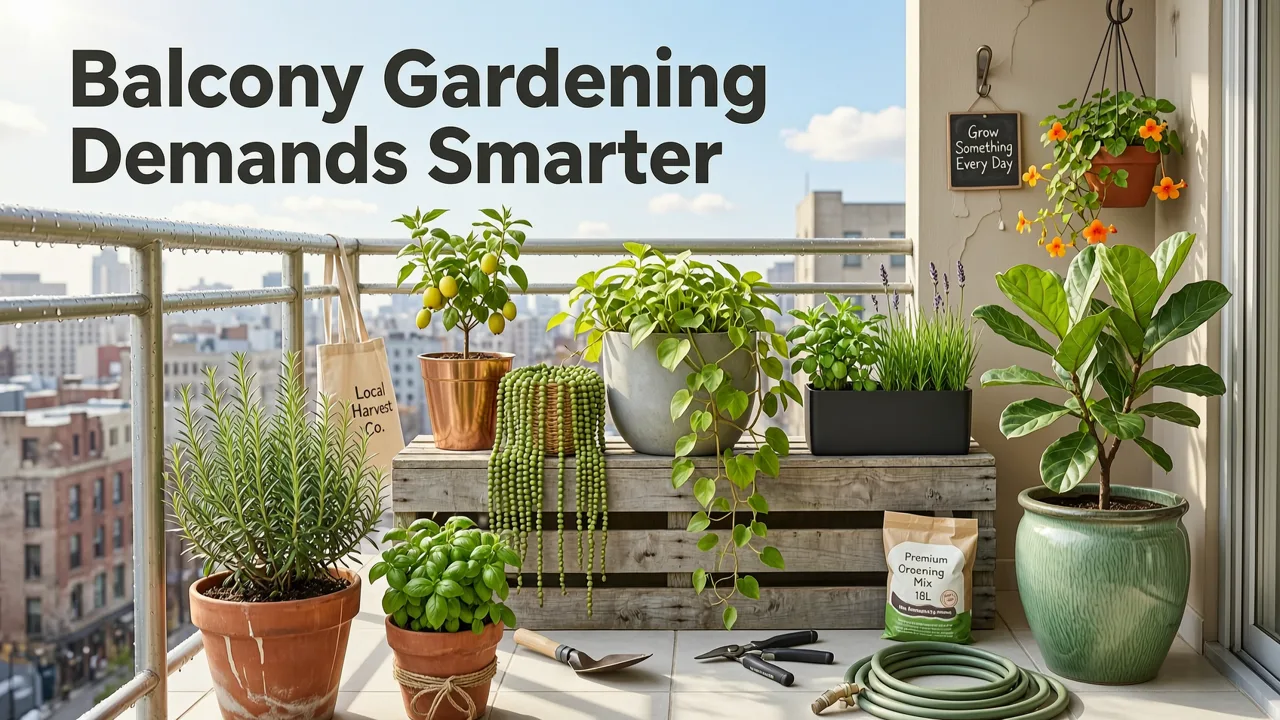
Balconies are unforgiving. Every square foot counts. A pot that looks charming in a catalog can block a walkway, cast unwanted shade, or overwhelm a railing. Traditional garden planning tools were built for sprawling backyards, not six-by-eight-foot ledges, which is why most homeowners end up guessing — and then replanting.
58 Nicest Balcony Garden Ideas
by Balcony Garden Web
A dedicated balcony garden AI designer solves this by treating your space as a constrained environment from the start. It accounts for:
- Vertical surfaces — walls, railings, and overhead beams become planting zones, not dead space.
- Weight and structural limits — container load matters on elevated platforms.
- Microclimate exposure — wind, sun, and rain patterns differ drastically from ground-level yards.
- Human traffic flow — a balcony must remain functional, not just decorative.
When the design engine understands these constraints, the concepts it produces are not just pretty — they are buildable.
How a Balcony Garden AI Designer Transforms Your Photo into a Plan
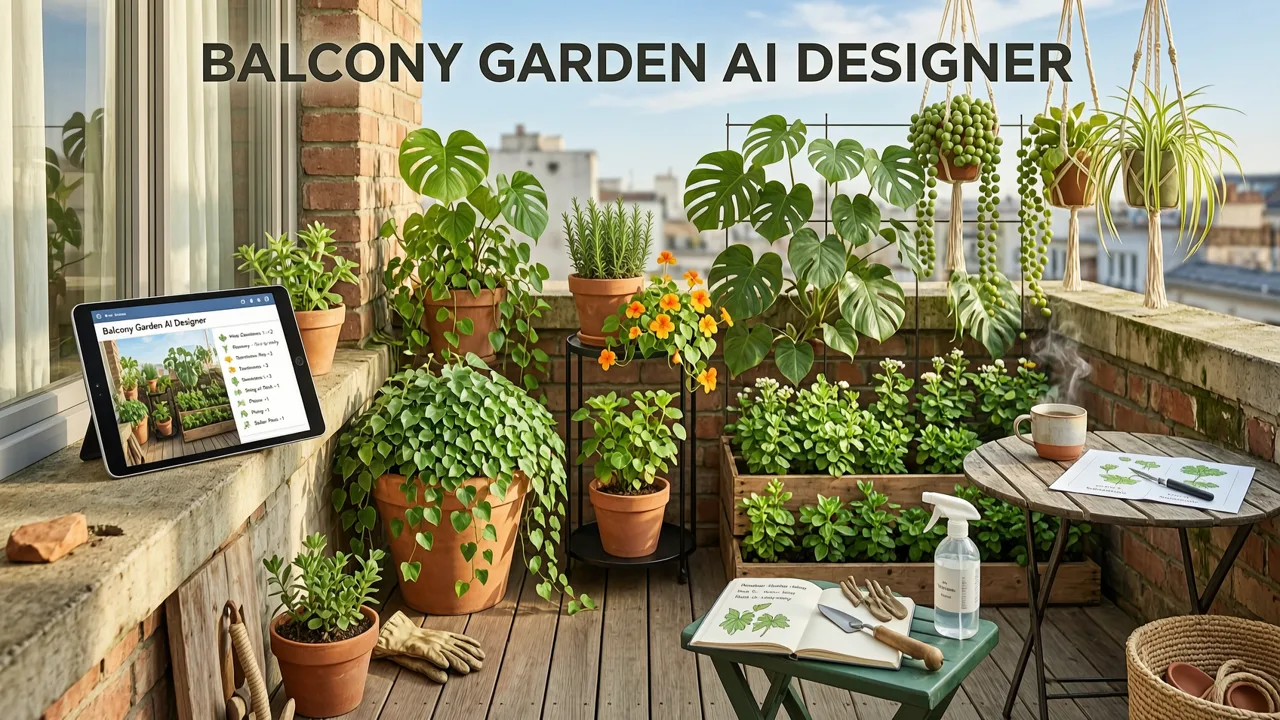
The workflow is simple, but the technology behind it is anything but. Here is what happens between the moment you upload your photo and the moment you see your first design concept.
1. Depth-Aware Scene Reconstruction
Modern AI design tools, built on advances documented in resources like the OpenAI documentation, perform monocular depth estimation on your single photo. The system identifies the floor plane, the railing, the wall, and any existing furniture — then reconstructs a three-dimensional understanding of your balcony from a flat image.
This means when the AI places a tall planter next to your railing, it knows the planter sits on the floor, not floating in mid-air. Shadows, reflections, and occlusions behave realistically.
2. Style-Adaptive Layout Generation
Once the spatial model is built, you choose a style — Mediterranean, Japanese minimalist, tropical urban, cottage herb garden, modern Scandinavian, and so on. The AI then generates multiple layout options that respect your balcony's actual dimensions and architectural features.
Unlike mood-board apps that paste stock images over your photo, a true balcony garden AI designer re-renders the entire scene. Furniture, planters, and greenery are generated with correct perspective, scale, and lighting.
3. Plant and Material Matching
The best tools go further by recommending specific plants suited to your balcony's light conditions and climate zone. A south-facing balcony in Phoenix calls for very different species than a north-facing ledge in Seattle. The AI cross-references your photo's lighting cues with regional plant databases to suggest realistic options.
For a deeper look at how AI matches plants to individual outdoor spaces, explore our guide on best plants for my backyard — the same principles apply to container gardening on a balcony.
Key Features That Define the Best Balcony Garden AI Designer in 2026
Not every tool that calls itself an AI designer actually understands small-space constraints. Here is a comparison of what separates a genuinely useful balcony garden AI designer from a basic photo filter.
| Feature | Basic Photo Overlay Apps | True Balcony Garden AI Designer (2026) |
|---|---|---|
| Depth awareness | None — flat 2D paste | Monocular depth estimation; 3D scene understanding |
| Scale accuracy | Guesswork | Proportional rendering matched to your photo dimensions |
| Style variety | 5–10 preset filters | Dozens of styles with customizable plant palettes |
| Plant recommendations | Generic lists | Light, climate, and container-aware suggestions |
| Multiple concepts | One output | Several variations to compare side by side |
| Structural awareness | None | Railing, wall, and overhead detection |
| Export and share | Limited | High-res downloads, shareable links, shopping lists |
If the tool you are evaluating cannot check most of the boxes on the right side of that table, it is a filter — not a designer.
Step-by-Step: Designing Your Balcony with AI in Under Five Minutes
Here is the exact process you will follow when you use a balcony garden AI designer like the one at AI Design Gardens.
- Take a clear photo. Stand near the entrance of your balcony and capture the full width. Include the floor, railing, and at least one wall. Good lighting — ideally morning or late afternoon — helps the AI read depth more accurately.
- Upload to the tool. Most AI designers accept standard phone camera formats (JPEG, HEIC, PNG). No special equipment is needed.
- Select a style. Browse the available aesthetics. If you are unsure, generate two or three different styles and compare.
- Review the concepts. The AI will return multiple rendered images showing your balcony transformed. Look at how planters sit relative to the railing, how greenery fills vertical space, and whether furniture feels proportional.
- Refine and iterate. Swap plants, change container colors, or try a different layout. The best tools let you adjust individual elements without regenerating the entire scene.
- Save and share. Download your favorites, share them with a partner or landlord, or use them as a shopping list when you visit a nursery.
Balcony Styles That Work Beautifully with AI Design in 2026
Certain aesthetics translate especially well to small balcony spaces because they rely on vertical layering, container gardening, and curated simplicity. Here are the top-performing styles homeowners are generating this year.
Mediterranean Terrace
Terracotta pots, trailing bougainvillea, a compact wrought-iron bistro set, and warm-toned outdoor rugs. This style thrives on sun-exposed balconies and benefits enormously from AI visualization because the layering of textures is hard to imagine without seeing it in context.
Japanese Zen Balcony
Bamboo screens, a small water feature, moss-style ground cover in shallow trays, and carefully pruned dwarf maple or juniper in ceramic containers. The restraint of this style makes AI planning essential — every element must be precisely placed.
Urban Herb and Edible Garden
Raised railing planters, stacked vertical herb towers, compact tomato and pepper varieties, and a fold-down potting shelf. An AI designer helps you figure out which surfaces get enough daily sun for edibles and which are better suited to shade-tolerant greens.
Tropical Retreat
Large-leaf plants like monstera, calathea, and bird of paradise in oversized planters, woven rattan furniture, and warm string lighting. The AI can show you how these bold plants will look against your specific wall color and railing style before you commit.
Scandinavian Minimalist
Clean lines, neutral-toned containers, a single statement plant, and functional storage benches. This style is deceptively difficult to pull off without AI assistance because the margin for error is so small — one oversized pot ruins the balance.
Common Balcony Design Mistakes an AI Designer Helps You Avoid
Even experienced gardeners make errors when planning a balcony because the scale is so different from a ground-level yard. Here are the most frequent missteps — and how AI visualization prevents them.
- Overcrowding. It is tempting to fill every inch. An AI designer shows you the negative space you need for the balcony to feel open rather than claustrophobic.
- Ignoring wind exposure. Tall, top-heavy planters on a high-rise balcony can become hazards. The AI flags proportion issues that suggest instability.
- Mismatched light requirements. Placing shade-loving ferns on a south-facing ledge is a classic error. AI plant-matching tools cross-reference light data with species databases.
- Blocking access. A beautiful design is useless if you cannot open the door or reach the railing. Spatial-aware AI keeps traffic flow in mind.
- Clashing materials. Modern glass railings do not pair well with rustic wooden barrels. Style-adaptive generation ensures material cohesion.
How Balcony AI Design Compares to Other Outdoor Planning Tools
If you are also thinking about your patio or backyard, it helps to understand where a balcony-specific tool fits in the broader landscape design ecosystem. For larger ground-level spaces, our guide on patio layout ideas from photo covers how the same AI principles apply to bigger areas with different constraints. And if you want to see what is possible across a full property, the 25 backyard design ideas for 2026 showcase demonstrates the range of AI-generated concepts.
The core difference is constraint handling. A backyard tool optimizes for open space, sight lines, and zone-based planting. A balcony tool optimizes for verticality, weight limits, and microclimate — which is why using a generalist tool on a balcony often produces concepts that look good in theory but fail in practice.
Is a Balcony Garden AI Designer Worth It for Renters?
Absolutely. Renters face a unique challenge: you want a beautiful outdoor space, but you cannot make permanent changes. A balcony garden AI designer lets you test ideas without commitment. You can visualize exactly how removable railing planters, freestanding shelves, and container gardens will look — then present the concept to your landlord if approval is needed.
Because the AI renders real containers and non-permanent features, the designs you generate are inherently renter-friendly. You see what is achievable without drilling, pouring, or planting in the ground.
The Role of Responsible AI in Garden Design
As AI tools become more powerful, responsible use matters. Guidelines like those outlined in Google's AI responsibility principles remind us that these tools should augment human judgment, not replace it. A balcony garden AI designer gives you options — but you still decide which plants suit your lifestyle, which layout feels like home, and which materials you can maintain.
Use the AI as a starting point for exploration, not a final authority. The best outcomes come when you combine AI-generated concepts with your own knowledge of your space, your climate, and your daily routines.
Getting Started with Your Balcony Makeover Today
The gap between a dull, underused balcony and a thriving outdoor retreat is smaller than you think — and in 2026, you do not need a landscape architect, a big budget, or a green thumb to cross it. A balcony garden AI designer lets you see the possibilities in your own space, in your own light, within minutes.
Upload your photo. Explore a few styles. Compare the concepts side by side. Then take the one that excites you and start building — container by container, plant by plant — with confidence that the result will look the way you imagined.
Ready to see your balcony transformed? Head to AI Design Gardens, upload your photo, and generate your first balcony concept today — free, fast, and built for small spaces.


