

Balcony Garden Layout Generator — Realistic Designs from Your Own Photo
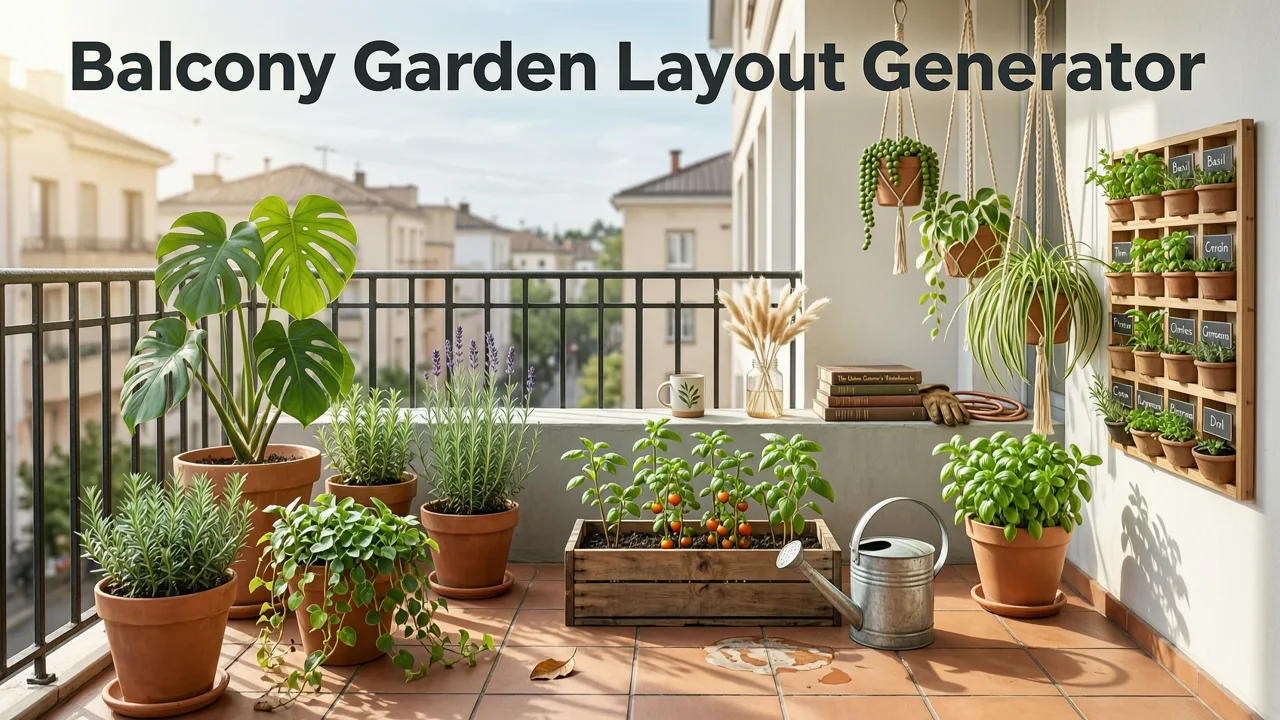
If you have ever stared at a cramped, sun-baked balcony and wondered where a single planter should go, a balcony garden layout generator solves that problem in seconds. Upload a photo of your space, pick a style, and receive realistic plant layouts and outdoor feature concepts you can compare before spending a dollar on soil or railing planters.
In 2026, AI-driven design tools have moved well beyond generic mood boards. A balcony garden layout generator now interprets your actual railing width, light exposure, and floor area, then renders container arrangements, vertical planters, and compact seating zones that fit your real dimensions. The result is a visual plan you can trust, share with a landlord, or hand to a landscaper for execution.
Why a Balcony Garden Layout Generator Is the Smartest Starting Point in 2026
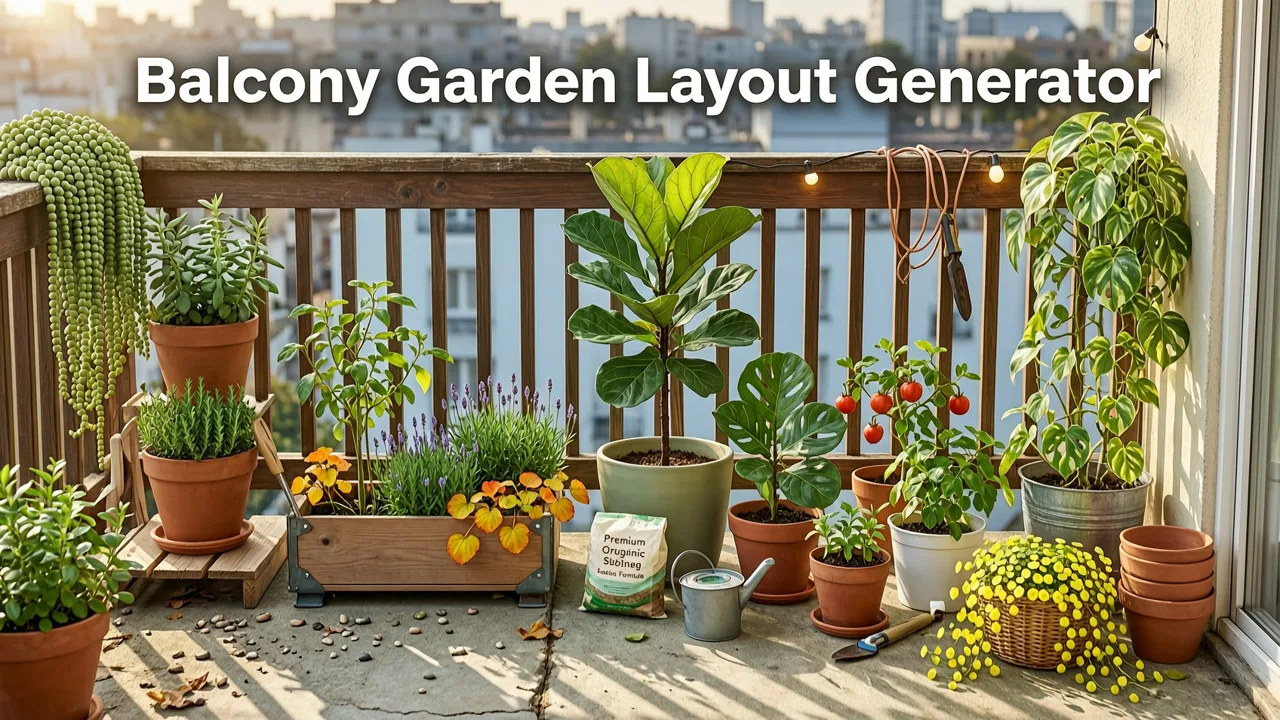
Small outdoor spaces carry an outsized risk: one wrong planter choice can block a walkway, shade out herbs, or make a six-by-eight-foot balcony feel cluttered rather than cozy. Traditional planning methods — sketching on paper, scrolling Pinterest, or guessing at a garden center — leave too much to chance.
Creating a Balcony Garden (For Complete Beginners)
by Epic Gardening
A dedicated balcony garden layout generator eliminates guesswork by grounding every suggestion in your actual photo. This matters because:
- Accuracy beats aspiration. You see how trailing nasturtiums would drape over your specific railing, not a stock photo railing three feet wider.
- Style comparison is instant. Switch between Mediterranean terracotta, Japanese minimalism, or tropical lushness with a single click and compare side by side.
- Costly mistakes disappear. You avoid buying oversized pots that block the door or sun-loving ferns for a north-facing ledge.
- Renter-friendly iteration. Test multiple layouts before committing to any purchase, which is essential when your lease limits structural changes.
Whether you are designing a fourth-floor apartment balcony, a ground-level patio nook, or a rooftop terrace, the generator gives you a realistic preview that respects constraints rather than ignoring them.
How a Balcony Garden Layout Generator Works — Step by Step
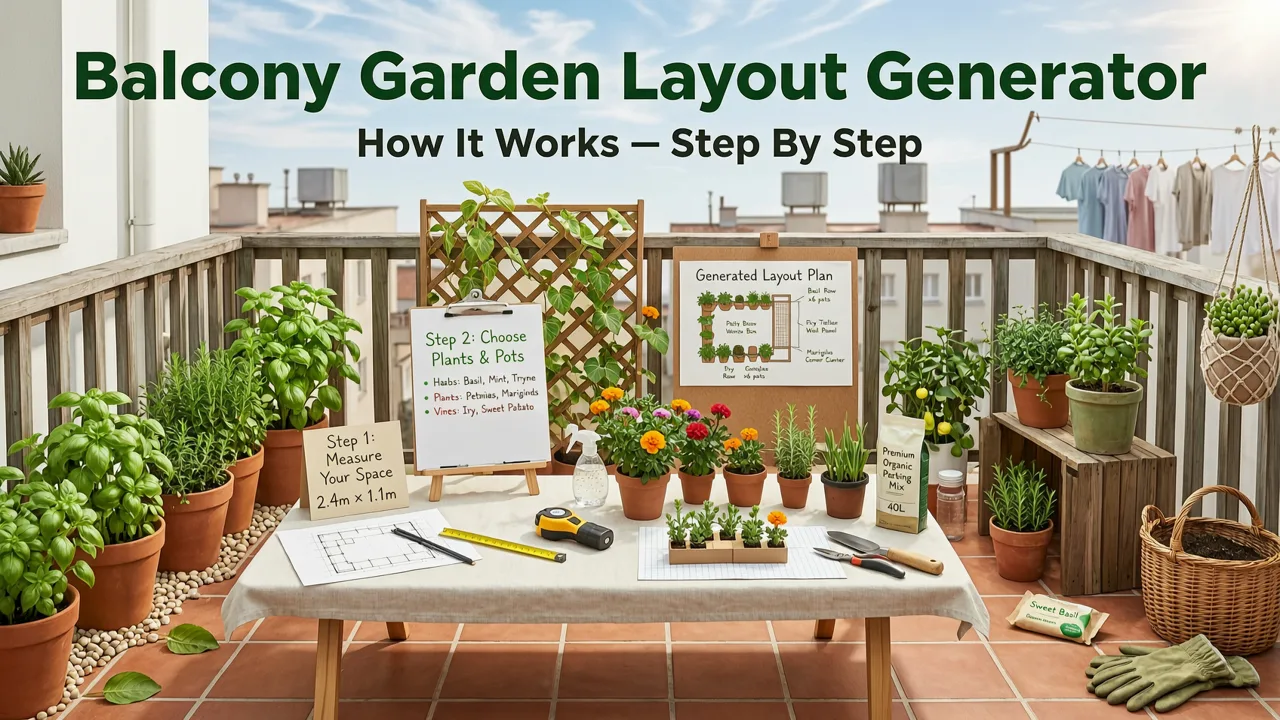
The process is designed for non-designers. No CAD skills, no landscape architecture degree, no measuring tape gymnastics required. Here is the workflow you will follow:
Step 1: Upload Your Real Balcony Photo
Take a clear, well-lit photo of your balcony from a standing position near the doorway or main access point. Include the railing, floor surface, any existing furniture, and the view beyond. The AI uses this image to understand spatial boundaries, light direction, and architectural context.
For best results:
- Shoot during daylight so shadow patterns reveal sun exposure zones.
- Capture the full width in a single frame — panoramas work if your balcony is long and narrow.
- Remove temporary clutter so the generator focuses on permanent features.
Step 2: Choose a Design Style
Select from curated style presets such as Urban Minimalist, Cottage Balcony, Tropical Oasis, Desert Succulent, or Edible Kitchen Garden. Each preset adjusts plant species, container materials, color palettes, and accessory suggestions to match the aesthetic.
You can also apply front yard landscape ideas principles to small spaces — cohesion, repetition, and intentional focal points translate perfectly from curb to balcony.
Step 3: Generate and Compare Layouts
The generator produces multiple design variations mapped onto your photo. Each variation shows:
- Recommended container sizes and placement
- Plant species suited to your light conditions
- Vertical garden or railing planter options
- Compact seating or accent feature placement
Review the options side by side, save your favorites, and refine until the layout feels right. The entire cycle typically takes under two minutes.
Key Features to Look for in a Balcony Garden Layout Generator
Not all AI garden tools are built for small-space constraints. When evaluating a balcony garden layout generator, prioritize these capabilities:
| Feature | Why It Matters for Balconies |
|---|---|
| Photo-based rendering | Ensures designs fit your actual railing height, floor area, and light angles |
| Container-aware plant suggestions | Recommends species that thrive in pots, not in-ground garden plants that will fail |
| Multiple style presets | Lets you compare aesthetics before purchasing any materials |
| Weight and drainage indicators | Critical for balcony safety — wet soil in large planters adds significant load |
| Seasonal adjustment | Shows how the layout evolves across spring, summer, and fall growth cycles |
| Exportable design summary | Provides a shopping list and layout diagram to share with landlords or installers |
Balcony Garden Layout Generator vs. Traditional Design Methods
To understand why AI-powered tools have become the default choice for balcony planning in 2026, consider how they compare against conventional approaches:
| Criteria | Balcony Garden Layout Generator | Paper Sketching | Hiring a Landscape Designer |
|---|---|---|---|
| Time to first concept | Under 2 minutes | 30–60 minutes | 3–7 business days |
| Cost | Low or free tier available | Free (but limited) | $200–$1,500+ |
| Realism of preview | Photorealistic, mapped to your photo | Abstract, hard to visualize scale | High, but slow to iterate |
| Number of variations | Unlimited | 1–2 practical sketches | 2–3 revisions typically included |
| Plant suitability filtering | Automatic based on light and zone | Manual research required | Designer handles this |
The generator does not replace a professional landscape architect for complex rooftop projects, but for the vast majority of apartment and condo balconies, it delivers comparable visual clarity at a fraction of the cost and time. You can explore the broader landscape of tools in our guide to the best AI garden design app for homeowners in 2026.
Design Principles the Best Balcony Garden Layout Generators Apply
Behind every AI-generated layout is a set of horticultural and spatial design principles. Understanding these helps you evaluate whether a generated suggestion is truly viable for your space.
Layering by Height
Effective balcony gardens use three vertical layers: trailing or low-growing plants at railing level, mid-height container specimens on the floor, and tall narrow plants or trellises at the back wall. A quality generator respects this layering so the space feels full without feeling crowded.
Light Mapping
The generator analyzes shadow patterns in your uploaded photo to estimate sun exposure. South-facing balconies receive recommendations for heat-tolerant species like lavender, rosemary, and sedum. North-facing balconies get shade-loving options such as ferns, hostas in container form, and moss arrangements.
Weight Distribution Awareness
Balconies have structural load limits. A responsible generator flags oversized planters concentrated in one area and suggests distributing weight across the floor space or switching to lightweight resin containers with perlite-amended soil.
Flow and Access
Even a lush balcony must remain functional. The generator preserves clear pathways to doors, maintains seating clearance, and avoids placing tall specimens where they would block views or light to interior rooms.
Common Balcony Styles You Can Generate Instantly
Here are five of the most popular balcony garden styles the generator can produce, along with the plant and material palettes each one favors:
Urban Minimalist
Clean lines, monochromatic containers in concrete or matte black, and a restrained plant palette of ornamental grasses, snake plants, and a single statement tree such as a dwarf olive. This style thrives on negative space and works especially well on narrow balconies.
Mediterranean Terrace
Terracotta pots, trailing bougainvillea or ivy geraniums, potted citrus trees, and herb clusters of basil, thyme, and oregano. Warm earth tones and textured surfaces create a sun-drenched vacation feel even on a city high-rise.
Edible Kitchen Balcony
Raised railing planters for leafy greens, compact tomato varieties in deep containers, strawberry towers, and a small dwarf lemon tree. This layout prioritizes south-facing light and easy kitchen access for daily harvesting.
Tropical Oasis
Large-leaf plants like elephant ears and bird of paradise in oversized planters, bamboo screening for privacy, hanging ferns, and a small water feature. Dense layering creates an immersive jungle atmosphere that masks urban noise.
Japanese Zen Balcony
Moss trays, a single carefully pruned dwarf maple or Japanese pine, gravel-filled shallow containers, and bamboo accent pieces. Restraint and asymmetry define this style, making it ideal for very small balconies where less truly is more.
How to Get the Most from Your Balcony Garden Layout Generator
Getting a beautiful output is only half the equation. Translating that output into a real, thriving balcony garden requires a few additional steps.
Verify Plant Hardiness for Your Zone
The generator suggests species based on visual compatibility and light estimates. Cross-reference recommendations with your USDA hardiness zone or local climate equivalent to ensure perennial plants will survive winter conditions. Annuals offer more flexibility since you replace them each season.
Check Building Rules Before Installing
Many condos and rental properties restrict railing attachments, limit planter weight, or prohibit drilling into walls. Use the generator's exportable summary to confirm your planned layout complies before making purchases.
Start with Containers, Not Construction
The beauty of balcony gardening is its reversibility. Begin with freestanding planters and hanging baskets. If a layout does not work after one season, you can rearrange without structural changes. This iterative approach mirrors the generator's own design philosophy.
Plan for Watering and Maintenance Access
A lush balcony that is impossible to water conveniently will decline quickly. Ensure every container is reachable, consider self-watering pots for upper shelves, and verify that drainage trays protect your balcony surface from water damage.
Extending AI Design Beyond the Balcony
Once you have used the balcony garden layout generator to transform your small outdoor space, the same AI principles apply to larger areas. If you also have a backyard to reimagine, you can design your backyard from a photo using AI with the same upload-and-preview workflow. The tool scales from a four-by-six-foot balcony to a quarter-acre yard without losing fidelity.
Similarly, if your front entrance needs attention, explore modern front yard design with AI to create a cohesive curb appeal that complements your newly designed balcony view.
Why 2026 Is the Right Year to Use AI for Balcony Design
The underlying models powering today's balcony garden layout generators have improved dramatically since the early image-to-image tools of 2024. Modern systems understand spatial relationships, material textures, and plant growth habits with far greater accuracy. For a deeper look at how these tools have evolved, see the OpenAI documentation on multimodal model capabilities and the Google AI responsibility guidelines that shape how generative tools are deployed in consumer applications.
The practical implications for you as a homeowner or renter are straightforward:
- Generated layouts are more photorealistic than ever, reducing the gap between preview and reality.
- Plant recommendations factor in regional climate data more precisely.
- Iteration speed means you can test dozens of layouts in a single evening rather than committing to one sketch.
- Integration with shopping databases means some generators now link suggested planters and plants directly to retailers.
Frequently Asked Questions
Is a balcony garden layout generator free to use?
Many AI garden design tools offer a free tier that includes a limited number of photo uploads and design generations per month. Premium tiers unlock unlimited variations, higher-resolution exports, and advanced features like seasonal adjustment and shopping list integration.
Can I use the generator if I rent my apartment?
Absolutely. A balcony garden layout generator is especially valuable for renters because it lets you test multiple layouts before spending money on containers and plants. You can also export your plan to share with a landlord for approval before making any modifications.
Does the generator work for very small balconies?
Yes. The AI is trained on spaces ranging from tiny Juliet balconies to expansive rooftop terraces. For very small spaces, the generator prioritizes vertical solutions like railing planters and wall-mounted pockets to maximize greenery without sacrificing floor area.
How accurate are the plant recommendations?
Plant suggestions are based on estimated light exposure from your photo, general climate assumptions, and container-growing suitability. For the best results, verify recommendations against your specific hardiness zone and balcony microclimate conditions before purchasing.
Can I share the generated designs with a landscaper?
Most generators allow you to export your design as an image or PDF summary that includes plant lists, container specifications, and layout positioning. This gives a landscaper or installer a clear starting point for execution, even if they refine the plan further.
Start Designing Your Balcony Garden Today
A balcony garden layout generator removes the uncertainty from small-space outdoor design. By uploading a single photo and choosing a style, you gain access to realistic, plant-specific layouts that respect your balcony's actual dimensions, light conditions, and structural constraints. Stop guessing which planter goes where. Stop buying plants that wilt in the wrong corner. Upload your photo, generate your options, and step onto a balcony that finally looks the way you imagined.


