

How a Balcony Garden Planner AI Works in 2026
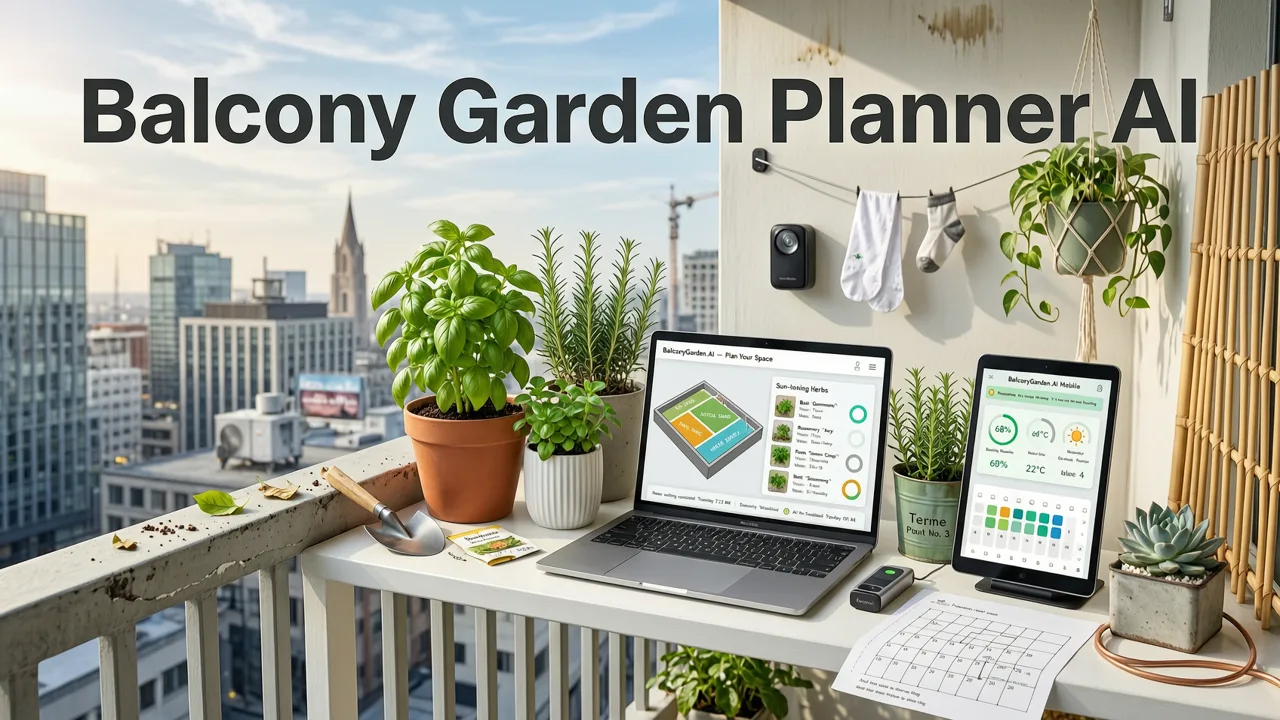
If you have ever stared at a four-by-six-foot balcony and wondered whether a vertical herb wall, a compact citrus tree, or a trailing jasmine cascade would actually fit, you already know the frustration. A balcony garden planner AI turns a single photo of your space into multiple realistic design concepts in seconds, so you can compare layouts, plant palettes, and hardscape details before you spend a dollar on soil, pots, or rail planters.
Unlike generic mood-board tools, a purpose-built balcony garden planner AI understands the constraints that define small-space gardening: weight limits, wind exposure, railing geometry, sun angles, and the narrow margin for error when every square inch counts. Upload a photo, choose a style direction, and preview plant layouts and outdoor features mapped directly onto your actual balcony. The result is a visual shortlist you can hand to a landscaper, a building superintendent, or your own weekend self.
Why Small-Space Balcony Design Still Fails Without AI
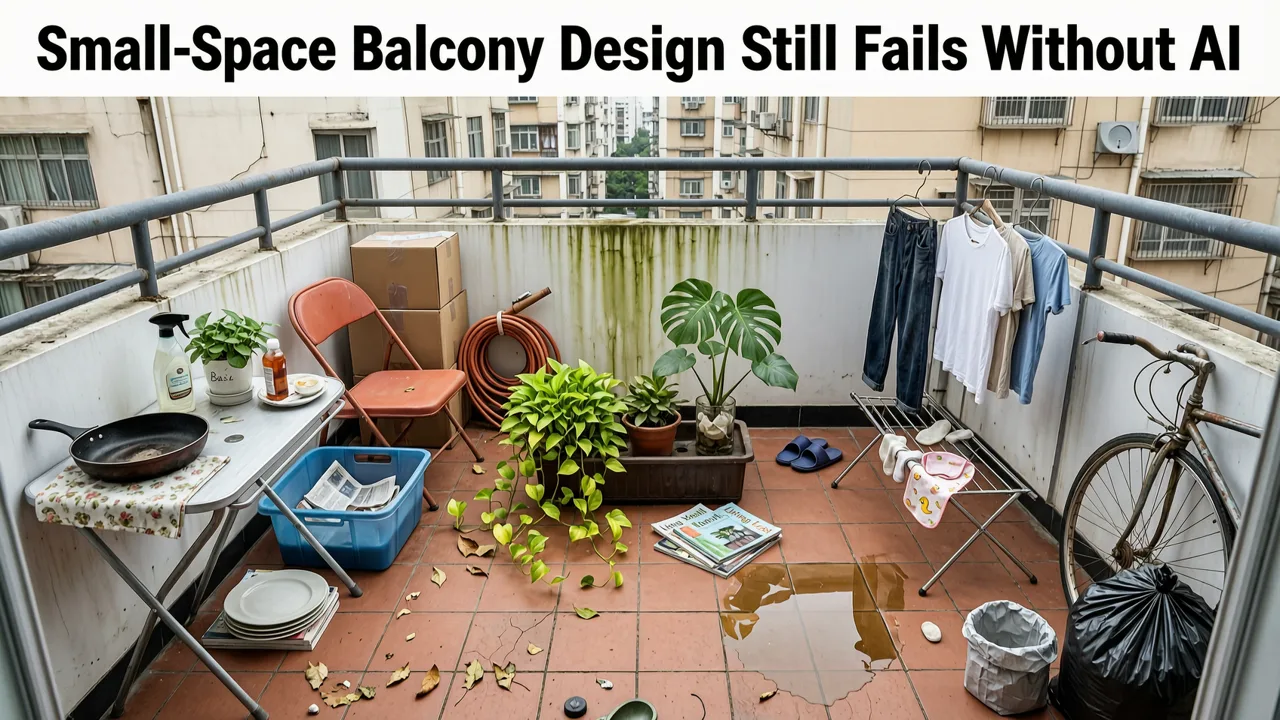
Most balcony projects fail for the same reason ground-level gardens do: the imagination gap. You can picture a lush corner, but you cannot tell whether a dwarf Japanese maple will crowd the reading chair, or whether a string of trailing lobelia will actually reach the railing below. In 2026, that gap is no longer acceptable when visual AI can render both options side by side on your own photo.
Watch AI Design Your Dream Backyard in Seconds
by Pick5 Pro
The Microclimate Blind Spot on Elevated Terraces
Balconies are not just small gardens. They are exposed, wind-scoured microclimates with reflected heat from glass and concrete, faster drying soil, and stricter weight rules than any ground bed. A tool that only understands flat suburban yards will suggest plants that scorch by July or planters that exceed your building's load rating. A balcony-specific planner factors in those realities from the first render.
The Cost of Guessing in a 12-Square-Foot Footprint
On a ground-level bed, a wrong plant choice costs you one season. On a balcony, it costs you the season, the soil, the pot, the brackets, and often the railing mounts you drilled to hold them. How to Avoid Planting Mistakes Before You Dig in 2026 walks through the same principle at scale: visualize first, dig second. On a balcony, the rule is even stricter because undoing a mistake means carrying wet soil down a stairwell.
What to Look for in a Balcony Garden Planner AI
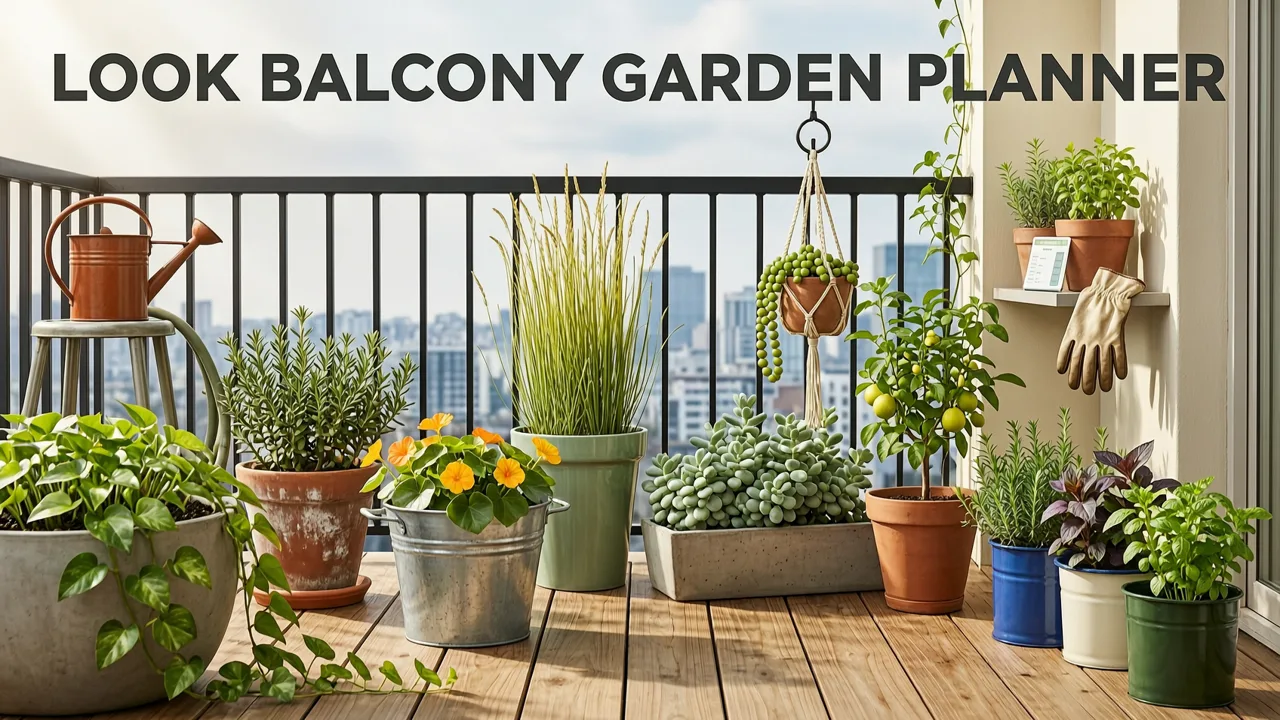
Not every AI design tool is built for vertical, weight-sensitive, rental-friendly spaces. Before you commit to a platform, check that it covers the small-space specifics that make or break a balcony project.
- Photo-to-render accuracy. The AI should respect your railing height, ceiling overhang, and existing fixtures rather than erasing them.
- Style variety tuned for small spaces. Mediterranean herb corners, Japanese minimalism, tropical container jungles, and cottage railing gardens should all be available, not just lawn-centric templates.
- Plant palette logic. Recommendations should reflect sun exposure, wind, and container depth, not just aesthetic color matching.
- Weight and scale awareness. Outputs should flag heavy terracotta or water-logged planters that could exceed typical balcony load limits.
- Comparison mode. You should be able to generate three to five directions from the same photo and flip between them instantly.
Step-by-Step: Planning Your Balcony With AI in 2026
Step 1: Photograph Your Balcony the Right Way
Stand at the doorway looking out, and capture the full width in a single, well-lit frame. Include the railing, any overhead beam, the floor surface, and at least one reference object like a chair or pot so the AI can judge scale. Shoot on a clear day around mid-morning so shadows do not distort the geometry. If your balcony is L-shaped, take two photos from the two key viewpoints.
Step 2: Note the Constraints Before You Upload
Jot down four numbers: approximate length, width, ceiling height, and railing height. Add two conditions: approximate daily sun hours and whether the balcony is covered or fully exposed. If you rent, confirm with your lease whether railing planters, drilled mounts, or freestanding furniture are permitted. These notes will guide your style choices inside the planner.
Step 3: Upload and Generate Design Directions
Inside the balcony garden planner AI, upload your photo and select a style category. Generate at least three directions so you can compare a maximalist tropical layout, a restrained minimalist layout, and a functional edible layout against the same physical space. Let the AI populate planters, rail mounts, vertical pockets, and overhead string elements based on your sun and wind notes.
Step 4: Evaluate Each Concept Against Real Constraints
Walk through each render with a short checklist: does the tallest plant block the view or the light? Do the largest containers sit over a structural beam rather than mid-span? Is there a clear path to the door? Does the palette match your USDA zone and balcony exposure? If a concept fails any of these, regenerate with a tighter prompt rather than forcing a pretty-but-impossible layout.
Step 5: Lock a Direction and Build a Shopping List
Once a concept passes the constraint check, use it as your shopping list backbone. Note pot dimensions, plant species, soil type, and any mounting hardware. A good AI planner will export a simple list you can take to a nursery or order online, which keeps you from impulse-buying plants that will not fit the final layout.
Balcony Design Styles That AI Renders Best
Some styles translate exceptionally well to AI-generated balcony concepts because they rely on a small number of strong elements rather than dense planting. Use the table below to pick a starting direction.
| Style | Key Elements | Best For | AI Strength |
|---|---|---|---|
| Mediterranean Herb Corner | Terracotta pots, rosemary, thyme, dwarf olive | Sunny, wind-protected balconies | Strong — simple geometry, clear plant forms |
| Japanese Minimalist | One specimen tree, moss tray, bamboo screen | Shaded or partially shaded balconies | Strong — restraint reads cleanly in renders |
| Tropical Container Jungle | Monstera, calathea, trailing pothos, layered heights | Humid, sheltered balconies | Moderate — density can blur at small scale |
| Cottage Railing Garden | Trailing lobelia, sweet pea, compact geranium | Full-sun, railing-forward balconies | Strong — color and trail read instantly |
| Edible Productivity Wall | Vertical pockets, lettuce, strawberries, herbs | Renters, kitchen-adjacent balconies | Strong — modular grid maps cleanly to AI |
Common Balcony Mistakes an AI Planner Catches Early
Even experienced gardeners misjudge small elevated spaces because the rules change the moment you leave the ground. A balcony garden planner AI surfaces the same mistakes a seasoned container gardener would, but before you buy a single bag of soil.
- Oversized focal plants. A dwarf citrus looks proportional in a ground garden but dominates a six-foot balcony. The AI shows the true scale against your railing and door.
- Wind-vulnerable specimens. Broad-leaved tropicals on a twentieth-floor balcony will shred by August. AI renders paired with your exposure notes flag the risk.
- Blocked egress. A beautiful reading nook is useless if you cannot reach the door in winter boots. Renders make the path visible before furniture arrives.
- Weight overload. Large water-retentive planters mid-span can exceed load ratings. A good planner highlights container placement over structural lines.
- Style mismatch with the building. A rustic cottage railing garden can clash with a sleek glass-and-steel tower. Seeing the render in context saves you from a costly aesthetic wrong turn.
How Balcony AI Planning Differs From Yard or Front Yard Planning
A balcony is not a small yard. It is a structurally bounded, weight-limited, wind-exposed container system with strict visual sightlines from inside the apartment. Tools built for front yard landscape ideas will suggest grading, trees, and walkways that simply do not apply. Similarly, a rain garden workflow such as the one in How to Design a Rain Garden from Your Yard Photo in 2026 is invaluable for ground-level hydrology but irrelevant six stories up. A balcony-specific AI planner starts from the correct physics: containers, rails, vertical surfaces, and human-scale sightlines.
Renter-Friendly Balcony Ideas AI Can Visualize Instantly
If you rent, every decision must be reversible. A balcony garden planner AI excels at showing you what a zero-drill, fully removable layout looks like before you commit. Renter-friendly directions the tool handles well include freestanding ladder shelves with trailing plants, tension-mounted bamboo screens, railing-pocket herb gardens, and modular deck-tile floors that lift out when you move. Seeing these options rendered on your own balcony photo removes the biggest renter fear: that a beautiful setup will mean losing the deposit.
Using AI Guidance Responsibly for Your Balcony Project
AI-generated balcony concepts are starting points, not construction documents. Follow the same responsible-use principles outlined in Google AI guidance and OpenAI documentation: treat the render as a hypothesis, verify plant hardiness with a local nursery, confirm container weights with your building management, and never treat an AI image as a structural or electrical plan. The planner's job is to narrow your choices; your job is to validate them in the real world.
From Render to Real Balcony: A 2026 Execution Checklist
- Finalize one AI-generated concept that passes your constraint checklist.
- Confirm plant hardiness and sun exposure with a local nursery or extension service.
- Verify container weights and railing-mount rules with your building management.
- Purchase lightweight containers, quality container mix, and slow-release fertilizer.
- Install deck tiles or outdoor rug first, then place the largest containers, then add mid-height plants, then trailing elements.
- Add lighting, seating, and decor last, using the AI render as your placement guide.
Why a Photo-Based Balcony Planner Beats Sketching or Mood Boards
A sketch tells you what you wish you had. A mood board tells you what someone else had. A photo-based balcony garden planner AI tells you what you can actually have, in your actual space, with your actual light and rail geometry. That difference is the entire reason the tool exists: it collapses the gap between inspiration and installation, which is exactly where most small-space projects die.
Frequently Asked Questions
Can a balcony garden planner AI work for a shaded or north-facing balcony?
Yes. Modern planners let you specify sun exposure, and the AI will prioritize shade-tolerant foliage such as ferns, hostas in container form, calatheas, and trailing ivy rather than sun-loving herbs. The render will still reflect your actual photo, so you see how the shade plants read against your specific railing and floor.
Do I need to be a gardener to use a balcony garden planner AI?
No. The tool is designed for homeowners, renters, and beginners who want to compare directions before buying. You upload a photo, pick a style, and the AI proposes plant palettes and layouts. You then validate the plant choices locally, which removes the guesswork without requiring prior expertise.
Can the AI handle irregular or L-shaped balconies?
Yes, provided you photograph each key viewpoint separately. Upload the primary view first, generate concepts, then upload the secondary view if the balcony wraps around. The planner will keep plant palettes and style consistent across both angles so the final design feels unified.
Will the AI suggest plants that are invasive in my region?
A well-built planner filters recommendations by your general hardiness zone and avoids known invasives for major regions. Always cross-check the final plant list with a local nursery or extension service before purchasing, especially if you live in a biodiversity-sensitive area.
How accurate are the AI renders compared to the finished balcony?
Renders are highly representative of layout, scale, and plant form, but real plants grow and behave differently than static images. Treat the render as a 90 percent accurate preview of proportions and style. The final 10 percent is adjusted during planting, as you would with any design tool.
Start Planning Your Balcony With Confidence
A balcony garden planner AI removes the two biggest barriers to small-space gardening: the fear of wasting money on the wrong plants and the inability to visualize a finished layout before you build it. Upload a photo, compare three to five directions, and walk onto your balcony with a plan that already fits the space, the light, the wind, and your lease. The only thing left to do is carry the first bag of soil upstairs.


