

If you have ever stared at an overgrown backyard and struggled to visualize a finished landscape, you are not alone. The best ai garden planner 2026 solves this by transforming a simple smartphone photo into photorealistic design concepts, letting you preview plant layouts and outdoor features before spending a dime. Whether you are planning a full backyard makeover or a simple patio refresh, AI-powered visualization bridges the gap between imagination and execution.
Gone are the days of relying on abstract 2D sketches or expensive, time-consuming 3D modeling sessions. Today’s generative landscape tools analyze your specific space, respect existing architectural lines, and generate multiple design variations in seconds. This guide breaks down how these platforms work, what features matter most, and how to use them to avoid costly planting mistakes.
What Makes the Best AI Garden Planner 2026 Stand Out?
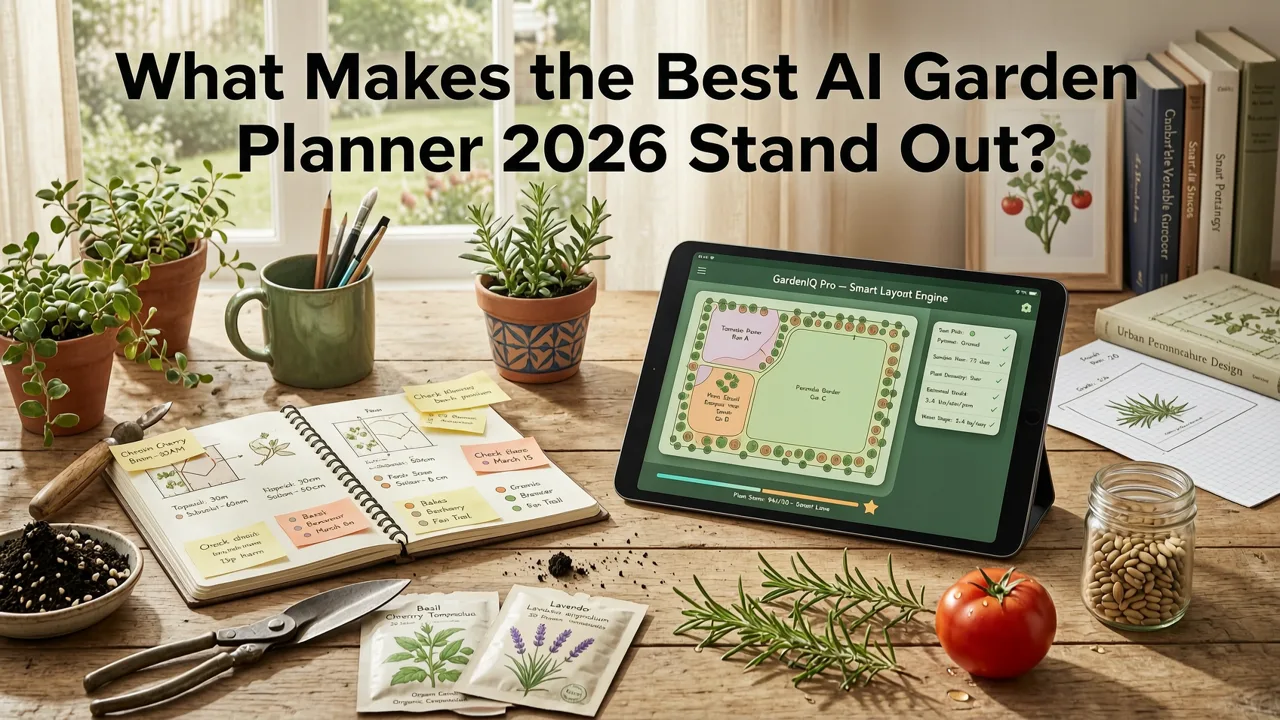
Not all digital design tools are created equal. The leading platforms in 2026 rely on advanced computer vision and generative models to understand the physical geometry of your yard. Rather than simply overlaying clip-art plants onto a flat image, modern AI reconstructs the scene in three dimensions.
AI Landscape Architecture Workflow 2026 — Plans, Diagrams, Renders & Animations
by Erick Verduzco
Depth-Aware Scene Reconstruction
When you upload a photo, the AI maps the depth of your space. It identifies the horizon line, the slope of the terrain, and the distance between your patio and the back fence. This depth awareness ensures that a tall oak tree placed in the background doesn't visually overlap with a low-growing border planted in the foreground. By leveraging foundational models documented in OpenAI's technical resources, these tools maintain spatial consistency, making the generated concepts highly accurate to your actual property dimensions.
Style-Adaptive Layout Generation
The best tools do not force a single aesthetic on your yard. They adapt to your preferences, whether you want a minimalist Japanese zen garden, a lush English cottage border, or a modern xeriscape. Furthermore, responsible AI development, as outlined in Google's AI responsibility guidelines, ensures these systems are trained on diverse, ecologically appropriate plant databases rather than generic, location-agnostic imagery.
How to Use an AI Landscape Design Tool in 4 Steps
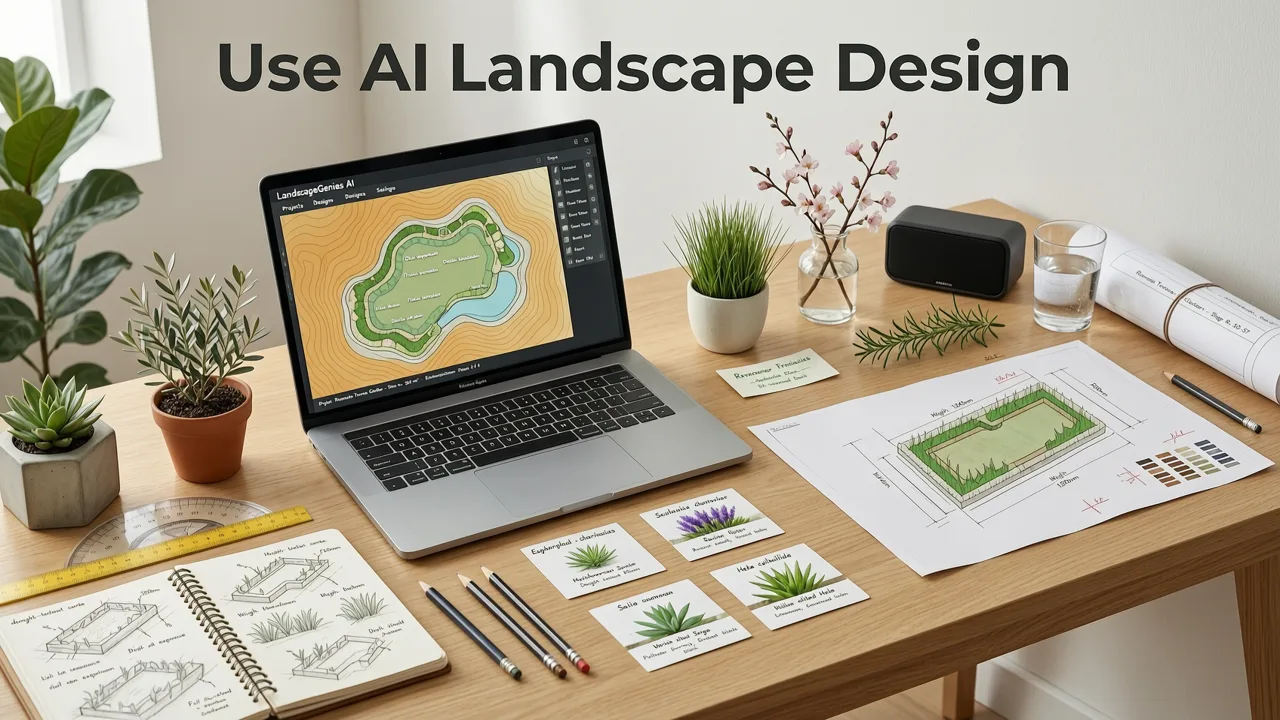
Transitioning from a blank yard to a fully realized design is straightforward when you follow a structured workflow. Here is how to get the most accurate results from your AI planner.
1. Capture the Right Baseline Photo
The quality of your output depends heavily on the quality of your input. Take your photo during the day when lighting is even, avoiding harsh shadows that can confuse the AI's edge detection. If you are working on a hardscape project, exploring patio layout ideas from photo can help you understand how to frame your shot to capture the entire slab, existing walls, and surrounding sightlines.
2. Select Your Design Style
Once your image is uploaded, choose a style preset. Most advanced planners offer categories like Mediterranean, Tropical, Woodland, or Contemporary. Some tools even allow you to upload a reference image of a garden you love, using it to extract color palettes and plant textures for your own space.
3. Generate and Compare Concepts
Hit generate and review the output. The true power of AI is the ability to iterate instantly. You can generate a high-density planting plan, then immediately switch to a low-maintenance gravel and succulent layout. Exploring these backyard landscape ideas before and after transformations allows you to compare vastly different design directions without committing to a single path.
4. Refine and Export for Contractors
Once you find a concept you love, refine the details. Swap out individual plant species, adjust the placement of a fire pit, or change the color of the paving stones. When you are ready to build, export the final images to share with your landscaping contractor or to use as a personal shopping guide at the local nursery.
Key Features to Look For When Choosing an AI Planner

With the market flooded with new applications, selecting the right platform requires a critical eye. The top-tier tools in 2026 share a specific set of capabilities that separate them from basic photo filters.
Botanical Accuracy and Plant Libraries
A visually stunning image is useless if it features plants that cannot survive in your hardiness zone. The best planners integrate with regional botanical databases, ensuring that the hydrangeas, ornamental grasses, and evergreens suggested for your design are actually suited to your local climate. Look for tools that allow you to filter plant selections by USDA hardiness zones, sunlight requirements, and soil drainage preferences.
Hardscape and Structural Element Integration
Garden design is not just about flora; it is equally about hardscape. Premium AI tools recognize and allow you to modify structural elements. You can visualize how a new pergola, a retaining wall, or a fire pit will look in your space. The ability to swap out paving materials—from natural flagstone to modern poured concrete—adds a crucial layer of realism to your planning process.
Lighting and Seasonal Variations
A garden changes drastically from spring to winter, and from day to night. Advanced platforms now offer seasonal toggles, allowing you to see how your design will look when the deciduous trees drop their leaves. Similarly, nighttime visualization modes let you plan outdoor lighting layouts, ensuring your pathways are illuminated and your architectural features are properly highlighted after dark.
Comparing Top Features in Virtual Landscaping Tools
When evaluating software for your outdoor project, it helps to understand how AI-driven planners compare to traditional methods. The table below highlights the core differences in workflow, cost, and accuracy.
| Feature | AI Photo-Based Planners | Traditional 3D Software | Manual Sketching |
|---|---|---|---|
| Setup Time | Seconds (upload a photo) | Hours (build from scratch) | Minutes (but highly abstract) |
| Visual Realism | Photorealistic, matches your exact yard | High, but requires manual texturing | Low, relies on user imagination |
| Learning Curve | Very low, intuitive sliders and prompts | Steep, requires CAD or 3D modeling skills | Low, but lacks technical precision |
| Cost | Freemium or low monthly subscription | High upfront cost or expensive licenses | Free (pen and paper) |
| Iteration Speed | Instant, generate dozens of variations | Slow, requires rebuilding scene elements | Slow, requires redrawing |
Why Visualizing Before You Dig Saves Money
Landscaping is one of the most expensive home improvement projects, and mistakes are incredibly costly to reverse. Moving a mature tree, replacing dead shrubs, or tearing up newly laid pavers can drain your budget in a single afternoon.
Closing the Imagination Gap
Homeowners often struggle to translate a nursery tag into a real-world spatial arrangement. You might buy ten boxwoods, only to realize they completely block your walkway when fully grown. AI visualization closes this imagination gap by showing you the mature scale and proportions of your choices in the context of your actual home.
Avoiding the Microclimate Blind Spot
Plants have strict environmental requirements. Placing a shade-loving fern in a south-facing bed that bakes in the afternoon sun is a guaranteed way to waste money. When you use an AI tool to map out your beds, you can cross-reference the generated plant list with your yard's specific sunlight and drainage conditions. For a deeper dive into this, read our guide on how to avoid planting mistakes before you dig. Proper planning ensures every plant is placed in an environment where it will actually thrive.
Planning Your Front Curb Appeal
While backyards are private retreats, your front yard is your home's public face. Upgrading your curb appeal requires a delicate balance of aesthetics, neighborhood norms, and practical maintenance. AI tools are exceptionally useful for front yards because they allow you to test how new foundation plantings, walkway materials, and entryway lighting will look against your existing architecture. If you are ready to elevate your home's exterior, exploring front yard landscape ideas generated from your own photo is the smartest first step.
Integrating AI Designs with Real-World Execution
Generating a beautiful concept is only half the battle; executing it in the physical world requires a strategic approach. How do you translate a digital render into a built landscape?
Communicating with Landscaping Contractors
Contractors appreciate clarity. When you hand over a set of AI-generated images, you eliminate the ambiguity of verbal descriptions. Instead of saying, "I want a modern look with some grasses," you can show them the exact texture, height, and density you prefer. This alignment prevents miscommunications and ensures the final build matches your vision. However, always consult with your contractor regarding structural integrity, grading, and local building codes, as the AI does not account for these physical constraints.
Phasing Your Landscape Project
If your AI design includes a massive overhaul, you do not have to install it all at once. Use your generated concepts to create a phased implementation plan. Year one might focus on essential hardscaping and large shade trees. Year two can introduce the mid-level shrubs and perennial borders. This phased approach spreads out the financial investment and allows the landscape to establish itself naturally over time.
Final Thoughts: Plan Your Outdoor Space with Confidence
The best ai garden planner 2026 is not just a novelty; it is a practical, money-saving tool that democratizes professional landscape design. By combining depth-aware scene reconstruction with style-adaptive generation, these platforms allow you to experiment freely, compare multiple design directions, and finalize a plan that perfectly suits your lifestyle and budget.
Stop guessing what your yard could look like and start seeing it for yourself. Upload your first photo today, choose a style, and bring your dream outdoor living space into focus before you break ground.


