

Why Finding the Best AI for Garden Design Matters More Than Ever in 2026
If you've ever uploaded a blurry backyard photo and received a cartoonish rendering with plants that don't exist in your climate zone, you already know the gap between hype and reality. The best AI for garden design in 2026 is no longer a novelty — it's a practical planning tool that turns a single smartphone photo into photorealistic, climate-aware landscape concepts you can share with contractors, nurseries, and family members before spending a dollar on soil or stone.
This guide compares the leading AI garden design platforms available today, explains what separates genuinely useful tools from flashy demos, and shows you how to use AI-generated concepts to avoid the most expensive planting and layout mistakes homeowners make every year.
What Makes an AI Tool the 'Best' for Garden Design in 2026?
Not all AI design generators are built for landscapes. Many image-to-image models produce beautiful pictures that fall apart the moment you try to source the plants, match them to your sunlight conditions, or hand the concept to a landscaper. After testing dozens of tools this year, we've identified five criteria that separate the best AI for garden design from the rest.
Can AI design my yard for free? 🪴 Tips for do-it-yourselfers (from a landscape designer)
by Garden Project Academy
1. Depth-Aware Photorealistic Rendering
The strongest tools in 2026 understand spatial depth. They don't just overlay textures — they reconstruct the three-dimensional geometry of your yard from a single photo, preserving the position of fences, walls, trees, and existing hardscape. This means the AI places plants at the correct scale and perspective, so what you see on screen matches what you'd see standing in your yard.
2. Climate and Zone-Appropriate Plant Selection
A gorgeous Japanese maple rendering is worthless if you live in USDA Zone 9 and the tree can't survive your summer. The best AI for garden design integrates horticultural databases that filter plant suggestions by hardiness zone, soil type, sunlight exposure, and water needs. This moves AI from pure aesthetics into actionable landscaping advice.
3. Style Range and Customization Controls
Homeowners want options. Whether you're drawn to Mediterranean drought-tolerant gardens, lush English cottage borders, minimalist Japanese zen layouts, or modern tropical patios, the tool should let you switch styles from the same base photo. Fine-grained controls — such as adjusting plant density, hardscape materials, and color palettes — give you creative direction without requiring design software skills.
4. Speed and Accessibility
In 2026, waiting minutes for a single render is unacceptable. Top-tier tools generate high-resolution concepts in seconds, run directly in your browser, and require no downloads, no CAD experience, and no subscriptions just to explore ideas. The best AI garden design tool should feel as simple as taking a photo and tapping a style.
5. Export and Collaboration Features
Concepts need to travel. You'll want to share renderings with a landscape architect, send plant lists to a nursery, or show your partner three different directions for the front yard. Downloadable high-resolution images, annotated plant lists, and side-by-side comparison views are essential workflow features.
Top AI Garden Design Tools Compared in 2026
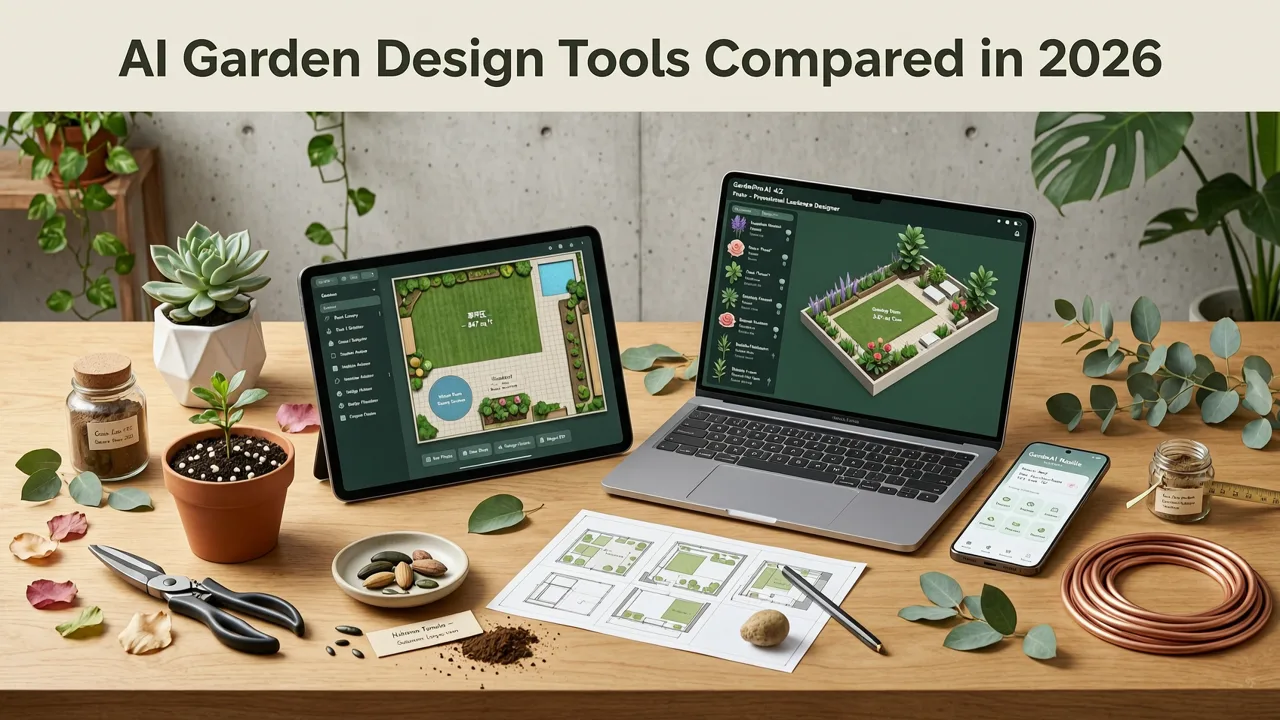
We evaluated the most popular AI-powered landscape design platforms against the criteria above. Here's how they stack up for homeowners, renters, and serious gardeners planning real projects this year.
| Tool | Rendering Quality | Plant Accuracy | Style Range | Free Tier | Best For |
|---|---|---|---|---|---|
| AI Design Gardens | Photorealistic, depth-aware | Zone-matched species | 12+ curated styles | Yes | Homeowners planning full makeovers |
| General Image AI (e.g., Midjourney, DALL·E) | High aesthetic quality | No horticultural data | Unlimited via prompts | Limited | Inspiration mood boards only |
| Traditional 3D Landscape Software | Realistic but manual | Database-dependent | Library-limited | Rarely | Professional designers and architects |
| Mobile-First Garden Apps | Variable, often stylized | Basic zone filters | 5–8 styles | Often | Quick balcony or container ideas |
The pattern is clear: purpose-built landscape AI tools like AI Design Gardens outperform general-purpose image generators when accuracy matters, while traditional 3D software still wins for technical precision at the cost of a steep learning curve. For most homeowners, the sweet spot is a dedicated AI garden design web app that combines photorealism with horticultural intelligence.
How the Best AI for Garden Design Actually Works Under the Hood
Understanding the technology helps you set realistic expectations and get better results from any tool you choose.
Depth-Aware Scene Reconstruction
When you upload a photo, the AI first estimates the depth map of your scene — identifying which objects are near the camera, which are mid-ground, and which form the background. This allows it to place new elements (plants, pergolas, pathways) at correct positions and scales rather than pasting them flat on top of your image. Modern models leverage techniques documented in OpenAI's platform documentation and related research to achieve this from a single view.
Style-Adaptive Layout Generation
Once the spatial structure is understood, the AI applies the selected design style — translating "Mediterranean courtyard" into specific plant species, hardscape materials, color palettes, and layout patterns. It preserves the bones of your actual yard while transforming the aesthetic direction. This is where AI-generated backyard design ideas become genuinely useful, because the output reflects your real space, not a stock image.
Horticultural Validation Layer
The most advanced tools add a validation pass that cross-references generated plant selections against climate databases. If the AI suggests hydrangeas but your photo indicates full sun exposure in a dry region, it adjusts the palette. This step is what separates a pretty picture from a plan you can actually execute.
Step-by-Step: Using AI to Plan Your Garden Makeover
Here's a practical workflow that takes you from a rough yard photo to a design direction you can confidently move forward with.
- Take a clear, well-lit photo. Stand at the corner of your yard or patio and capture the widest view possible. Morning or late-afternoon light reduces harsh shadows.
- Upload to your chosen AI tool. The platform will analyze depth, identify existing structures, and prepare the scene for rendering.
- Select a design style. Browse options like cottage garden, modern minimal, tropical, xeriscape, or Japanese zen. Generate at least two or three variations to compare directions.
- Review plant selections. Check that suggested species match your USDA hardiness zone, sunlight conditions, and maintenance preferences. Tools like AI-powered plant matching can refine these choices further.
- Refine and iterate. Adjust density, swap hardscape materials, or try a different color palette. Most tools let you regenerate variations instantly.
- Export and share. Download high-resolution renderings and plant lists. Share them with a landscaper for quotes or use them as your own planting guide.
If you're specifically rethinking an outdoor entertaining area, the workflow for patio layout ideas from photo follows the same principles but focuses on furniture placement, lighting, and hardscape patterns rather than planting beds.
Common Mistakes Homeowners Make — and How AI Helps You Avoid Them
Buying Plants That Won't Thrive
The single most expensive gardening mistake is purchasing plants unsuited to your climate, soil, or light conditions. AI tools with integrated horticultural databases flag these mismatches before you order, saving you hundreds of dollars in replacements.
Ignoring Scale and Proportion
A tree that looks perfect in a nursery catalog can overwhelm a small yard once planted. Depth-aware AI rendering shows plants at true scale relative to your existing structures, so you can spot proportion problems before digging.
Committing to One Direction Too Early
Traditional landscape design often involves a single concept from a designer, making it hard to compare alternatives. AI lets you generate five or six distinct styles from the same photo in minutes, giving you a broader creative palette to evaluate.
Overlooking Hardscape Opportunities
Many homeowners focus exclusively on plants and forget that pathways, retaining walls, pergolas, and lighting define the structure of a garden. The best AI tools render hardscape elements alongside plantings, helping you see the full picture.
Who Should Use AI for Garden Design — and Who Still Needs a Professional
AI garden design tools are ideal for homeowners planning DIY makeovers, renters visualizing balcony or patio upgrades, and anyone who wants to explore multiple design directions before hiring a landscape architect. They're also valuable for communicating your vision to professionals — arriving at a consultation with AI-generated concepts saves time and ensures your designer understands your preferences.
However, AI tools don't replace the need for a licensed landscape architect when your project involves structural changes, drainage engineering, retaining walls over a certain height, or complex irrigation systems. Use AI for conceptual exploration and aesthetic direction, then bring in professionals for technical execution on large-scale projects.
The Future of AI Garden Design Beyond 2026
The trajectory is clear: AI tools are becoming more spatially accurate, more horticulturally informed, and more integrated with supplier databases so you can order the exact plants shown in your rendering. As responsible AI practices outlined in Google's AI guidance continue to evolve, expect better transparency around how design suggestions are generated and stronger guardrails against unrealistic or ecologically harmful plant recommendations.
We're also seeing early movement toward seasonal visualization — previewing how your garden will look in spring, summer, and fall from a single design — and augmented reality overlays that project AI-generated designs onto your yard in real time through your phone camera. These capabilities are still maturing, but they signal where the best AI for garden design is headed next.
Final Verdict: Choosing the Right AI Tool for Your Project
The best AI for garden design in 2026 is the one that combines photorealistic rendering, climate-appropriate plant data, and an intuitive interface that lets you explore freely without technical barriers. For homeowners starting from a single photo and wanting actionable, shareable concepts, purpose-built landscape AI platforms deliver dramatically better results than general image generators or traditional design software.
Upload your photo, test a few styles, compare the renderings, and walk into your next landscaping conversation with confidence. Your yard — and your wallet — will thank you.
Ready to see your outdoor space transformed? Upload a photo to AI Design Gardens today and generate your first realistic landscape concept in under a minute.


