

Why an AI Plant Layout Generator Changes How We Plan Gardens in 2026
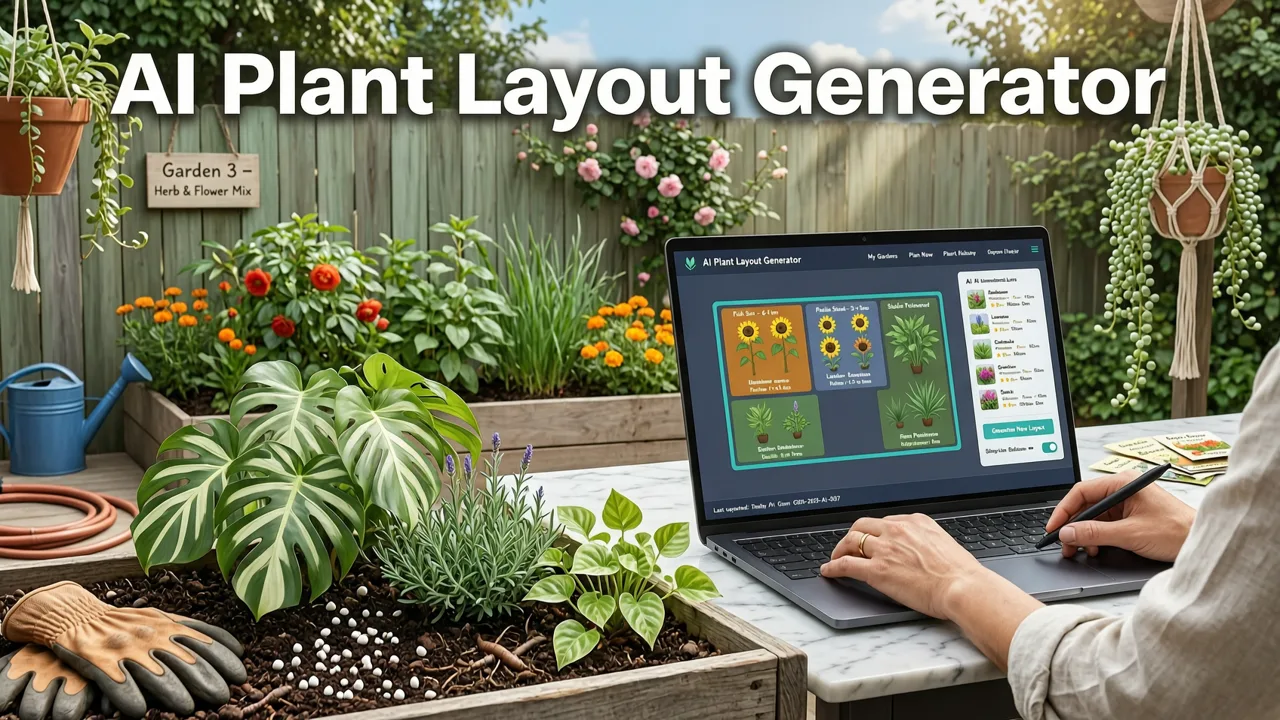
If you have ever stared at a bare patch of soil, a tired flowerbed, or a blank backyard and wondered where each shrub, perennial, and tree should actually go, an AI plant layout generator gives you the answer in seconds. Upload a single photo of your outdoor space, choose a design style, and the AI returns realistic, depth-aware planting plans that show you exactly how your garden could look before you spend a dollar on plants or hire a landscaper.
In 2026, this technology has moved far beyond novelty. Modern AI plant layout generators combine computer vision, generative scene modeling, and plant database intelligence to produce plans that respect sunlight patterns, soil context, and spatial proportions. Whether you are redesigning a front yard curb appeal, rethinking a patio border, or planning a full backyard makeover, the tool lets you visualize, compare, and refine designs with a level of precision that was previously available only to professional landscape architects.
What an AI Plant Layout Generator Actually Does
At its core, an AI plant layout generator is a software tool that analyzes a photograph of your outdoor space and produces a realistic visual rendering showing where plants, hardscape elements, and decorative features would be placed. Unlike a flat 2D sketch or a mood board of stock images, the output is tailored to the exact geometry, lighting, and architectural context of your own yard.
Create Floor Plans in SECONDS Using This AI Method!
by The Architecture Grind
Here is the step-by-step workflow most leading tools follow:
- Photo upload: You snap or upload a clear image of the area you want to redesign.
- Scene analysis: The AI maps the spatial boundaries, detects existing structures, and estimates lighting conditions.
- Style selection: You choose from design aesthetics such as cottage garden, modern minimalist, Mediterranean, tropical, or Japanese zen.
- Plant placement: The generator positions species-appropriate plants in realistic proportions, accounting for mature size, color harmony, and seasonal variation.
- Preview and iterate: You compare multiple layouts side by side, swap individual plants, and export a final plan to share with a landscaper or nursery.
The result is not a generic template dropped onto your photo. It is a context-aware design that feels like it belongs in your specific space. For a deeper look at how this process works across different outdoor areas, see our guide on the best AI garden design tool available to homeowners today.
How AI Transforms a Simple Photo Into a Detailed Plant Layout
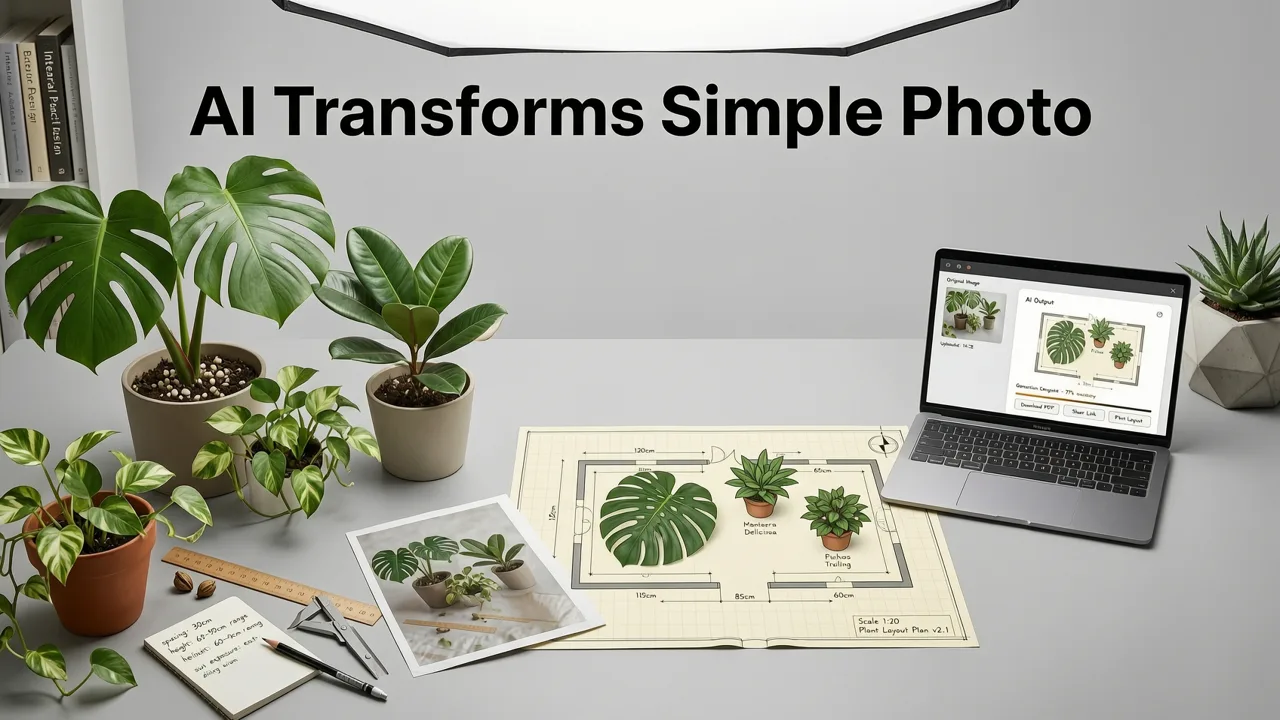
The magic behind a quality AI plant layout generator lies in the layered intelligence working behind the scenes. Understanding these layers helps you appreciate why the results are so much more useful than a hand-drawn sketch or a static catalog image.
Depth-Aware Scene Reconstruction
When you upload a photo, the AI does not treat it as a flat image. It reconstructs a three-dimensional understanding of your space, identifying the ground plane, walls, fences, existing trees, and sightlines. This depth awareness ensures that plants are placed at correct scale, with foreground specimens appearing larger and background elements receding naturally. The outcome is a rendering that looks believable from every angle.
Style-Adaptive Layout Generation
Every garden style follows its own visual grammar. A cottage garden embraces layered informality, generous bloom, and intermingled textures. A modern minimalist layout favors clean lines, repetition, and restrained plant palettes. The AI has been trained on thousands of professionally designed gardens across these styles and applies the appropriate principles when generating your layout. You can explore how these principles translate to different outdoor zones in our 25 backyard design ideas for 2026 feature.
Species Intelligence and Compatibility
Top-tier generators do not just place pretty shapes on a canvas. They reference plant databases that encode growing requirements, mature dimensions, bloom seasons, and companion-planting relationships. When the AI selects a hydrangea for a shaded border, it considers whether the soil context and light exposure in your photo support that species. This layer of intelligence is what separates a useful planning tool from a purely decorative one. For more on matching plants to your specific conditions, read our breakdown of the best plants for your backyard using AI-powered matching.
Key Benefits of Using an AI Plant Layout Generator
The shift from guesswork to guided visualization delivers tangible advantages for homeowners, renters, and gardening enthusiasts alike.
- See before you spend: Visualize mature plant arrangements before purchasing anything, eliminating costly replanting mistakes.
- Compare multiple directions: Generate three or four distinct style options for the same space and evaluate which resonates most.
- Communicate clearly with professionals: Share a realistic rendering with a landscaper or nursery instead of trying to describe your vision in words.
- Save time on research: Skip hours of browsing plant catalogs and sketching on paper; the AI handles spatial arrangement instantly.
- Experiment freely: Try bold color combinations or unconventional layouts with zero physical commitment.
- Seasonal confidence: Some generators show how your layout will look across spring, summer, and fall bloom cycles.
AI Plant Layout Generator vs. Traditional Garden Planning Methods
To understand just how much the technology has advanced, it helps to compare it directly with the approaches most homeowners relied on even a few years ago.
| Factor | Traditional Methods (Sketches, Catalogs) | AI Plant Layout Generator (2026) |
|---|---|---|
| Visualization realism | Flat sketches or mood boards; hard to judge scale | Photorealistic renderings matched to your actual photo |
| Time to first concept | Hours to days of research and drawing | Seconds to minutes after upload |
| Style exploration | Limited to what you can imagine or find in books | Multiple AI-generated style variations on demand |
| Plant suitability | Manual cross-referencing with zone maps and guides | AI references species data and environmental context |
| Cost before commitment | Often requires buying plants to test a layout | Free to iterate digitally before any purchase |
| Professional communication | Vague descriptions or hand-drawn plans | High-resolution images landscapers can work from directly |
Who Benefits Most From an AI Plant Layout Generator
While the tool is useful for anyone with an outdoor space, certain situations deliver especially high value.
Homeowners Planning a Full Yard Redesign
If you are tackling a comprehensive landscape overhaul, the cost of a wrong plant choice compounds quickly. A mature tree planted too close to a foundation, or a sun-loving shrub placed in deep shade, can waste hundreds of dollars and years of growth. An AI plant layout generator lets you test the entire plan digitally, catching spacing and compatibility issues before they become expensive realities.
Renters Improving a Patio or Balcony
Renters often want to personalize their outdoor area without major investment. Container layouts, vertical garden arrangements, and compact balcony plantings can all be visualized through the generator, helping you choose pieces that fit your square footage and lighting conditions perfectly. For patio-specific inspiration, explore our patio layout ideas from photo resource.
Gardeners Experimenting With New Styles
Experienced gardeners who want to transition from one aesthetic to another, say from a traditional English border to a drought-tolerant xeriscape, can use the tool to preview the shift realistically. This is especially valuable when the new style involves unfamiliar species or spacing conventions.
First-Time Homeowners Starting From Scratch
Moving into a new build with a bare yard can feel overwhelming. The AI removes the paralysis of infinite possibility by generating concrete, visual starting points that you can refine over time.
How to Get the Best Results From Your AI Plant Layout Generator
The quality of the output depends partly on the quality of the input. Follow these practical guidelines to ensure your generated layouts are as accurate and useful as possible.
- Shoot in good light: Capture your photo during daylight hours when the space is evenly lit. Avoid harsh midday shadows that can confuse the AI's depth analysis.
- Clear the frame: Remove temporary clutter such as toys, hoses, or vehicles so the AI can focus on permanent structures and the ground plane.
- Include reference objects: Make sure fences, walls, doors, or existing large plants are visible. These help the AI gauge scale accurately.
- Take multiple angles: If you are redesigning a large yard, shoot from two or three vantage points and generate layouts for each. This gives a more complete picture of the full space.
- Be specific with style inputs: If the tool allows descriptive prompts, use precise language like "Mediterranean courtyard with lavender, olive tree, and terracotta pots" rather than a vague "make it pretty."
- Iterate rather than settle: Generate several variations, swap individual elements, and compare before committing to a final plan.
Understanding the Responsible Use of AI in Garden Design
As AI tools become more embedded in everyday decision-making, it is worth considering how they should be used responsibly. Leading platforms follow guidelines similar to those outlined in Google's AI responsibility principles, prioritizing transparency, user control, and accuracy. In the context of garden design, this means the AI should clearly present its outputs as design suggestions rather than certified horticultural advice, and it should encourage users to verify plant suitability for their local climate zone and soil conditions before purchasing.
The underlying generative models powering these tools are built on frameworks documented in resources like the OpenAI documentation, which emphasize safe deployment and continuous refinement. As a user, you benefit from a tool that is constantly improving its plant knowledge, rendering accuracy, and style fidelity.
Common Mistakes to Avoid When Using an AI Plant Layout Generator
Even the most advanced tool can produce suboptimal results if used carelessly. Watch out for these pitfalls.
- Using a blurry or poorly lit photo: The AI cannot reconstruct what it cannot clearly see. A sharp, well-lit image is the single biggest factor in output quality.
- Ignoring mature plant size: The generator may show plants at their mature proportions, but if you do not account for this when purchasing nursery stock, you may overcrowd beds within a few seasons.
- Skipping climate verification: Always confirm that the species suggested by the AI are appropriate for your USDA hardiness zone or local climate equivalent.
- Relying on a single generation: One layout is a starting point, not a final answer. Explore multiple variations before making decisions.
- Forgetting hardscape and infrastructure: Plants do not exist in isolation. Consider irrigation access, pathway materials, and drainage alongside the planting plan.
What to Look for in the Best AI Plant Layout Generator in 2026
Not all tools on the market deliver the same level of quality. When evaluating options, prioritize these capabilities:
- Photorealistic rendering: The output should look like a plausible photograph of your actual yard, not a cartoon or collage.
- Style diversity: The tool should support a wide range of aesthetics from formal to naturalistic.
- Plant database depth: A broad, regularly updated species library ensures relevant and realistic suggestions.
- Iterative editing: You should be able to swap individual plants or features without regenerating the entire scene.
- Export options: High-resolution downloads that you can share with contractors, nurseries, or gardening groups.
- Free trial or freemium access: Reputable tools let you test the core workflow before requiring payment.
The Future of AI-Driven Garden Planning
The trajectory is clear: AI plant layout generators will become more precise, more personalized, and more integrated with purchasing workflows. Expect to see features such as direct integration with local nursery inventory, automated shopping lists based on your approved layout, and seasonal progression previews that show how your garden evolves month by month. As the underlying models improve, the gap between a digital preview and the final planted result will continue to narrow, giving homeowners unprecedented confidence in their outdoor design decisions.
Frequently Asked Questions
Can an AI plant layout generator work with any type of outdoor space?
Yes. Modern generators handle backyards, front yards, patios, balconies, and even indoor garden areas. The key is uploading a clear photo that captures the spatial boundaries and existing structures of your specific area.
Do I need gardening experience to use an AI plant layout generator?
Not at all. These tools are designed for homeowners and beginners as well as experienced gardeners. You upload a photo, select a style, and the AI handles plant placement. You can then refine the results as your confidence grows.
Are the plants suggested by the AI suitable for my climate?
Leading generators reference plant databases that include climate zone data. However, you should always verify that suggested species are appropriate for your local conditions before purchasing, especially if you live in a region with unusual microclimates.
How many design variations can I generate from one photo?
Most tools allow you to generate multiple style variations from a single upload. You can typically produce three to five distinct layouts and iterate further by swapping individual elements within each design.
Is the AI plant layout generator free to try?
Many platforms offer a free tier or trial that lets you upload a photo and generate initial layouts. Premium features such as high-resolution exports, unlimited iterations, and advanced editing may require a subscription.
Start Designing Your Garden With Confidence
An AI plant layout generator removes the guesswork from garden planning and replaces it with realistic, personalized visualizations you can trust. Whether you are reimagining a small balcony, overhauling a backyard, or simply curious about how a cottage garden would look along your front walkway, the technology puts professional-level design insight in your hands in minutes. Upload your first photo today, explore a few style directions, and walk into your next planting season with a plan that actually fits your space.


