

Small Japanese Balcony Garden Ideas: Why AI Preview Changes Everything in 2026
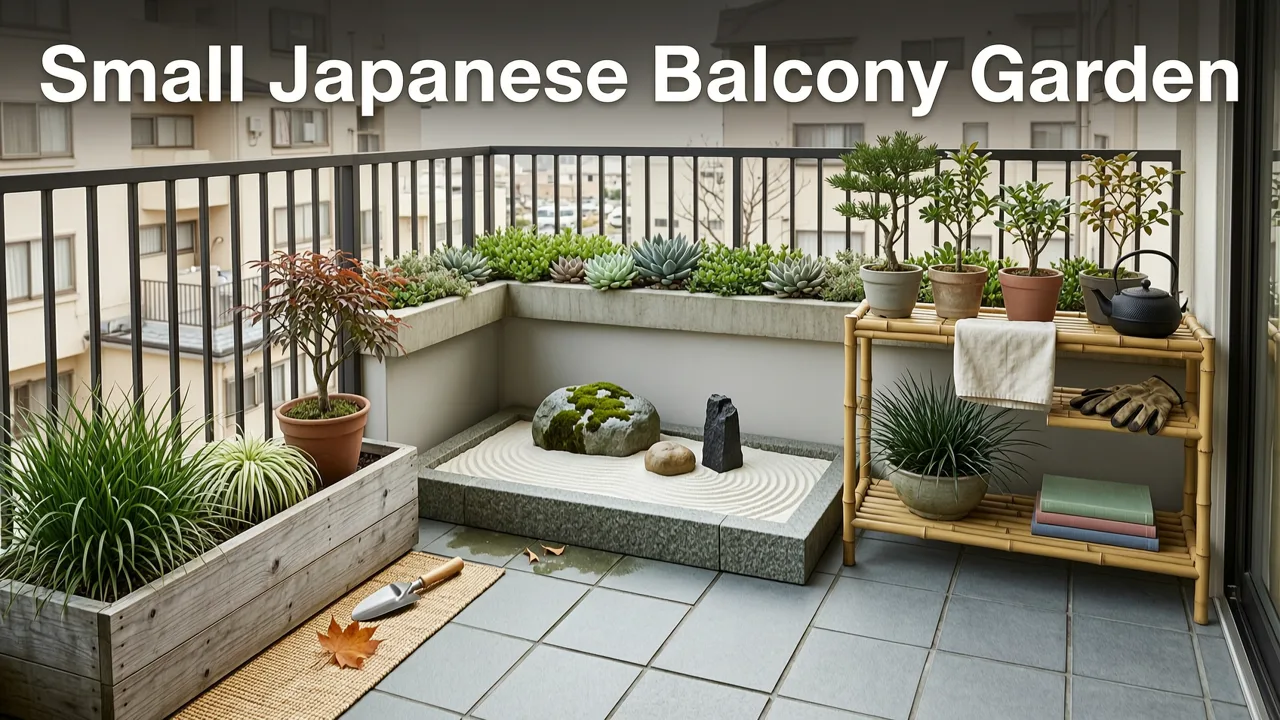
A small Japanese balcony garden can transform even the tightest outdoor space into a tranquil, layered retreat — but only if the proportions, plant choices, and hardscape elements actually work in your real balcony. In 2026, the fastest way to find out is not to buy a single plant yet. It is to upload a photo of your balcony and preview realistic Japanese-style layouts with AI before committing to a design.
This guide walks you through the most effective small Japanese balcony garden ideas, explains how each element functions in a compact footprint, and shows you how to visualize every concept against your own railing, wall, and floor — not a Pinterest mood board that ignores your actual dimensions.
What Defines a Small Japanese Balcony Garden
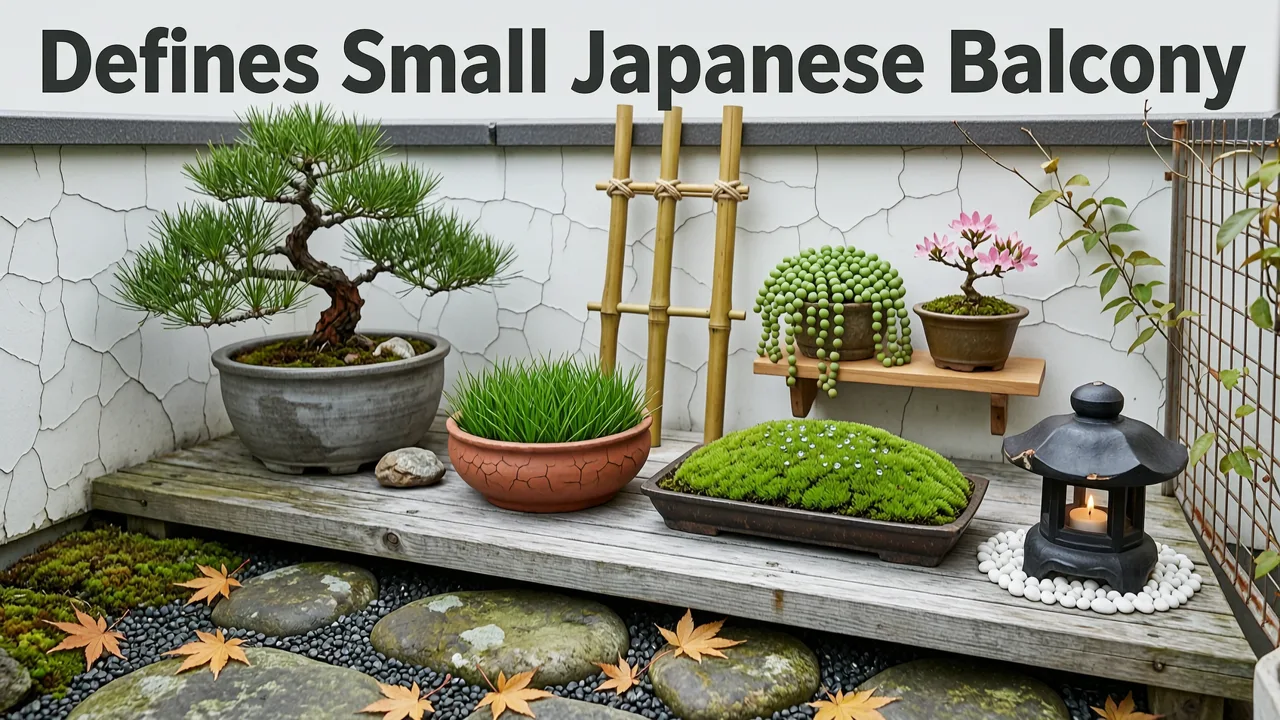
A Japanese balcony garden is not simply a collection of potted plants arranged neatly. It is a deliberately composed miniature landscape that borrows principles from traditional Japanese garden design — asymmetry, layering, negative space, seasonal rhythm — and scales them to fit a railing, a ledge, or a narrow concrete pad.
DIY MAKEOVER SMALL JAPANESE BALCONY | DAISO JAPAN
by Japanne
The core principles that carry over to balcony scale include:
- Wabi-sabi: embracing imperfection and natural weathering in materials like aged wood, moss, and stone.
- Shakkei (borrowed scenery): framing the skyline or a distant tree as part of your composition rather than fighting it.
- Miegakure (hide and reveal): using partial screens, bamboo fencing, or a single tall plant to create depth in a shallow space.
- Ma (negative space): leaving areas intentionally empty so the eye rests, which is critical on a small balcony where overcrowding feels claustrophobic.
When these principles are applied to a balcony that might be just two meters wide, the result feels intentional rather than cluttered. And when you preview the layout with AI first, you can test whether those principles actually read correctly in your specific light, angle, and railing configuration.
7 Small Japanese Balcony Garden Ideas That Work in 2026
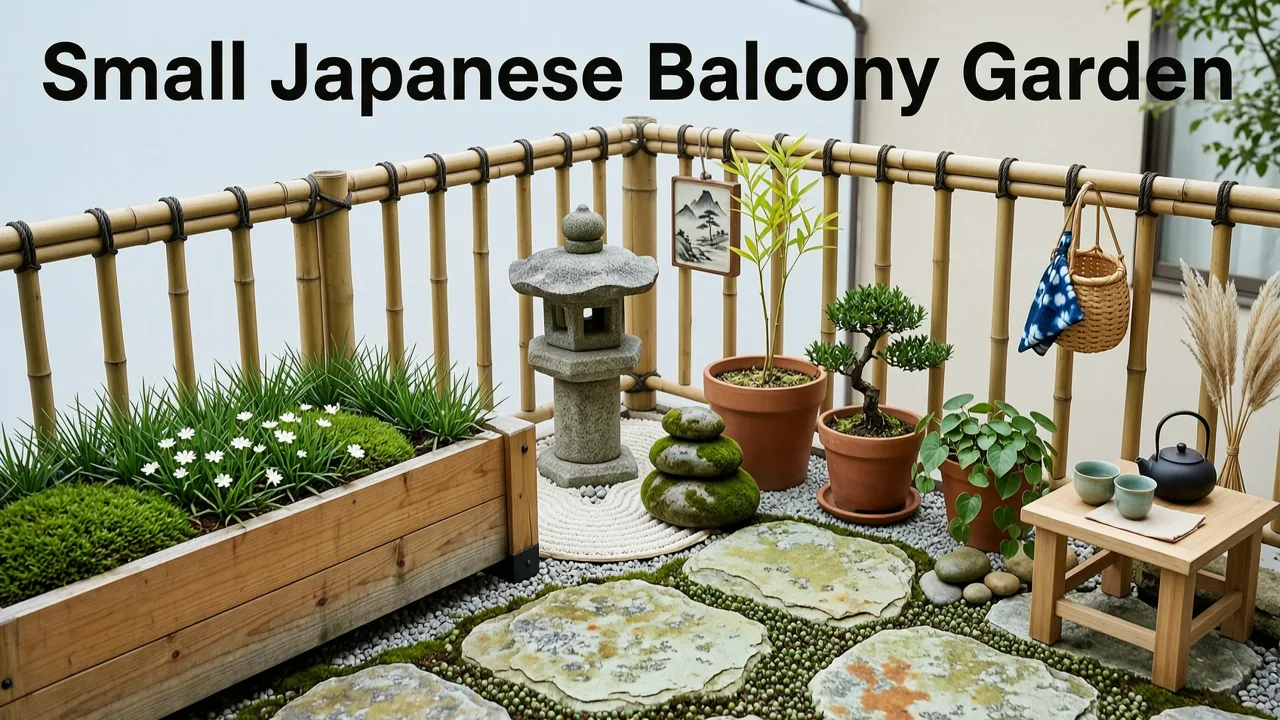
1. Miniature Zen Sand Tray on a Tiered Shelf
A shallow wooden tray filled with fine white gravel, a single smooth stone, and a miniature rake is the most space-efficient Zen element you can add to a balcony. Place it on a narrow tiered shelf against a wall and it becomes a focal point without consuming floor space. The key is scale: the tray should feel like a jewel, not a centerpiece competing with your seating.
2. Bamboo Screening for Privacy and Vertical Rhythm
Thin bamboo poles lashed to the railing or mounted on a slim frame create instant privacy and vertical texture. In a small Japanese balcony garden, bamboo serves a dual role: it filters harsh sunlight for shade-loving plants below, and it introduces the linear rhythm that Japanese design relies on. Choose treated bamboo rated for outdoor use, and anchor it securely — wind load on a balcony is no joke.
3. Moss and Fern Container Arrangement
Moss is the soul of a Japanese garden, and on a balcony, it thrives in shallow terrarium-style containers or low ceramic bowls. Pair it with a compact fern — such as a Japanese painted fern or a small maidenhair — in a shaded corner. The combination reads as a miniature forest floor. In 2026, stabilized moss panels are also widely available for balconies where live moss would struggle with wind and sun exposure.
4. Stone Lantern as a Single Focal Point
A small stone lantern — a tōrō scaled to 20 or 30 centimeters — placed on a raised plinth at one end of the balcony anchors the entire composition. Japanese gardens traditionally use a single focal point to give the eye a destination. On a balcony, that focal point should be visible from your primary seating position. Do not add more than one lantern or you will break the principle of restraint.
5. Compact Japanese Maple in a Deep Pot
A dwarf Japanese maple — varieties like 'Red Dragon', 'Ryusen', or 'Koto no Ito' — is the single most impactful plant you can place on a small Japanese balcony garden. In a deep, matte-black or dark terracotta pot, it provides seasonal color, architectural branching, and a sense of age that no annual flower can match. Position it where it receives morning sun and afternoon shade.
6. Water Basin (Tsukubai) Miniature
A traditional tsukubai is a stone water basin used in tea ceremony gardens. On a balcony, a miniature version — a shallow stone bowl with a slow drip from a bamboo spout — introduces the sound of water without the footprint of a pond. The auditory element is what matters here: the gentle trickle masks city noise and reinforces the sense of a self-contained landscape.
7. Stepping-Stone Path Illusion on the Floor
Two or three flat, irregularly shaped stones placed on the balcony floor create the visual suggestion of a garden path. This is a classic miegakure technique: the brain interprets the stones as a journey, which makes the space feel deeper than it is. Keep the stones low-profile so they do not become tripping hazards, and leave generous gaps between them to preserve the feeling of ma.
How to Preview Your Small Japanese Balcony Garden with AI Before You Build
The most common mistake homeowners make with balcony gardens is buying plants and materials based on a mental image that does not match their actual space. A balcony that faces northwest will read very differently from one that faces southeast. A railing made of glass will change the sightlines entirely compared to a solid concrete parapet.
This is exactly why AI-powered design tools have become the standard first step in 2026. The process works in three steps:
- Upload a real photo of your balcony. Take it from your primary viewing angle — usually from inside looking out, or from the doorway. Do not use a stock image or a diagram.
- Select a Japanese garden style. Choose from options like Zen minimalist, moss garden, tea garden, or courtyard garden. The AI maps the style's typical elements — stone, water, plant types, screening — onto your actual space.
- Review and compare multiple layouts. Generate two or three variations and compare them side by side. This lets you see whether a bamboo screen feels right at your railing height, or whether a maple would dominate the space.
If you want to see how this works for a front-facing outdoor area as well, you can also explore front yard landscape ideas you can generate from a photo using the same AI workflow.
Choosing the Right Plants for a Small Japanese Balcony Garden
Plant selection is where most balcony gardens fail. A plant that thrives in a ground-level Japanese garden may wither on a wind-blasted, sun-baked balcony two stories up. Here is a practical planting guide organized by light condition:
| Light Condition | Recommended Plants | Role in Design |
|---|---|---|
| Full sun (6+ hours) | Dwarf Japanese maple ('Red Dragon'), Japanese black pine (mame size), azalea, hakonechloa grass | Focal tree, structural accent, seasonal color |
| Partial shade (3–5 hours) | Japanese painted fern, hosta (miniature varieties), Japanese anemone, heuchera | Understory layer, texture contrast |
| Deep shade (under 3 hours) | Moss (live or stabilized), Japanese aralia, cast iron plant, liverwort | Ground cover, forest-floor effect |
| Wind-exposed | Juniper procumbens 'Nana', dwarf bamboo (Fargesia murielae), sedum, creeping thyme | Screening, wind buffer, low-maintenance filler |
When you preview these plant combinations using AI, you can see how they layer together before purchasing. This is especially valuable for a small Japanese balcony garden, where one oversized plant can overwhelm the entire composition.
Materials and Hardscape: What Works at Balcony Scale
Traditional Japanese gardens rely heavily on stone, gravel, and water. On a balcony, you need to adapt those materials to weight restrictions and drainage realities.
- Gravel and sand: Use in shallow, contained trays only. Loose gravel on a balcony floor is a wind hazard and a drainage nightmare.
- Stone: Choose lightweight volcanic rock or pumice rather than dense granite. A 30-centimeter granite boulder can weigh over 40 kilograms — check your balcony's load rating.
- Wood: Cedar and cypress are traditional and weather beautifully. Use them for shelf brackets, tray frames, and bamboo lashing ties.
- Water features: A recirculating pump in a sealed basin is the only practical option. Never attempt a flowing water feature on a balcony without professional waterproofing assessment.
For patio-level spaces that connect to a balcony or ground-floor outdoor area, you might also consider using an AI patio layout generator to coordinate the hardscape between both zones so the Japanese style flows seamlessly.
Common Mistakes to Avoid in a Small Japanese Balcony Garden
Even with the best intentions, compact Japanese-style balconies often fall into a few predictable traps:
- Too many focal points. One lantern, one maple, one moss bowl. If everything is a focal point, nothing is.
- Ignoring wind. Tall bamboo or a lightweight maple in a shallow pot will topple on an upper-floor balcony. Stake, anchor, and choose heavy pots.
- Overcrowding the floor. The principle of ma demands open space. If you cannot walk across your balcony without navigating an obstacle course, you have too much.
- Using non-Japanese ornamental plants as fillers. Petunias, geraniums, and colorful calibrachoa will break the visual language instantly. Stick to foliage-driven, textural plants.
- Skipping the AI preview step. Buying plants before visualizing the layout is the single most expensive mistake. You end up with plants that do not fit, colors that clash, and a space that feels busy rather than serene.
How to Use Your AI Preview to Plan Purchases and Phasing
Once you have generated your AI-designed small Japanese balcony garden layouts, use them as a phased implementation plan rather than a shopping list.
- Phase 1 — Hardscape and screening: Install bamboo screening, shelving, and any stone or lantern elements first. These are the bones of the design.
- Phase 2 — Anchor plants: Place your Japanese maple or primary structural plant. Let it establish for a few weeks before adding understory layers.
- Phase 3 — Understory and ground cover: Add ferns, moss containers, and filler plants once you can see how the anchor plant reads in the space.
- Phase 4 — Water and sound: Install the miniature tsukubai or recirculating water feature last, once the planting is settled and you can judge the acoustic balance.
This phased approach mirrors how professional landscape designers work, and it becomes far more precise when you can compare your AI-generated layouts at each stage. If you are also planning a larger backyard project, the same AI workflow applies — you can learn more about how to design a backyard from a photo using AI for projects that extend beyond the balcony.
Why This Approach Outperforms Traditional Design Methods in 2026
Five years ago, designing a small Japanese balcony garden meant browsing inspiration photos, guessing at scale, and hoping the plants you ordered would look right when they arrived. In 2026, AI visualization tools have eliminated that guesswork. You are no longer designing from imagination — you are designing from a realistic rendering of your own space.
This matters more on a small balcony than in a large yard. In a large garden, a misplaced plant is an inconvenience. On a two-meter balcony, a misplaced plant is the entire garden. The margin for error is razor-thin, and AI preview gives you the confidence to use that margin wisely.
For homeowners who want to see a broader range of AI-generated outdoor designs before narrowing down to a Japanese balcony style, the 25 front yard landscape ideas for 2026 collection demonstrates how the same AI process adapts to very different scales and styles.
Final Thoughts: Start with Your Photo, Not Your Wallet
A small Japanese balcony garden is one of the most rewarding outdoor projects you can undertake — if you plan it correctly. The principles of Japanese garden design translate beautifully to compact spaces, but they demand precision. Every element must earn its place.
The smartest move you can make in 2026 is to photograph your balcony first, generate a few AI-designed layouts, and let those realistic previews guide every purchase and planting decision. You will save money, avoid wasted plants, and end up with a balcony that feels like a genuine Japanese landscape — not a collection of potted compromises.
Upload your balcony photo today and preview your small Japanese balcony garden in minutes. The right layout is already waiting inside your space — you just need to see it before you build it.


