

AI Japanese Garden Planner — From Your Photo to a Zen-Ready Yard
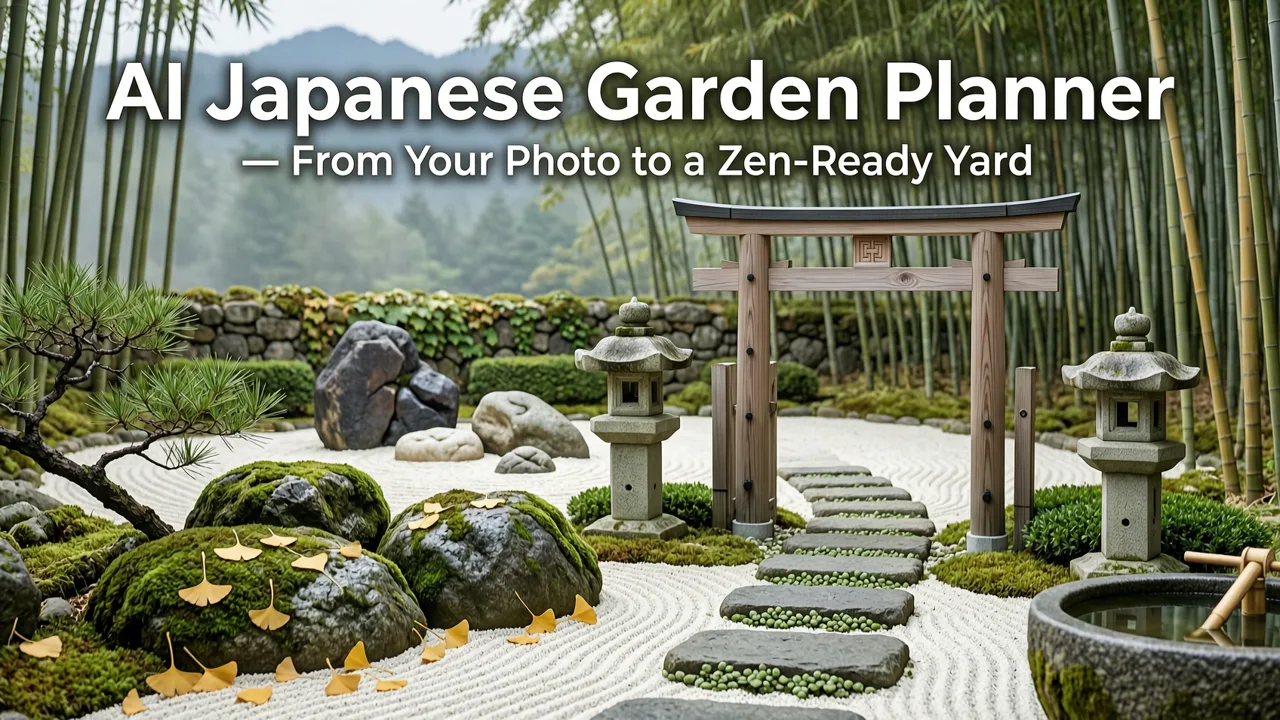
If you have been dreaming of a tranquil Japanese-inspired outdoor space but cannot tell which layout will actually work in your yard, an AI Japanese garden planner solves the guesswork in minutes. Upload a single photo of your yard, patio, or balcony, and the tool generates realistic, style-accurate landscape concepts you can compare before spending a single dollar on plants, stone, or a landscape contractor.
In 2026, AI-driven visualization has replaced sketchy mood boards and expensive concept renderings for thousands of homeowners. You no longer need a design degree, a drafting table, or a consultation fee to see whether a karesansui (dry landscape), a tsukubai water basin, or a winding roji garden path will feel right in your specific space. The AI Japanese garden planner translates your real photo into multiple design directions, grounded in authentic Japanese garden principles and adapted to your climate, light conditions, and scale.
What Makes a Japanese Garden Different — And Why AI Gets It Right
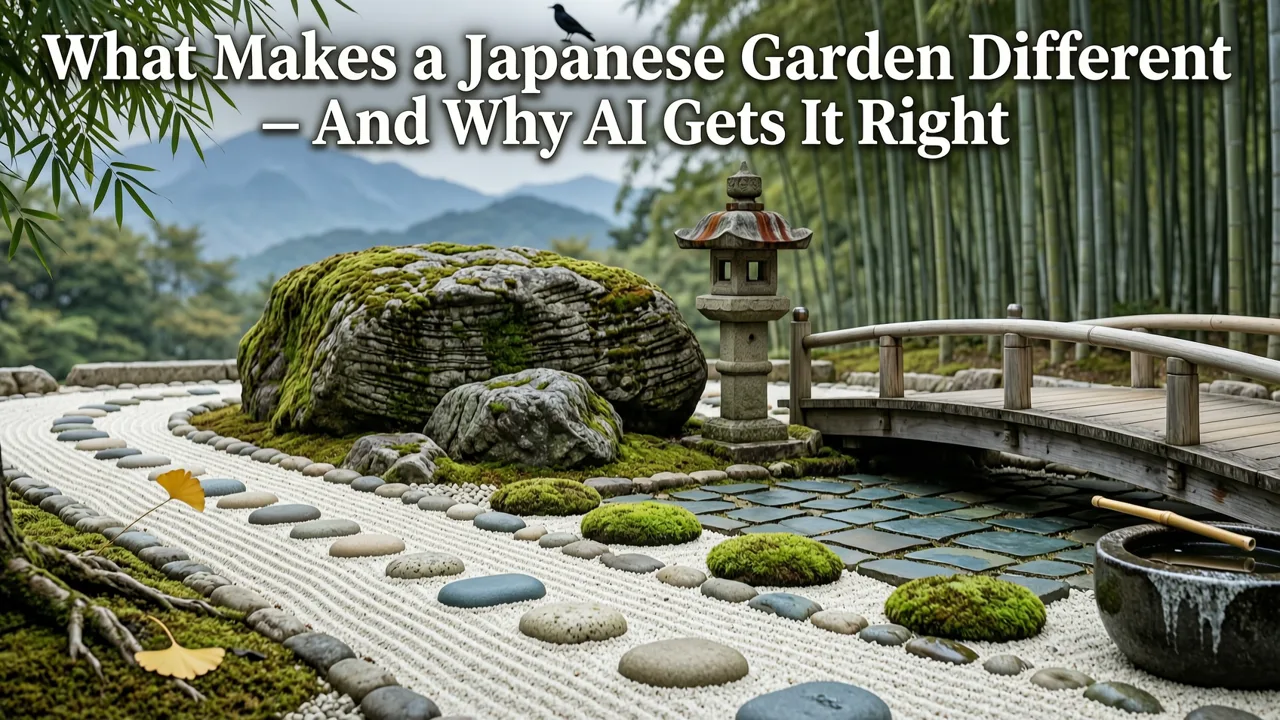
Japanese garden design is not simply a matter of placing a few rocks and a maple tree. It rests on centuries-old principles of asymmetry, borrowed scenery (shakkei), layered texture, and the careful balance of stone, water, plants, and empty space. A poorly planned Japanese-style yard can feel cluttered, inauthentic, or simply wrong — which is why visualization before installation matters more here than in almost any other garden style.
FREE!!! AI to Design Your Dream Backyard! (Before & After)
by Nana's easy AI
Core Principles the AI Applies to Your Photo
- Wabi-sabi — embracing imperfection, weathered textures, and natural aging in materials and plant form.
- Miegakure — hide-and-reveal sightlines that encourage slow movement and discovery.
- Sanbonsugi — the triad composition of stone, water feature, and primary planting anchor.
- Ma — intentional negative space that lets the eye rest and the garden breathe.
- Shakkei — borrowing distant scenery such as a tree line, hill, or skyline to extend the garden visually.
When you upload your photo, the AI evaluates your existing hardscape, sightlines, and proportions, then layers these principles into design concepts that respect both tradition and your site's real constraints. You can read more about how AI translates real outdoor spaces into actionable plans in our guide on how to design a backyard from photo using AI.
How the AI Japanese Garden Planner Works — A 3-Step Process
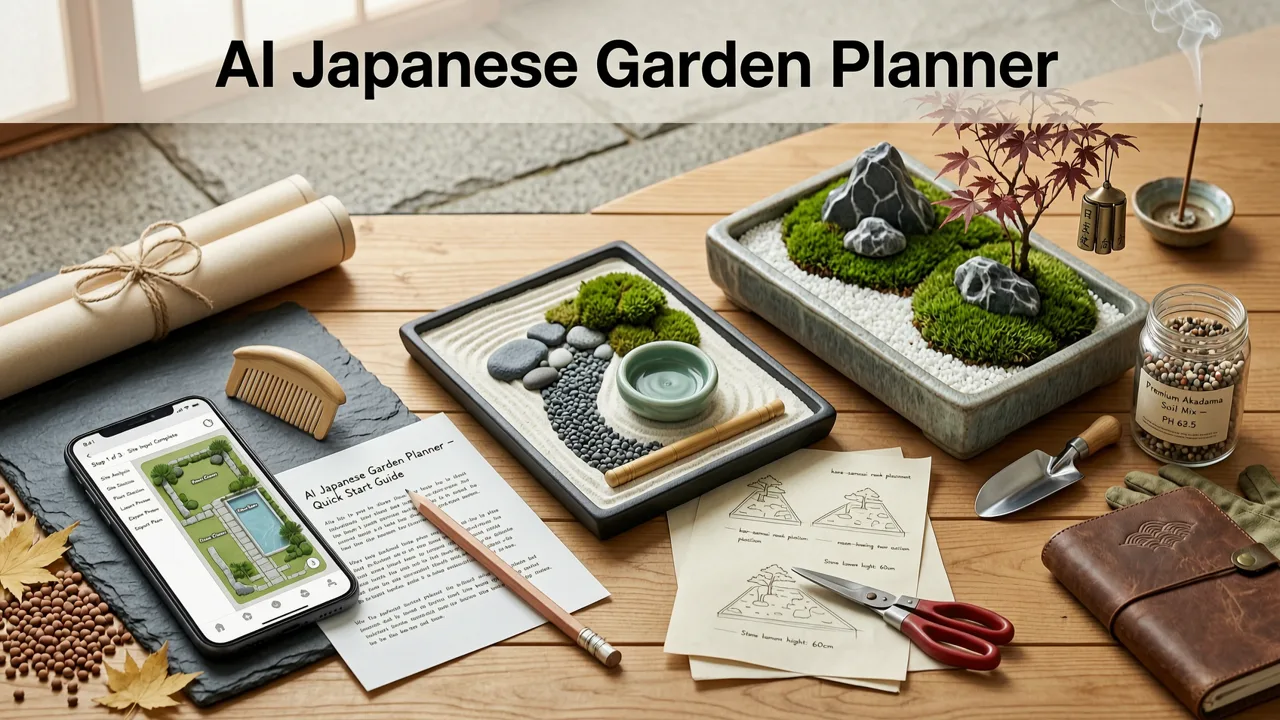
The workflow is built for speed and clarity. There is no software to install, no account maze, and no design jargon required. Here is the realistic process homeowners follow in 2026.
Step 1: Upload Your Real Photo
Take a straight-on photo of the area you want to redesign — a backyard corner, a side yard, a front entrance, or a patio. The AI works best with clear, well-lit images taken at eye level. Avoid heavy shadows, extreme wide-angle distortion, or images where the main area is blocked by furniture or vehicles.
Step 2: Choose a Japanese Garden Style
Select from style presets that map to authentic Japanese garden categories:
- Karesansui (Dry Landscape) — raked gravel, carefully placed rocks, minimal planting. Ideal for small courtyards and side yards.
- Roji (Tea Garden) — stepping stones, moss, lanterns, and a tsukubai basin. Suited to shaded walkways and entry transitions.
- Chaniwa (Stroll Garden) — winding paths, pond elements, layered shrubs, and borrowed scenery. Best for larger backyards.
- Tsubo-niwa (Courtyard Garden) — compact, vertical-friendly designs for balconies, patios, and narrow urban lots.
- Modern Zen Fusion — clean lines, contemporary materials, and restrained Japanese accents for homeowners who want a subtler interpretation.
Step 3: Preview, Compare, and Refine
Within seconds, the AI generates multiple realistic renderings overlaid on your actual photo. You can toggle between styles, swap individual elements such as lantern type, stone arrangement, or primary tree species, and save favorites to share with a contractor or nursery. This compare-before-you-commit approach is exactly what makes tools like the free AI patio layout generator so valuable for homeowners who want to avoid costly replanting.
Japanese Garden Styles Compared — Which One Fits Your Space
Choosing the right style is the single most important decision. Below is a practical comparison based on space size, maintenance level, climate tolerance, and budget.
| Style | Best For | Maintenance | Climate Flexibility | Typical Budget Range |
|---|---|---|---|---|
| Karesansui (Dry Landscape) | Small yards, side courts, front entries | Low | High — works in arid and temperate zones | $ |
| Roji (Tea Garden) | Shaded paths, entry transitions | Medium | Medium — moss and ferns need humidity | $$ |
| Chaniwa (Stroll Garden) | Larger backyards with room to wander | Medium–High | Medium — pond elements need climate match | $$$ |
| Tsubo-niwa (Courtyard) | Balconies, patios, narrow urban lots | Low–Medium | High — container-friendly | $–$$ |
| Modern Zen Fusion | Contemporary homes, minimalist tastes | Low | High | $$ |
If you are also considering the front of your home, the same AI workflow applies — see our collection of 25 front yard landscape ideas for 2026 for Japanese-inspired curb appeal concepts tested against real photos.
What to Look for in a Quality AI Japanese Garden Planner
Not every AI garden tool understands Japanese design principles. Many generic landscape generators produce stylized but culturally inaccurate results — mixing bamboo where maple belongs, placing lanterns in symmetrical rows, or ignoring the importance of negative space. When evaluating a planner, prioritize the following.
Style Accuracy and Cultural Grounding
The AI should demonstrate understanding of asymmetry, naturalistic grouping, and seasonal layering. Look for tools that reference authentic garden categories rather than vague labels like "Asian style." Quality planners are trained on documented garden typologies and can explain why a particular element belongs in a given composition.
Photo-to-Design Fidelity
The renderings should respect the proportions, lighting, and existing structures in your uploaded photo. If the AI ignores your fence line, changes your house color, or places a full-size maple in a three-foot balcony, the output is decorative — not useful. The best tools in 2026 maintain spatial fidelity so you can trust the layout when it comes time to build.
Plant and Material Recommendations
A strong planner suggests specific species and materials suited to your climate zone. For a Japanese garden, this might mean recommending Acer palmatum (Japanese maple) for temperate zones, Pinus thunbergii (Japanese black pine) for coastal areas, or Ophiopogon japonicus (mondo grass) as a low-maintenance ground cover. Material suggestions should extend to gravel type, stone origin, and lantern style.
Iteration and Comparison Tools
You should be able to generate multiple variations, toggle individual elements, and save side-by-side comparisons. This is especially important for Japanese gardens, where a single stone repositioned by two feet can change the entire composition's energy.
Common Mistakes the AI Helps You Avoid
Japanese garden design has a low tolerance for error. A misplaced element does not just look wrong — it breaks the philosophical intent of the space. Here are the most common mistakes homeowners make when attempting a Japanese-style garden without proper planning, and how AI visualization prevents each one.
Symmetry Overload
Western gardens often celebrate symmetry. Japanese gardens reject it. Pairing identical lanterns on either side of a path, lining rocks in even intervals, or planting mirrored shrub borders will immediately signal "not Japanese." The AI generates asymmetric compositions by default, training your eye to accept and appreciate naturalistic imbalance.
Overplanting
A Japanese garden is defined as much by what is absent as what is present. Homeowners new to the style often fill every inch with plants, eliminating the ma (negative space) that gives the garden its meditative quality. The AI enforces restraint by design, showing you how empty gravel, a single moss cluster, or an open sightline can carry more visual weight than a dense border.
Wrong Species for the Climate
Japanese maple is iconic, but it struggles in extreme heat, heavy wind, or alkaline soil. The AI cross-references your photo's implied climate context and suggests alternatives — Lagerstroemia (crepe myrtle) pruned in maple form for hot southern zones, or Pinus mugo for cold, exposed sites. This prevents the expensive cycle of planting, watching it fail, and replanting.
Scale Mismatch
A massive stone lantern in a six-by-eight-foot courtyard looks absurd. A tiny tsukubai basin lost in a half-acre backyard disappears. The AI evaluates your photo's proportions and scales every element accordingly, so the final design feels cohesive rather than theatrical.
Essential Elements of a Japanese Garden — And How AI Places Them
Understanding the key elements helps you evaluate the AI's output with a critical eye. Here is a quick reference for the components that define authentic Japanese garden design.
Stone (Ishi)
Stones are the bones of the garden. They represent mountains, islands, or ancestral presence. Placement follows strict tradition: upright stones symbolize heaven, low horizontal stones represent earth, and arching stones evoke water. The AI positions stones in triads and groupings that follow these conventions, avoiding the common amateur mistake of scattering rocks randomly.
Water (Mizu)
Water represents purification, continuity, and life. In a karesansui garden, raked gravel symbolizes water — an abstraction that is no less powerful. The AI can generate both literal water features (ponds, basins, cascades) and symbolic dry interpretations depending on your chosen style and site constraints.
Plants (Shokobutsu)
Planting in a Japanese garden is layered, evergreen-dominant, and seasonally aware. The AI prioritizes structural plants — pines, maples, azaleas, mosses — and layers in seasonal accents such as cherry blossom, iris, or autumn-coloring shrubs. It also accounts for growth habits, ensuring that a plant placed in your rendering will not outgrow its position in three years.
Ornament (Tenokobutsu)
Lanterns (tōrō), water basins (tsukubai), and bamboo fences (fence) serve functional and aesthetic roles. The AI selects ornament styles that match your garden type — a rustic yukimi-gata (snow-viewing) lantern for a stroll garden, a simple square basin for a tea garden — rather than defaulting to generic "Asian" décor.
Preparing Your Photo for the Best AI Results
The quality of your input directly determines the quality of the output. Follow these guidelines to get renderings you can actually build from.
- Shoot in daylight, ideally during golden hour or on a bright overcast day to minimize harsh shadows.
- Stand at the center of the area, at eye level, and capture the full width of the space.
- Remove temporary clutter — chairs, hoses, toys — so the AI reads the actual hardscape and planting zones.
- If the space is large, take two or three overlapping photos and run each through the planner separately.
- Include a visible vertical reference (a fence post, door frame, or person) to help the AI gauge scale.
These same principles apply whether you are planning a full backyard redesign or a small front yard landscape refresh. Consistent, well-composed photos produce consistently reliable AI output.
From AI Rendering to Real Installation — What Comes Next
The AI Japanese garden planner gives you a confident visual direction. Turning that direction into a built garden involves a few practical next steps.
Validate Plant Choices With a Local Nursery
Take your AI-generated plant list to a local nursery or landscape supplier. Confirm availability, climate suitability, and current pricing. Nurseries can often suggest close alternatives if a specific cultivar is out of stock.
Get Quotes From Landscape Contractors
Share your AI renderings with two or three licensed contractors. The visual reference dramatically reduces miscommunication — contractors can see exactly what you mean by "a low moss bed with three grouped stones and a path of irregular flagstone." Expect more accurate quotes and fewer change orders when you provide this level of clarity.
Phase the Build If Budget Is Tight
Japanese gardens mature beautifully over time. You do not need to install everything at once. Start with hardscape — stone, gravel, paths — then add primary structural plants, and finally introduce accent plants and ornament over subsequent seasons. The AI renderings help you plan phasing so the garden looks intentional at every stage, not half-finished.
Why Homeowners Choose AI Visualization Over Traditional Design in 2026
Traditional landscape design involves consultation fees, waiting periods, and concept drawings that are difficult for non-designers to interpret. AI visualization compresses that process into minutes, at a fraction of the cost, with output that is often more intuitive than a hand-drawn plan.
This does not replace professional landscape architects for complex sites — large estates, significant grading, or protected natural areas still require expert oversight. But for the vast majority of homeowners who want to explore Japanese garden styles, compare layout options, and build confidence before hiring, an AI Japanese garden planner is the most efficient starting point available in 2026.
For context on how AI visualization tools are built and the responsibility frameworks guiding their development, you can review Google's AI responsibility principles and the OpenAI documentation on model capabilities and limitations.
Final Thoughts — Plan Visually, Build With Confidence
A Japanese garden is a long-term investment in beauty, tranquility, and daily ritual. Rushing into planting or hardscape without a clear visual plan is the fastest way to waste money and end up with a space that feels disconnected. An AI Japanese garden planner gives you the confidence to explore, compare, and commit — all from a single photo of your real yard.
Upload your photo today, test a few styles, and see your outdoor space transformed into the serene, intentional Japanese-inspired garden you have been envisioning. The renderings cost nothing to generate, and they may save you thousands in avoided mistakes.


